

How To Keep Your RV Safe And Functional While Camping At High Altitudes
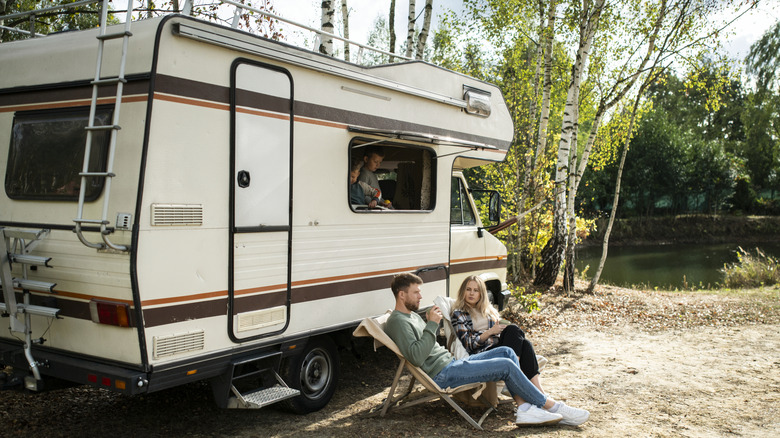
Recreational vehicles offer comfortable escapes from the humdrum of daily life. They allow you to take your bathroom, television, kitchen, and living room along with you on trips to some of the country's most gorgeous natural spaces. This gratifying experience will have you hitting the road more and more often. But if you take an excursion without proper preparation, there's a good chance you will run into mishaps that could cause deep frustration and even danger. When traveling to high-elevation spots, you will be exposed to more risk than usual. Elevation can impact so many parts of your RV, including the engine, the cooling system, and the tire pressure. That's why it's important to be prepared for your trip well in advance.
You need to make sure you know the exact route you're going to take before you set out. This is because RVs are not well-suited to all types of roads or road conditions. Try to avoid routes with lots of switchbacks, and if there is a chance of rain or ice, you should try not to drive up or down steep grades. Extreme weather is just one of the overlooked dangers you need to prepare for before going on an RV trip.
You can use an app called RV Life Trip Wizard to plan your outing in advance. Unlike Google Maps, this app will provide you with RV-specific information. The app will tell you about the elevation levels, weather, gas stops, and campgrounds. Once you have a good sense of which roads you need to be on and where you can stop for maintenance or fuel, your mind will be free to take on other problems that might arise.
Make sure that your brakes are in working order
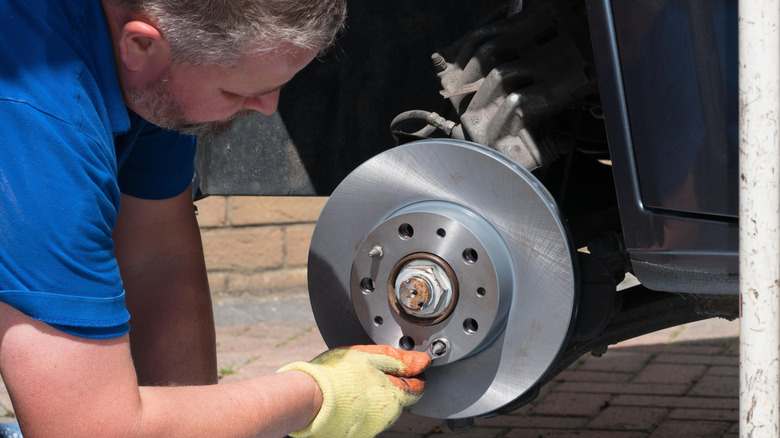
One of the most crucial aspects of high altitude RV camping is ensuring that your brakes are in good condition because you need to be prepared to travel up and down steep grades. You should always have your brake pads inspected before major trips and once every 6,000 miles. Keep in mind that descending sharp slopes can be just as precarious as driving up them. Declines will put the most stress on your brakes, and you need to remember that your RV is much heavier than a normal vehicle. If traffic is slowing down ahead of you, especially when you're going downhill, you should decelerate early and slowly because you'll have a much larger stopping distance than other cars.
To keep them from wearing out, ensure not to ride your brakes when you're going downhill. Simply switch to a lower gear and cruise down slowly. If you use them all the way down a mountain, they can overheat, and you could end up having to call a tow truck. If the brakes are overheating, you will probably notice a strong chemical odor. Another thing you can do is listen for problems. If you hear strange noises while braking, like squeaking, get to a mechanic as soon as you can.
As important as it is to check your brake pads before outings, you also need to check your brake fluid. It needs to be replaced every two to three years. This is important because moisture builds up in the brakes over time, making them less effective. These are just a few of the RV tips that'll make tackling mountain terrain easier.
Higher altitudes will impact your tires and propane tanks
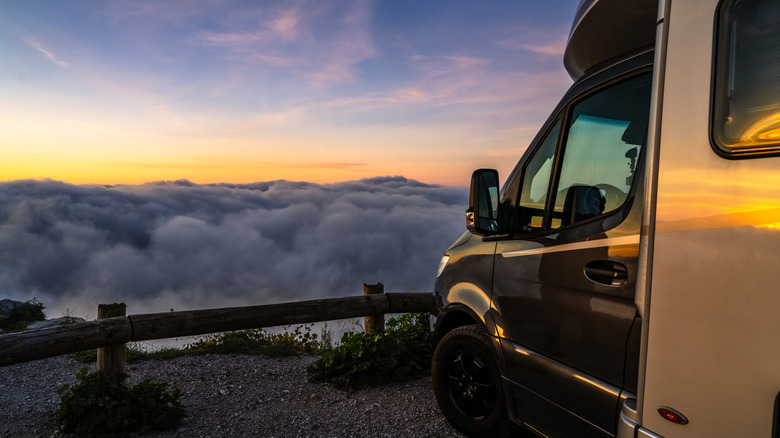
When you head up to where the air is thinner, you'll notice things are different. As you feel your ears popping, the change of altitude is also having an effect on your RV. The first thing you need to keep in mind is your tires. The air inside them will expand as you head up into a higher elevation, which can cause them to become overinflated and more vulnerable to wear and blowouts. Depending on how high you're going, consider letting a bit of air out of your tires as you climb in elevation. You definitely don't want to start with them overinflated before driving up a mountain. This is part of why it's always a good idea to bring spare tires just in case.
Your propane tanks will also not be as effective in high altitudes. For many RV campers, this is a crucial fuel source. You'll likely need propane for your appliances, refrigerator, and stove, as well as to heat your shower water. In higher altitudes, there is less oxygen in the air, so propane doesn't combust as easily. Your system will drop substantially in effectiveness, so you should consider switching to electricity. Bring an electric space heater if you're traveling to high altitudes in cold weather. Also, your lithium batteries will drain faster, so always bring spares.
You may also feel high altitude sickness, which makes strenuous activities harder. It can take up to a week to adjust to the thinner air. Your lips might also become chapped faster because the air tends to be drier. You might want to avoid high elevations during your first few outings. Closer to sea level, there are plenty of National Parks that are perfect for RV camping.