

How To Save Any Over-Fertilized Hydrangeas In Your Garden
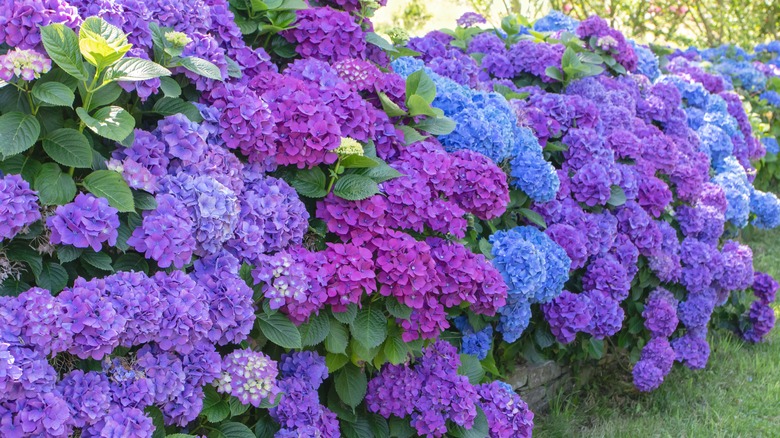
Hydrangeas (Hydrangea spp.) are shrubs that are a popular choice for gardeners, known for their big, beautiful blooms. Hydrangea-lovers only want the best for their plants, and may be willing to do anything to help them thrive — including trying quirky tricks like using pickle juice to help hydrangeas flourish. But in the process of caring for them, some of us can accidentally overdeliver on nutrients and end up harming our hydrangeas instead. In fact, fertilizing too much can actually be worse than fertilizing too little. Not only does over-fertilizing tend to produce fewer blooms, it can result in "fertilizer burn," which dries out the hydrangea's roots.
You'll be able to tell if a hydrangea has been over-fertilized by looking at its leaves, which may appear scorched or withered. You may also see a crust of fertilizer salts on the soil around your hydrangea plant. In severe cases, the entire plant may wither and die, but there are often steps you can take to revive your hydrangea and bring it back to its former glory. Here's what to try, and how to safely fertilize going forward.
Try these hydrangea rescue tactics
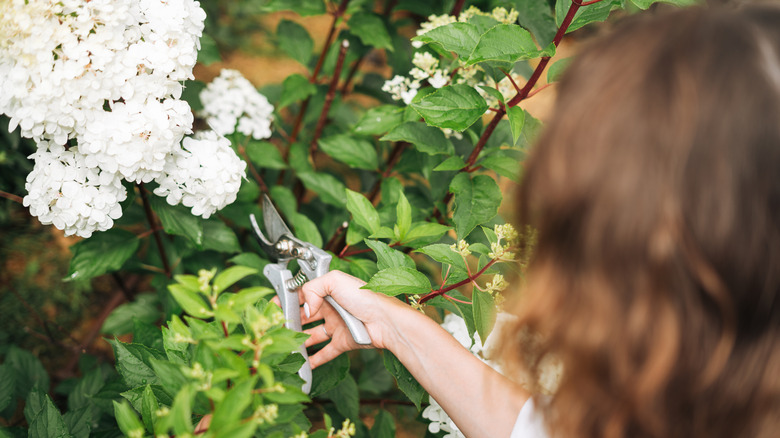
Start by removing any excess fertilizer that you can still see on the upper soil layers around your hydrangeas. Then, since over-fertilizing dries out hydrangeas, resurrect them by giving a long, deep watering, which will also flush any extra fertilizer out of the soil. Finish off by removing any brown, withered, or damaged leaves. A good watering and patience can usually save your hydrangeas, but if they are in potted soil, transplanting them to fresh soil with the right amount of fertilizer may be the safest last-ditch option. Just be careful not to overwater, as this can also harm your plants. In the event of overwatering, try adding organic material such as compost, which can help air out the soil.
Once you've saved your over-fertilized hydrangeas, make sure you implement healthy fertilizing habits going forward. You only need one application of fertilizer in spring or early summer, and possibly a second application around July or when the buds begin blooming. When spring rolls around, read up on these spring fertilizing tips for hydrangeas, including how to raise or lower the pH levels in your soil for vibrant blue or pink blooms. And although blooms are at their peak in the summer months, don't forget that caring for your hydrangeas is a year-long commitment, even in the cold months. Check out these top tips to care for your hydrangeas this winter.