

A Simple Addition That'll Help Plants Thrive In Your Rocky Soil Garden
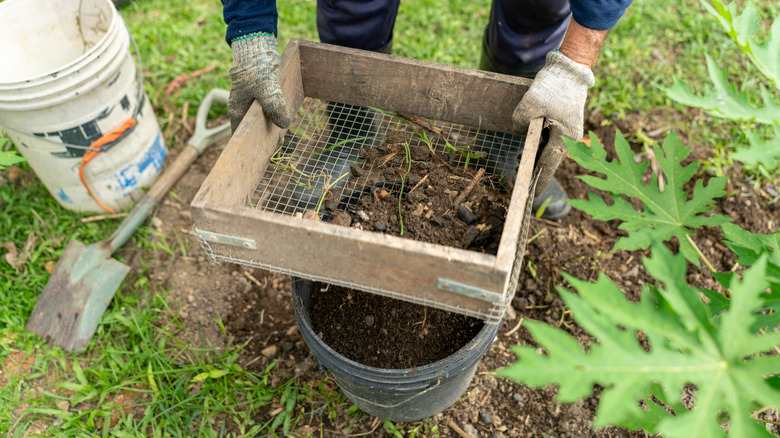
Healthy soil is the anchor from which plants will either prosper or struggle, and different soil types can present unique challenges to gardeners. Rocky soil, which happens when the shifting ground pushes rocks up toward the surface, can make it particularly difficult for plants to thrive. The rocks can obstruct essential nutrients from reaching plants, and block roots from spreading out. Fortunately, there's a simple ingredient you can add to your garden's rocky soil to help improve its quality: organic matter.
So what exactly is organic matter? It's a nutrient-rich substance composed of living, dead, or decomposing plants, small animals, or microorganisms. Organic matter for soil can come from all kinds of places. For instance, seaweed makes a great source of organic matter that can contribute to a lush green yard. Coffee grounds, which you probably discard every morning, can also be repurposed as compost, mulch, or fertilizer. Even dead flowers can be recycled as organic matter to improve the health of your soil for new blooms! Here's how to get started.
Practical tips for improving your soil with organic matter
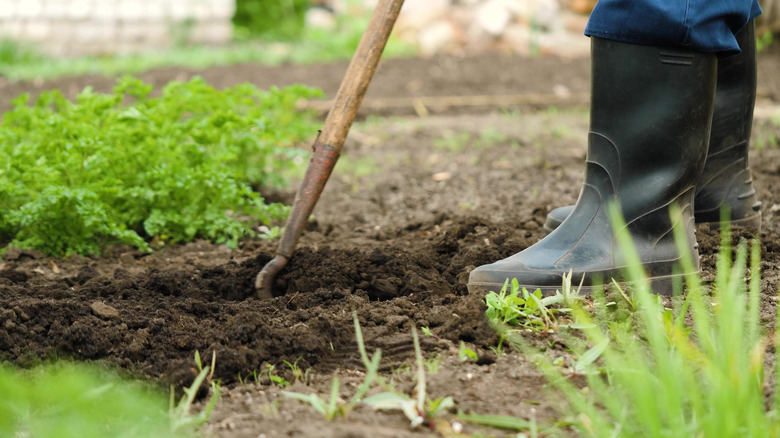
Start by removing any large rocks on the surface, and continue to remove any especially big rocks you encounter while working the earth. Then, apply a six-inch layer of compost that's rich with organic matter, and till it about a foot deep into the soil. Wait at least three weeks before planting anything so that the organic matter has time to become fully integrated into the soil. Make sure it is broken down to the point that you can no longer recognize the source material. This is a good project to work on in autumn, as it allows the organic matter the whole winter to decompose.
Next, you're ready to get planting. Although you've supplemented your soil with organic matter, it's still a good idea to opt for plants that have the best chance of thriving in rocky soil. Fuss-free plants like lavender, hardy shrubs, cedar and oak trees, and herbs such as sage and oregano may be good choices. Once you're done planting, top the garden bed with a layer of organic mulch. It protects the soil from seasonal extremes, retains moisture, and eventually decomposes to enrich the soil with more nutrients.