

Why Your Garden's Tomato Skin Is So Tough And How To Fix It
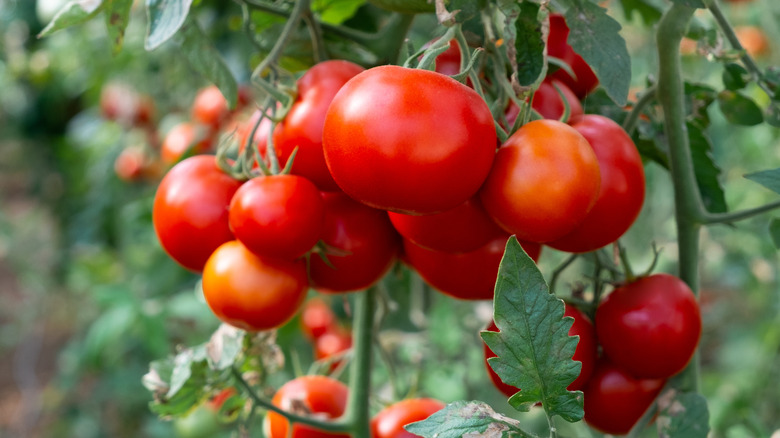
While tomatoes grow fairly well without being high-maintenance, sometimes it's still hard to know exactly how they'll turn out until you eat them. One variety tastes different than another and has a different mouthfeel; sometimes even growing the same variety from year to year may yield different results. When the skins on those homegrown tomatoes seem leathery and tough, however, it's not exactly the most pleasant experience when biting through them.
Sometimes the issue can be chalked up to just growing the wrong variety of tomato. Some tomatoes have naturally thicker skins, such as Roma, plum, and some cherry tomatoes. The thicker skins help prevent splitting; they also make it harder for insects to invade. Some tomatoes are even called crack-resistant, which is a code word meaning "expect tougher skin." Choosing a tomato type that's known for thinner skins, such as numerous heirloom tomatoes, is a step in the right direction if you're looking for a solution. Unfortunately, variety isn't the only factor affecting a tomato skin's thickness, but for every planting problem, there is indeed an answer.
It's too hot outside for your tomatoes
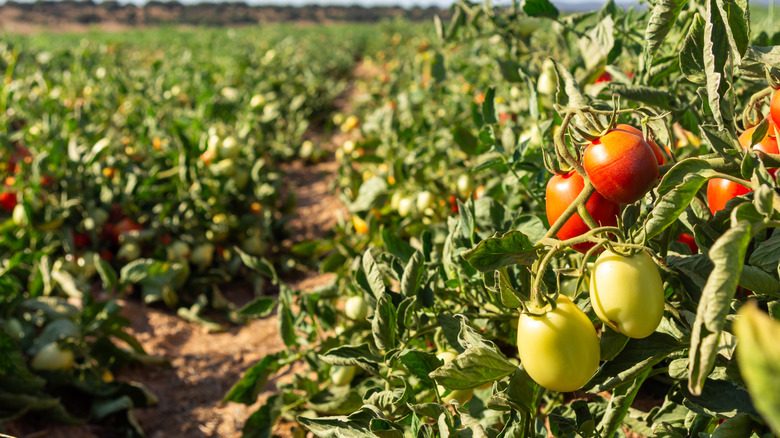
Tomatoes are a bit like people in that many prefer a little sun and warm temperatures but not non-stop sun over a series of scorching hot days. Tomatoes could scald in such conditions, so they develop a thicker-than-typical skin to help prevent the problem. Lots of wind during that heatwave could contribute to the thickening of those tomato skins too. If you're expecting a streak of really hot days back to back, providing shade for your tomatoes will help prevent scalding.
If you're growing them in containers, move them to an area that's in the shade during the hottest parts of the day. If they're in the ground or a raised bed, improvise some shade. (This clever umbrella hack keeps plants happy on hot summer days.) A patio umbrella works well, and it can be moved as needed. A shade sail is another DIY solution, providing a larger canopy of cool shade to protect a series of tomato plants, and it may be removed when not needed too.
If you live in an area that's typically hot all summer, choose tomato varieties that thrive in the heat. They usually have some heat-related term in the name, such as "Solar Fire" or "Heatmaster." Whichever varieties you plant, grow them in an area where most of the direct sunlight happens in the morning rather than the hottest parts of the day.
More water will prevent tough skin
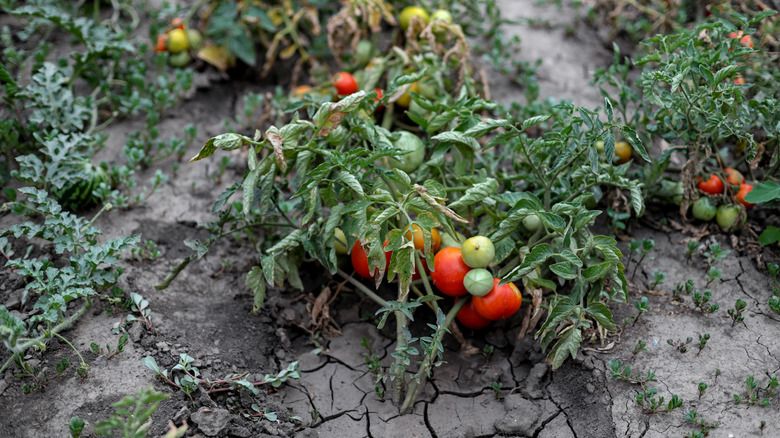
Underwatering can also make tomato skins turn tough. When they aren't getting the water they need, tomatoes develop a thicker skin to conserve the liquid they have within them. If the soil around your tomato plants looks dry, they most certainly need to be watered. The soil should feel moist at least an inch down near the plant roots; if not, water those plants.
Tomatoes planted in the ground need an inch or two of water each week even during moderate weather. If the weather has been extremely hot and dry, you might need to water those tomatoes once or even twice per day as conditions persist. Tomatoes planted in containers may need even more water than those planted in the ground because the soil heats up faster in a container, which leads to quicker evaporation. Water them early in the day until the water runs out of the bottom of the container. Check the soil again later in the day, and give them more water if the soil is dry an inch down below the surface. If you DIY a simple tomato plant watering system, it'll help ensure consistent watering even if you're away much of the day.