

Clever Ways To Cover Your Wooden Fence With Climbing Plants
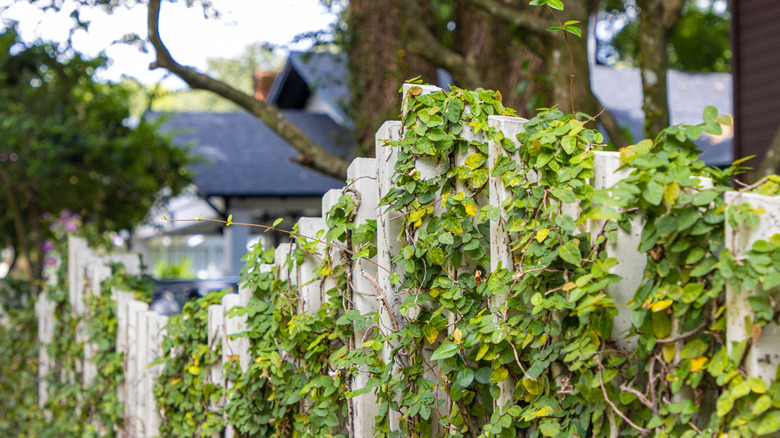
Covering your wooden fence with climbing plants is one of the most attractive upgrades you can give your backyard. Not only do climbing plants provide a whimsical effect, but they can also offer additional privacy to your yard. However, there is a right and a wrong way to go about adding climbing plants to your backyard landscape. One of the first things you need to consider is what kinds of plants are going to work well with your wooden fence.
Vines are some of the best types of plants to climb your wooden fences. They naturally climb whatever they are planted near, and can easily be trained to specific shapes thanks to their relatively flexible structure. Some excellent climbing vines include plants like Chinese wisteria, morning glory, sweet pea, winter jasmine, and firethorn. Each of these blooms with incredibly colorful flowers, which only adds to the scenic value of adding the climbers to your fence line.
If you prefer flowers to vines, there are several varieties of hydrangeas and roses that climb and blossom with fantastic blooms. You can also train dwarf fruiting trees to climb your fences. It's a method known as Espalier, and is an excellent option for people with narrower backyards who want to make the most out of their space.
How to train your climbing plants to your fence
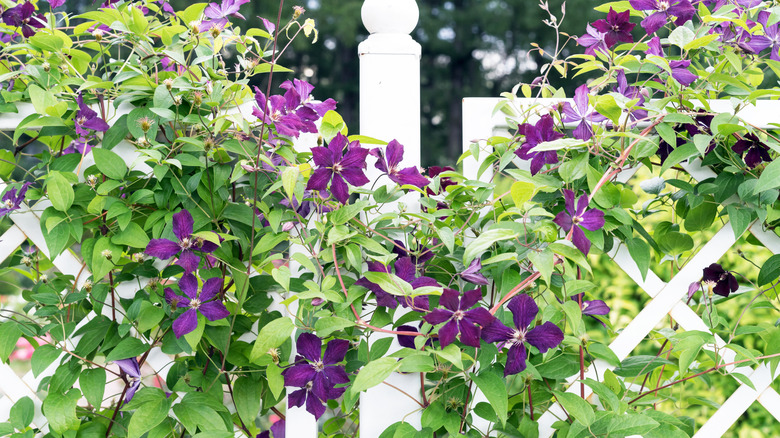
Now that you've chosen the right plant for the job, you need to consider exactly how you are going to make your plants climb your wooden fence. There is a note of caution to be had here. Climbing plants do have the potential to cause damage if left unchecked. You see this frequently when ivy or other climbing plants are grown too close to houses. They can become havens for rodents and insects, as well as grow through your fence's structure. In order to successfully grow climbing plants along your fence, you need to be able to train them properly.
Training your plants means guiding their growth into the shapes and directions you want. You can keep climbing plants in check with zip ties, or more complicated, sturdy training systems constructed of wire, which you'd want to use if you plan on growing fruit trees along your fence line.
However, the best and easiest way to train your climbing plants to your fence is to add a trellis to the sides of the fence. The designed shape of a trellis will act as a proper ladder for the vines to climb through. They also act as a barrier between the plants and the actual structure of your fence. Once the climbing plants are established on the trellis, all you will need to do is some occasional pruning to keep them from getting too wild.
Utilize free-standing trellises

While using a trellis and training the climbing plants are certainly going to be your best bets in terms of getting the most coverage from your vines, there is another way you can liven up your wooden fence with climbing plants. You can use an obelisk, which is a free-standing, triangular structure that the vines can easily grow up without coming into contact with your fence. Instead, you will be getting the illusion of the vines climbing your fence, without them actually affecting the structure. It might not be as effective as previously mentioned tactics, but they will still look excellent.
Also, if you don't want to go about buying a trellis, you can always DIY a trellis from old hoses or other materials you have lying around the yard, like scrap wood, pallets, stakes, and twine. The key is simply giving your plants something safe to climb. Do that, and they'll reward you with a fence line full of charm.