

Here's What's Causing The String-Like Patches In Your Lawn And How To Fix It
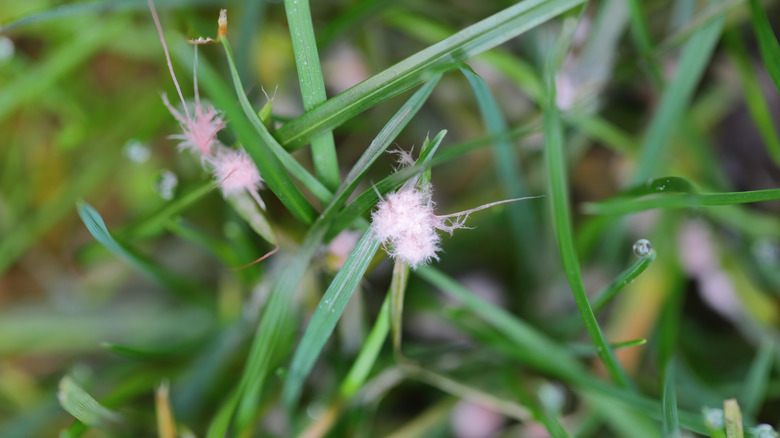
Is your lawn looking a little pink? If so, it's probably not because you're seeing the world through rose-colored glasses. If you've noticed circular pink or reddish patches on your grass, usually about 4 to 8 inches in diameter, then your lawn may have a common foliar disease known as red thread. The symptoms can appear similar to dollar spot, another common disease that affects grass. But upon closer inspection, red thread disease, which is caused by a fungus (Laetisaria fuciformis), is discernible by the antler-like structures, or sclerotia, that you'll see growing on the grass blades. It develops under moist, cool conditions, especially when temperatures are around 65° to 75°Fahrenheit. Grasses grown in soil with low nitrogen levels are also more likely to become infected.
The good news is that the issue is mostly cosmetic. Red thread doesn't kill grass, as the fungus doesn't infect the plant's crown or roots, and you can expect your grass to return to normal once conditions — water, temperature, nitrogen — are no longer favorable for the fungus's growth. Still, if you want your lovely green lawn back and aren't prepared to wait for red thread to resolve on its own, there are steps you can take to treat it and prevent it from appearing in the first place.
Red thread redemption: Next steps for treatment and prevention
Most cases of red thread don't require treatment with a fungicide. Instead, since low nitrogen levels are a big reason why some lawn species (especially fescue, ryegrass, and Kentucky bluegrass) develop red thread, make sure you're nourishing yours with a nitrogen-rich fertilizer. This can help speed your grass's recovery from red thread, and also keep it healthy and strong so that it's less susceptible to red thread in the future. There are also several plants that naturally add nitrogen to your garden soil, which you could consider adding to your yard for a nitrogen boost. Just be careful not to over-fertilize, as this can actually exacerbate red thread. Try applying a slow-release NPK fertilizer intermittently throughout the season to strike a healthy balance.
You'll also want to reevaluate your lawn mowing techniques. Be sure to do some tidying up every time you mow your lawn, and bag any infected lawn clippings and dispose of them to keep red thread from spreading to other areas of your yard. And make sure you're not cutting your grass too short, as taking too much off weakens the grass and leaves your lawn more susceptible to disease and pests. Proper thatch management techniques also help, as red thread can hide out in dense thatch over the winter.
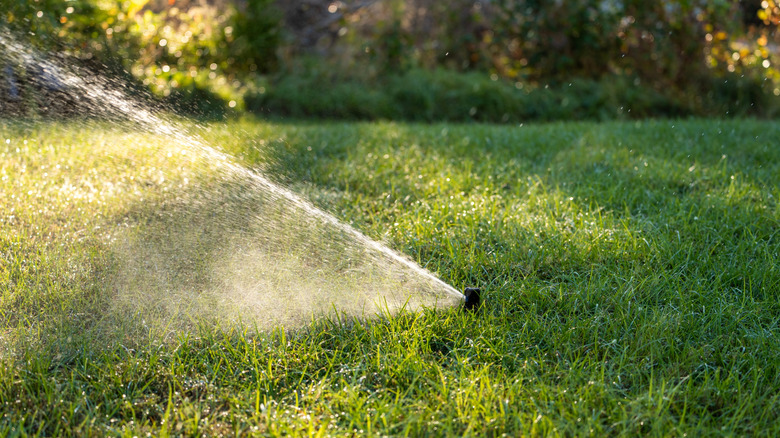
Since fungi thrive in moist environments, how and when you water your lawn can aid in prevention, too. Most turf grass only needs one to two inches of water a week. You should also try to water in the mornings, as the time of day when you water your lawn can have a big impact on preventing fungal disease from having the opportunity to take hold. In the event of overwatering or an extra rainy season, check out this step-by-step guide to removing standing water on your lawn.