

A Clever Gardening Trick That'll Help Prevent Strawberries From Drying Out
We may receive a commission on purchases made from links.
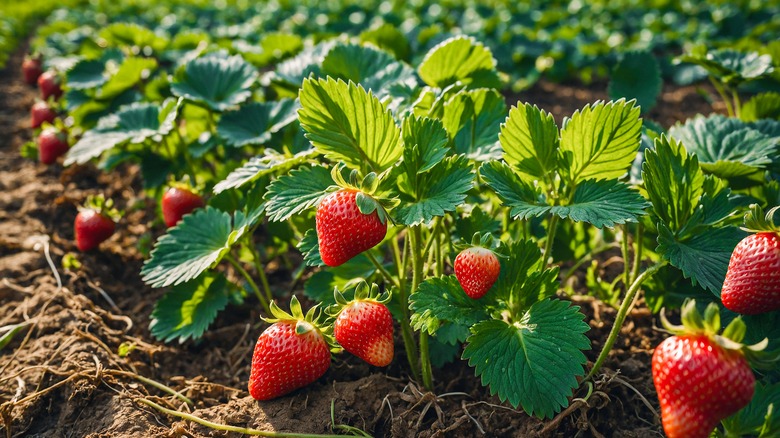
Growing the best strawberries on the block is a reachable goal, particularly if you know what they need to thrive. It's key to know that strawberries also require a substantial amount of water, about an inch per week. This makes watering the plants often a must since their roots aren't very deep. If water is in short supply, the strawberry fruits are likely to be small and dehydrated. One of the best ways to prevent this is by applying horticultural wool to the growing area.
Horticultural wool is a fancy name for sheep's wool that's used to support plant growth. The wool fibers absorb moisture from watering and rain like a reservoir, releasing the water gradually to keep the soil consistently damp between waterings — perfect for strawberries' shallow root systems. The sponge-like padding is a natural way to conserve water in your garden, while warding off weeds that might block your strawberries' sunlight or siphon off nutrients that are crucial for healthy development.
As an added bonus, decomposing horticultural wool enriches strawberries' soil with nitrogen, potassium, and other nutrients. Though you should apply a balanced fertilizer in early spring and fall, wool slowly replenishes a range of vitamins and minerals throughout the year. It often takes a year to break down, so the impact may be most noticeable the following growing season.
How to use horticultural wool to help your strawberries grow
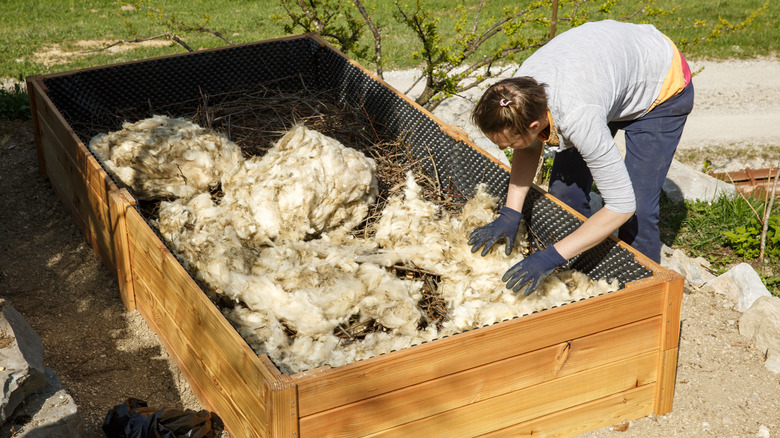
Horticultural wool can essentially be used as mulch. Simply place a thin layer of wool on raised beds and in-ground gardens. In strawberry planters and hanging baskets, you can apply it on top of the baskets' soil, or line the bottoms of the container with it to keep the growing environment from becoming parched.
This material can also benefit your strawberries in other ways. It can be used as a handy tool for deterring slugs, snails, and other pests eager to munch the plants' foliage – sprinkle it with a little wood ash for maximum slug-fighting power in your garden. Horticultural wool also makes for a great strawberry seed-starting base; scatter strawberry seeds on a strip of wool, water them, and watch them germinate. Just don't forget to keep the seeds warm by placing their fleecy growing medium in a sunny spot. Once seedlings have formed, transfer them to pots along with their wool or plant them in your strawberry patch.
Sheep's wool such as Kondoos raw natural wool can be purchased by the bag at some online retailers. Or, look for a product like Agricas wool pellet organic fertilizer. These pellets aren't as fluffy as raw wool, but they hold water and release nutrients in a similar manner.