

The Flower Trend That'll Add Visual Interest And Color To Your Yard
Having a unique and beautiful garden is the goal of most gardeners. But sometimes deciding what to plant (and where to plant it) can be a real challenge. If you have large spaces in your garden that you want to fill with something different and creative, consider planting a flower carpet: A section of low-growing ground cover plants that create a "carpet" effect when they bloom that will bring a ton of color and depth to your garden. Another name for the carpet concept is "carpet bedding," although this can refer to a design that is typically made with just foliage plants and not those that bloom. You can even create patterns or designs with your flower carpets as intricately as you prefer. These flower carpets can benefit pollinators, too. In fact, your yard may be full of butterflies when you plant this ground cover.
There are a variety of ground cover plants to choose from that can provide the carpet effect you want to create. Many options are easy keepers and don't require a lot of maintenance. And some will do well in shady areas, so don't let the shade stop you from adding a creative element to your garden. Other ground cover choices are evergreen, providing green foliage all year long so that you don't lose your entire carpet when the cooler weather comes. Even though it may sound complicated, planting a flower carpet can be done by newbie gardeners too! So grab those garden tools you absolutely need and let's get started.
How to grow a flower carpet in your garden
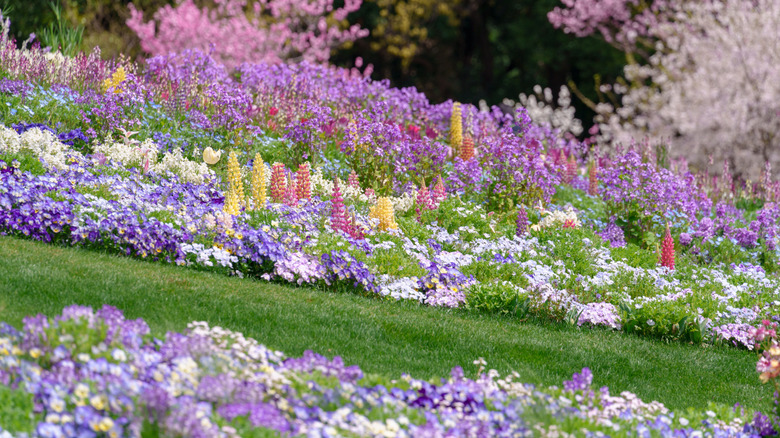
Choosing flowers to include in your flower carpet is fun, but it does take a little research and planning to find the best ground cover for your climate conditions. Some great choices that provide beautiful foliage include the foam flower, which produces white flowers every spring and has light green leaves all year long, the bugleweed, which has striking blue flower spikes with purple-green leaves, and others — like creeping Jenny, brass buttons, and and phlox. It is highly recommended to plant perennials unless you think you will want to change that section of your garden the next year. Perennials will come back each spring on their own while annuals have to be replanted each year.
The best soil to use for flower carpets is a well-draining, loamy soil with a good amount of humus. You will need about three or four plants per one square foot of garden space, but this will vary once you start planting. Group plants with similar watering and feeding needs together, which will make care and maintenance easier to manage.
After the plants are in the ground, give them a good watering without completely drenching them and continue to keep an eye on soil dryness. When it is dry more than an inch down, it's time to water. In the early springtime, prune any foliage before new growth appears. When the plants start growing again, their leaves will quickly fill in the spaces and you will have your carpet back after any winter dormancy.