

What To Consider Before Using White Gravel In Your Garden
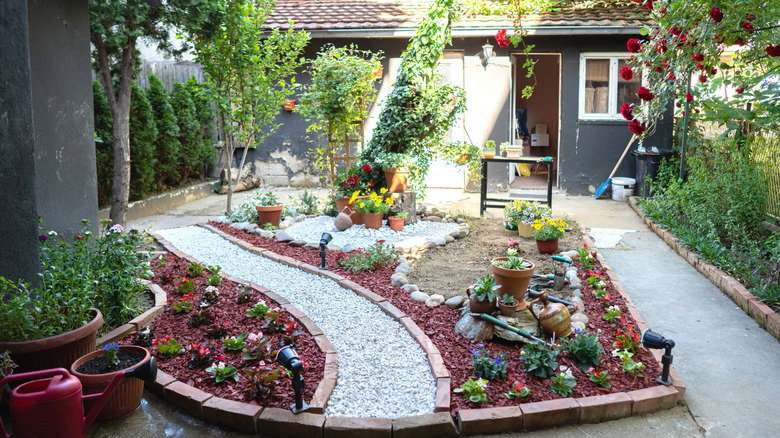
If you're looking for a visually appealing way to spruce up your yard, you might be interested in picking up some white gravel. White gravel is typically made from crushed stones (such as marble or limestone), and it carries an elegant, sophisticated feel. The material has become a go-to for many suburban homeowners who want to make their home pop among a sea of similarly designed buildings.
Though this attractive ground cover offers plenty of enticing benefits, it's not a one-size-fits-all solution. While white gravel may be an ideal addition to some landscapes thanks to its unique visual aesthetics, it comes with certain issues to consider such as price, maintenance needs, and light reflection. If you're wondering whether white gravel will work in your own yard, read on as we outline a few pros and cons of these bright stones and offer a bit of insight into installation best practices and practical use cases for it.
Benefits of white gravel and how to install it
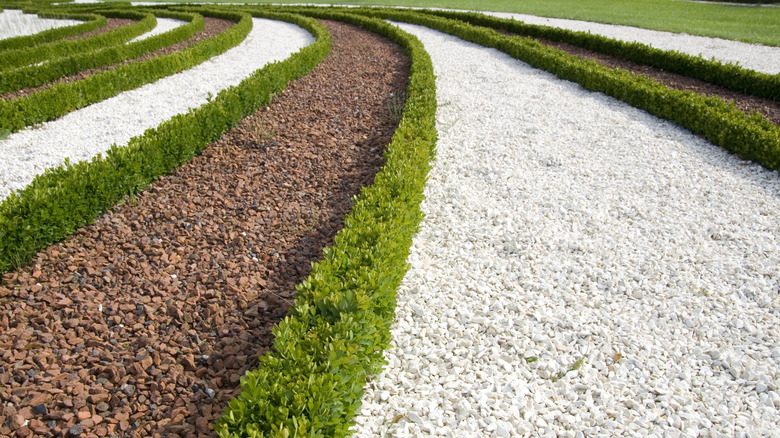
Offering a stylish alternative to darker materials, white gravel can provide stark contrast to the greenery of your lawn and the blooming flowers of your garden. When employed properly, this contrast cultivates a visually stunning minimalist aesthetic and can even make your space appear larger by highlighting the different focal points of the yard. This clean, crisp feature also brightens outdoor areas and often stands up against storms, making it ideal for Zen gardens and DIY garden paths. White gravel is also easy to install and decent at suppressing weeds. Plus, it can reduce your perennial workload by giving you a break from worrying over how often to refresh the mulch in your garden.
If money is no object for you and you don't mind getting your hands dirty, it's hard to argue with white gravel's beautiful results (just remember to avoid these most common gravel landscaping mistakes when installing this material). You'll apply it in thick layers, placing it atop carefully laid landscape fabric to ensure weeds don't find their way between the rocks. From there, you can easily create rock beds and eye-catching borders throughout your garden. Afterward, tamp down your gravel with a shovel, and use a rake to even the surface. Your rocks should stand around 2 inches above the soil, fully covering the ground.
If you're building a walking path, know that laying the gravel too deep could make the space difficult to traverse. Likewise, layering it too shallow could create unsightly gaps or cause rocks to get caught in the bottom of your shoes. Once you've got the whole affair measured, manicured, and ready to present, give everything a quick rinse, just to make the vibrant white gravel really shine.
Why white gravel might not be for you
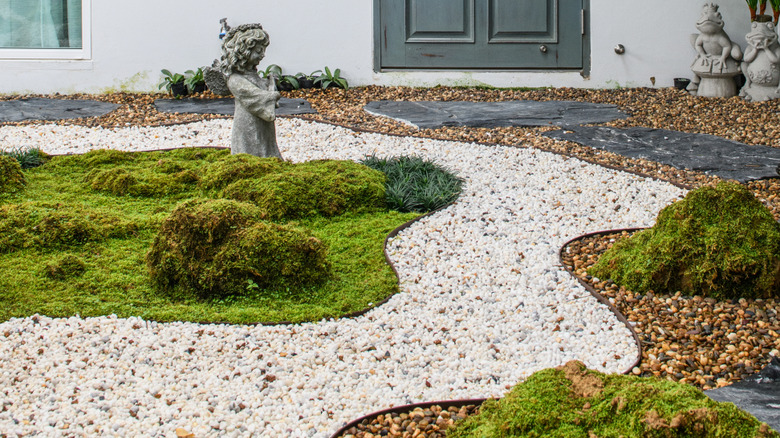
Despite white gravel's benefits, this material is known to be a bit pricey, especially in areas where it needs to be shipped from afar. Depending on where you're sourcing it from, gravel made from white marble can cost nearly $250 per square yard before shipping. When compared to patio tiles, mulch, and other alternatives, white gravel can run up quite a steep price tag, making it impractical for lawns and gardens of a certain size.
Even if you do manage to score a great deal on the ground cover, there's no guarantee that white gravel is right for your personal taste. Some homeowners find the minimalist sheen of white gravel to be too abrasive, while others lament the dirt, algae, and grime buildup that accumulates without regular cleaning and maintenance. Those who do install white gravel are advised to frequently wash the area with dish soap and water, diluted bleach, or even a white vinegar mixture. A pressure washer hose and scrubbing brush may also be necessary.
Lastly, white gravel has a tendency to reflect quite a bit of light, making it a poor choice for those in extremely sunny climates. The reflective nature of the stones can create glare, taking your yard from picturesque to blindingly bright. Of course, this won't be a major problem if you cover your white gravel with plenty of flowers and colorful plants, but this solution could make the stones harder to clean later, so it's still a give and take.