

Beans In Your Garden Will Thrive With The Help Of A Common Herb

Sometimes called sweet bay or bay leaf, bay laurel (Laurus nobilis) is the secret ingredient that brings depth of flavor many savory soups and sauces. In addition to enhancing your cooking, this perennial shrub can quietly assist the bean plants in your garden. Bay laurel is easy to grow near beans (Phaseolus vulgaris) like snap beans and green beans, because both species are happy in full sun and well-draining soil with plenty of nutrient-rich organic matter. Plus, bay laurel helps ward off pests that prey upon several popular types of beans, from snap beans that are eaten fresh to kidney beans that are typically dried for storage. Since bay laurel grows at a leisurely pace, it's unlikely to crowd bean seedlings or other neighboring plants.
Growing bay laurel in your garden can repel moths, weevils, ants, roaches, flies, and even mice. That's because its foliage contains terpenes including eucalyptol, a strong-smelling compound that these troublemakers detest. If you plant enough bay laurel, its aroma may reduce mosquito populations in your yard. Pair bay laurel with other pungent plants that repel garden pests to make both you and your beans even less appealing to insects. For example, plant thyme nearby to deter ticks that can bite while you're gardening. Thyme likes the same growing conditions as bay laurel, and its bold aroma masks the smells of other plants that moths and other bugs seek out. This gives your beans and bay laurel some protection from pests, especially cabbage loopers, which will target beans when cruciferous vegetables aren't available. As a bonus, you can store harvested bay laurel leaves with dried beans in your cabinet or cellar to keep weevils from devouring them.
Other ways to repel garden pests with bay laurel
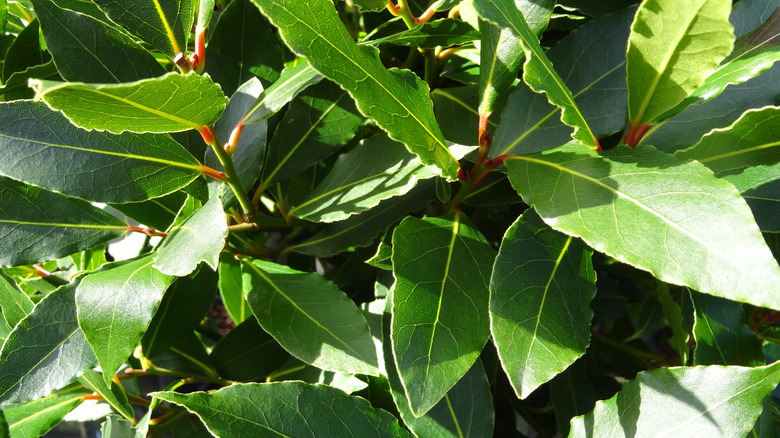
Harvested bay laurel leaves aren't just for bags of dried beans. Harvest bay laurel foliage to use in your garden later. To strengthen your beans' bug barrier, dry a pile of bay laurel leaves and sprinkle some of them around the plants every few weeks. Be sure to store harvested bay laurel leaves in tightly sealed containers to preserve their potency. Indoors, you can use them to keep moths and weevils out of grain canisters and shoo silverfish away from places they might like to hide.
Speaking of potency, some gardeners use bay laurel to create a strong liquid bug deterrent that doubles as a nutrient-rich DIY fertilizer tea. One method involves simmering a scoop of the plant's leaves in a pot of water for a half an hour, then straining the liquid and spritzing it on plants once it has cooled. This spray is suitable for houseplants as well as beans and other crop-bearing plants in your garden. To produce as many leaves as possible for this project, make sure not to overwater your bay laurel, which can promote root rot. However, bay laurel can handle both occasionally dry and occasionally soggy soil well. Bring it inside for the winter if you live outside its preferred growing range — USDA hardiness zones 8 through 10. You could even grow bay laurel in a container near your vegetable garden, which makes moving the plant easier when cold weather is imminent.