

The Yellow-Flowering Climbing Plant That'll Bring More Hummingbirds To Your Yard
We may receive a commission on purchases made from links.
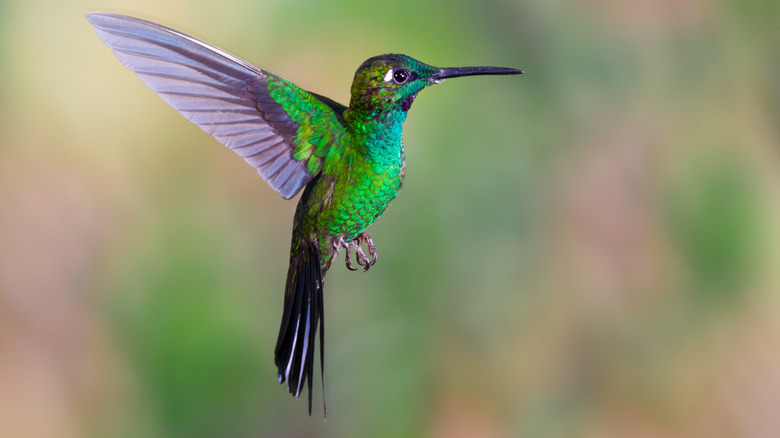
If you're dreaming of turning your yard into a hummingbird haven, don't overlook the power of flowers. Though hummingbirds are famous for loving red flowers, they're drawn to other vibrant hues as well. The bright yellow blossoms of canary creeper (Tropaeolum peregrinum) are a perfect example. These cheery vines are great at grabbing hummingbirds' attention as it climbs up fences and over the edges of hanging baskets. Canary creeper flowers provide hummingbirds with delicious nectar from midsummer through the first frost of fall. This nectar also attracts bees, butterflies, and other pollinators that many flowering plants depend on to make seeds and fruit.
From afar, canary creeper looks like it's teeming with little yellow canaries. Some admirers think the uppermost petals also look like the wings of a bird as it flies through the sky. This vine is perfect for a sun-drenched pergola near your hummingbird feeders or a trellis in an area where you'd like your tiny feathered friends to nest.
Though canary creeper has a name that brings to mind slow and deliberate tiptoeing, it's actually a fast mover, sometimes growing 12 feet in a single year. That said, canary creeper is not considered aggressive or invasive. It will also happily grow around other plants in your garden, rather than smothering them. This plant is typically grown as an annual, though it can also be a perennial in USDA Hardiness Zones 9 and 10.
How to care for canary creepers
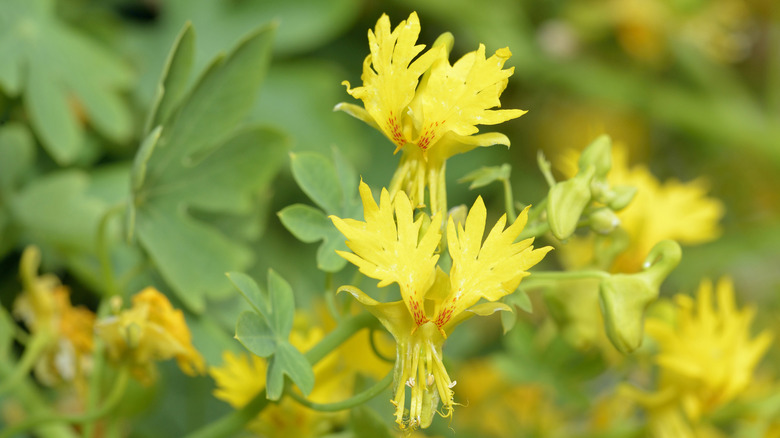
Canary creeper is a fuss-free plant that's ideal for gardening beginners. For starters, it needs very little in the way of nutrition. This plant actually prefers nutrient-poor, sandy soil, so it's a good choice for parts of your garden that have hosted heavy feeders in the past. Resist the urge to fertilize, as this will encourage your canary creeper to produce fewer flowers.
Fewer flowers means less nectar and, in all likelihood, fewer hummingbird visits. When it comes to water, less is more. Canary creeper can handle drought but dislikes soggy conditions. Water the vine every now and then, and make sure whatever soil it's in drains well. If the soil is retaining too much water, try mixing in sand, which is often part of its habitat in the wild.
You can grow canary creeper by sowing its seeds outdoors as soon as the risk of frost becomes unlikely. Or, start the seeds indoors in winter or spring, ideally four to six weeks before frost is expected to cease in your hardiness zone. The seeds typically take a week or so to germinate. Though canary creeper isn't a pest magnet, do keep an eye out for sap-sucking insects such as aphids and tarnished plant bugs. The latter are particularly destructive since they may harm the plant's buds, seeds, and leaves. Kaolin clay — like Bare Essentials Living White Kaolin Clay Powder — can shield your canary creeper's foliage from becoming a meal.