

How To Create Your Own Hydrangea Privacy Hedge
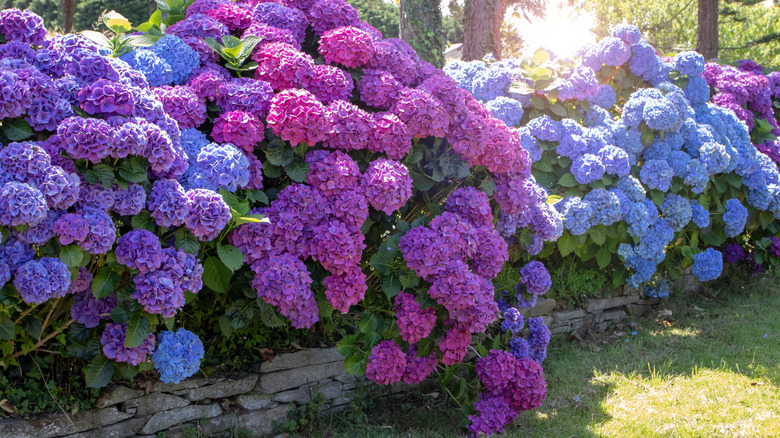
Hydrangeas — colorful shrubs that produce flowers in a variety of shades, from pinks and purples to whites, blues and even green — certainly know how to make a statement. In some cultures, hydrangeas are said to symbolize boastfulness and abundance, while others see them as a symbol of apology. But honestly, who wouldn't want to brag about these big, beautiful blooms? In fact, this abundance and tendency to grow in excess is exactly the reason why hydrangeas make an excellent choice for a privacy hedge if you're looking for a way to keep nosy neighbors from peeking into your yard using a barrier that's also visually appealing. In fact, hydrangeas are an ideal simple trick to add more privacy to your backyard.
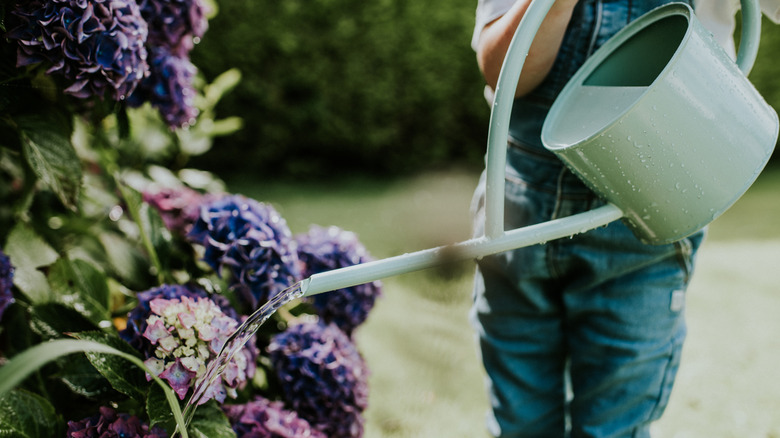
Ready to get started? Before digging in, remember that all parts of the hydrangea plant are mildly toxic to dogs, so this may not be the best option for homeowners with curious pets. Hydrangeas (Hydrangea spp) should also only be taken on if you have the time or climate for them to get regular waterings (different species thrive in different USDA zones). In Greek, the word "hydrangea" means "water vessel" — which is appropriate, because these gorgeous shrubs can guzzle a lot, and should be watered several times a week for optimal growth. That's not all to consider when embarking on your privacy hedge project: You'll want to keep some tips in mind while planting your hydrangeas, and make sure you choose the right varietal before you get started.
Some important tips to keep in mind
Although there are dozens of hydrangea species worldwide, about a handful are typically used in gardens in the U.S., and you'll want to choose the right one if your goal is privacy. Panicle hydrangea (Hydrangea paniculata) is a great option, as it can grow up to 15 feet tall. Limelight, a type of panicle hydrangea, is a good choice if you're seeking some height but nothing too extreme. Limelight grows to 8 feet tall, and its leaves acquire a beautiful deep red color in the fall. In general, panicle hydrangeas thrive in zones 3-9 so they are also incredibly hardy throughout much of the U.S. but are particularly cold hardy.
Once you've picked your favorite, and after choosing the optimal spot in your garden to plant your hydrangeas, you'll want to remember a few things. It may seem counterintuitive, but if you want your hedge to be nice and thick for ultimate privacy, you'll want to leave space between each hydrangea when you're initially planting: About three to six feet, depending on the varietal. They need plenty of room to grow into healthy, lush bushes eventually reaching their maximum height and width. Don't rush the process; planting too close together gives the hydrangeas less room to breathe and enables disease to spread among them more easily.
It's also important not to overprune your hydrangeas. They don't need much trimming to stay healthy, and doing too much can actually weaken the shrub and make it more susceptible to disease. Plus, too much pruning means losing a lot of that lush density and height that make hydrangeas such an appealing privacy hedge. And if you want to help them really thrive, try adding this household staple to hydrangeas' care routine.