

Adding A Fountain To Your Birdbath Sounds Nice, But Is Maintaining One Worth It?
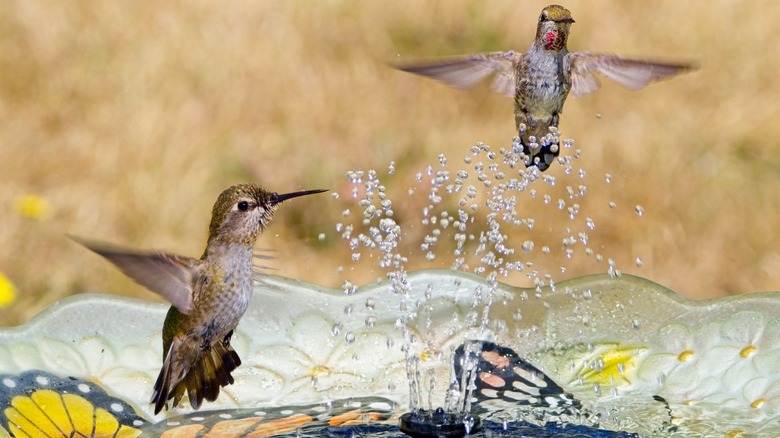
A fountain can make a birdbath exponentially better in some ways, adding the soothing sound of moving water and attracting more birds in the process. After all, birds hear and see the water and are instantly drawn to it — so much so that even something as simple as a syrup bottle repurposed into a DIY birdbath dripper could catch their attention, turning a boring birdbath into a bird magnet. In most cases, adding any kind of water feature is a great way to attract bug-eating birds to your yard, too — which means that there are plenty of reasons you might want to incorporate some moving water into your outdoor living areas.
That said, it's not all about the benefits. In fact, one major downside to adding a fountain is the added hassle when it's time to clean out the birdbath. The moving parts and water circulation system typically require more frequent maintenance and thorough cleaning to keep the water safe for birds and to keep the fountain functioning properly.
As such, it's always worth taking the time to mull over the various features and maintenance concerns before simply buying an add-on fountain. Even if your birdbath is a simple basin, fountains designed specifically for birdbaths come in all shapes, sizes, and price points, so you'll want to make sure you choose wisely.
The drawbacks of adding a fountain to your birdbath

Bird fountains require a form of power to move water. Some are electric — using an electrical outlet or batteries — and others run on solar power. While cord-based fountains mean you'll always need an outlet nearby, alkaline battery-powered fountains require frequent battery replacement. As for solar fountains, some have panels directly atop the pump, which means they won't work unless they're in direct sunlight. And, as it turns out, direct sunlight isn't ideal for birdbath water, since it'll heat up quickly, making it more prone to faster algae growth.
Additionally, some fountains come with an assortment of nozzles to move water in different ways — including spray heads that waste water by shooting too high and missing the bath entirely. This means you'll have to refill the birdbath more often than you would without the fountain or risk damaging the pump if the water level gets too low (or completely dries up).
Birdbath fountain pumps also require regular cleaning. Sure, the water in a birdbath is clean for a while, but it doesn't stay that way for long. Algae and debris brought in by the birds can get sucked into the pump and could clog it, even with the pump's small sponge filter in place. To make matters worse, some pumps must be taken partially apart for easier cleaning, and their small size might make it harder to reach certain problem areas. Finally, a fountain pump won't work in freezing conditions; although it may keep water from freezing for a little while, it will eventually freeze over if the birdbath isn't heated.