

How To Repurpose Old Sponges To Keep Your Plants Hydrated

We may receive a commission on purchases made from links.
Keeping plants hydrated sounds simple, but sometimes it's hard to tell how much moisture certain residents of your garden need. This can lead to a major watering mistake: overwatering in an attempt to be on the safe side. If a plant's foliage is turning yellow and its soil is damp, too much water is probably to blame. Excess moisture also creates ideal conditions for root rot, a potentially fatal condition caused by fungal pathogens. Installing moisture-delivering spikes or another self-watering system can help you resist the urge to over-serve your plants. One of the simplest self-watering setups involves reusing old sponges. In addition to stretching your budget, this hack benefits the environment by keeping sponges out of landfills.
Old sponges give indoor and outdoor plants a consistent source of hydration. That's because they're designed to soak up water and hold it in until squeezed. Even sponges that have scrubbed many dishes can retain enough moisture to help a plant stay healthy. Speaking of health, take a few safety-promoting steps before gifting spent sponges to your garden. First, soak them in soapy water for an hour to wash away chemicals that may have settled into their crevices. You could also microwave wet sponges for a minute apiece or treat them with rubbing alcohol. Both of these methods kill a wide range of germs you don't want in your garden. After cleaning and disinfecting the sponges, rinse them well. If they're made of synthetic materials, set them aside for potted flowers or other plants you don't plan to eat, as sponges containing plastic take a long time to break down and may release substances you shouldn't ingest.
Turning sponges into hydration helpers for your plants
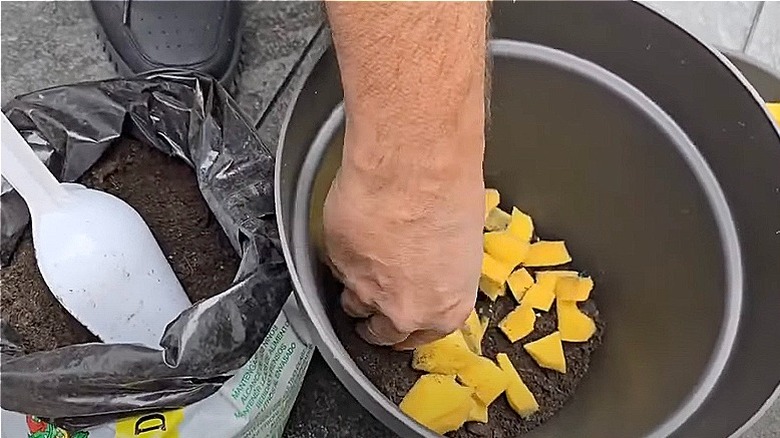
After busting germs and clearing away chemicals, remove heavy-duty scouring pads from any sponges you're repurposing. Then, cut up the sponges to prepare them for your garden. Aim for pieces that are no larger than one cubic inch. The idea is to create a layer of sponge fragments that holds moisture near your plants' roots. This absorbent layer is especially helpful for outdoor seedlings that need consistent watering to thrive.
Sponges are also a great addition to container gardens because potted plants tend to need more frequent watering than in-ground ones. If you're using your sponges in pots, place an inch or two of soil in the bottom of each container, blanket that soil with a single layer of sponge pieces, and then add more soil and plants. This approach should also work for larger planting sites as long as you create a thick enough sponge layer to absorb plenty of liquid.
If you'd like to use this hydration hack for edible plants, incorporate natural sponges into your cleaning routine. A lot of eco-friendly sponges — for example, the SmilePowo 12-pack of natural kitchen sponges — are made of biodegradable coconut fiber and cellulose. Loofahs, like the Lather organic sea wool hypoallergenic sponge, are made of plant-based materials that can also hydrate your plants without adding microplastics to your soil. Whichever type you choose, you can ensure your sponges get a second life while helping your plants to flourish.