

How To Cut Your Overgrown Lawn With A Hedge Trimmer
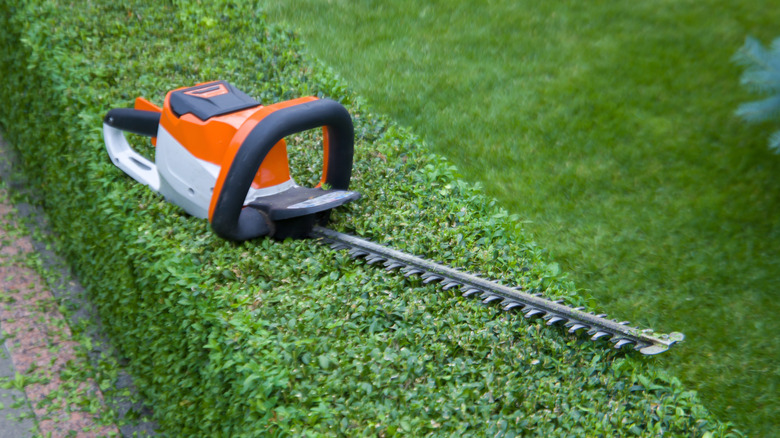
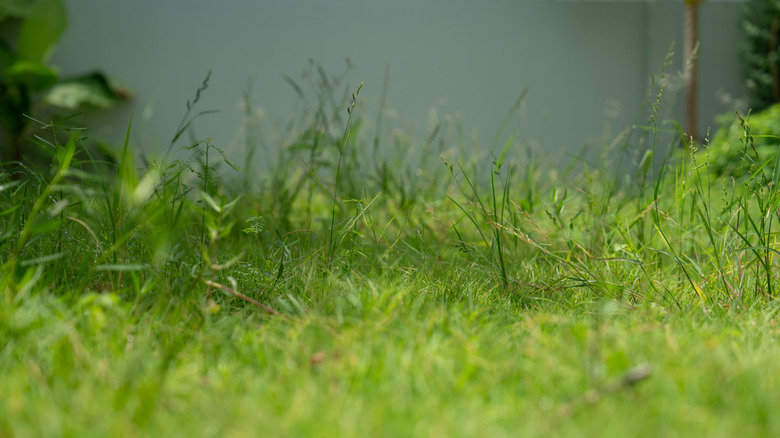
When a lawn becomes overgrown, it can be much harder to cut. Long bundles bunch up around rotary blades, preventing them from turning properly and causing the engine to overheat. If you operate a cylinder mower, the issue can be even worse. Pretty soon, your lawn will become home to a host of creatures that you don't want to run into, including snakes, raccoons, and badgers. High grass is also a great habitat for ticks, which carry diseases like Lyme disease and Rocky Mountain spotted fever. But aside from pest control, it's important to keep a backyard maintained because it's easier to walk around on a well-cut lawn. If your lawn is out of control, consider taking a whack at it with a hedge trimmer.
This power tool can easily take out overgrown grass, thick weeds, and saplings. They are easy to carry, but you will have to lean down to cut your grass at the proper level. Remember, cutting your grass too short might secretly cause you to ruin your lawn. Unlike a mower, there is no guard to cover a hedge trimmer blade, so there are minor safety concerns. A blade can hit rocks and send them flying through the air at dangerous speeds. That's why it's important to maneuver the tool correctly and prepare for the project before you get started. One benefit of hedge trimmers is that they can get into tighter spaces than most lawn mowers can. If you have a very small yard, you might consider selling your mower and just using a hedge trimmer.
Safety and planning before using the hedge trimmer on your grass
Aside from a hedge trimmer, this job will require a rake and trash bags to collect the clippings. If you have a compost bin, consider disposing of your clippings there. You'll also need to use the correct safety gear, including gloves, long pants and sleeves, and safety glasses.
One of the best ways to make the cutting process go faster and easier is to put a lot of thought into finding the best trimmer and cutting attachment. The first choice you'll have to make is whether to pick out a battery-powered trimmer or a trimmer with a cord. If your trimmer has a cord, it'll need to be long enough to reach across the yard; otherwise, you'll need an extension. Any default attachment should easily cut through the grass, but if a lot of small trees are growing, consider using a pruning attachment. You can also use a string trimmer or a brush cutter instead of a hedge trimmer.
It's important to keep both hands on the hedge trimmer at all times while it is running. Once you've determined your desired lawn height, fan the trimmer evenly across the ground at that level, making sure not to hit the ground. Once you've fanned across a spot, swipe across it again. Large rocks and stumps can hide in the weeds, so be aware of these obstructions. When the job is finished, rake up the grass and collect it into your trash bags, which can go to the dump. If this all seems like too much of a hassle, you can try clever alternatives to grass for a no-mow garden.