

Install Your Bird Feeder Pole With This Method & It'll Never Budge Again
We may receive a commission on purchases made from links.
You've been there before. You install your bird feeder pole, hang your favorite feeder full of tasty morsels, and wait patiently for colorful songbirds to arrive. And they do ... until the neighborhood squirrel, raccoon, or even a deer or bear sniffs out your seed stash and crashes the party. Next thing you know, these seed thieves have bent or downed your pole, scattered your seed, and tested your patience. No matter how closely you followed the instructions, the local wildlife seems determined to sabotage your bird banquet buffet efforts. What do you do? The best chance of success comes from a few smart installation tricks that ensure your feeder pole is sturdy, stable, and squirrel-resistant.
First, you want to put your bird feeder in the right place to keep your flying guests safe. Sure, hanging a feeder from a tree branch seems like an obvious solution, but it comes with its own set of problems. Branches offer easy access for climbing critters, and the swinging motion from wind (or curious paws) can spill seed quickly. Mounting your feeder on a pole a bit away from trees, by contrast, keeps everything more secure, deters uninvited diners, and puts birds in a safer and more visible location, setting it close enough so they can still retreat to trees or bushes as needs be. There are also some details to consider before putting multiple bird feeders in your yard. Once that's all decided, you want to make certain it's sturdy. Whether you're installing a wooden or metal pole, the technique matters.
How to install a sturdy wooden bird feeder post
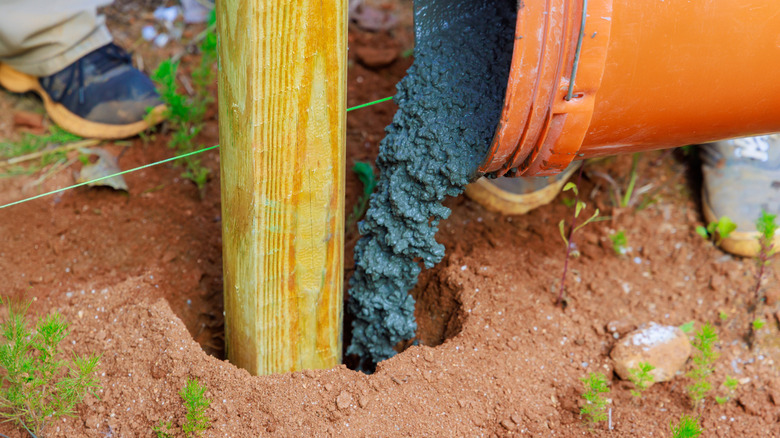
For a solid upgrade, swap out a flimsy pole on a base for an 8-foot-long, 4-by-4 pressure-treated wooden post that promises more staying power and less frustration. Start by digging a hole about 2 feet deep using a post hole digger. Add 5 inches of gravel at the bottom to improve drainage, unless you're blessed with rocky soil. If the digging gets tough, soak the area with water and give it time to soften before finishing your hole.
Once the post is standing upright in place, grab fast-setting concrete (like Quikrete concrete mix), your hose, and a wheelbarrow or bucket, then stir things up to a thick, putty-like consistency. Pour the concrete into the hole, making sure to use a level to keep the post straight. You'll want to dome the concrete so it slopes slightly away from the post on all sides for proper drainage. Let the concrete cure fully — at least overnight — before attaching your feeder hooks to the top of the post. When ready, use 12-inch garden hooks and secure them with wood screws. Pre-drill your holes, center your hooks, and test for comfortable hanging heights before committing. Once done, your feathered friends will thank you with cheerful songs, and no visiting deer or jumping raccoon will be able to knock things over.
How to install a metal bird feeder pole without squirrel shenanigans
Studies show that watching birds can reduce stress and improve mental health, but watching squirrels devour and destroy everything is definitely stressful. You'll want your setup to be both sturdy and squirrel-smart. Installing a metal pole like the one in the video above helps defend against those fuzzy freeloaders, since they can't sink their claws into a narrow steel pole like they can with wood (make sure it's rust resistant). For the best view (and a daily mood boost), place your sturdy bird feeder so you can watch from your favorite window.
To install a metal pole, start by digging a small hole where you want it placed. Insert the pole into the ground and use a piece of scrap lumber and hammer, or a soft mallet, to gently pound it in. Once it's stable, fill in the dirt around the base and tamp it down. If the pole isn't vertical, straighten it and use scrap lumber as a shim next to the pole to keep it in place. Want to take it to the next level? A baffle is a must-have product to keep squirrels from eating bird seed. With a little planning and the right tools, your bird feeder pole will be perfectly positioned to welcome feathered visitors without uninvited, seed-stealing guests. Now, keep your bird feeder mess-free with a simple DIY upgrade.