

What To Consider Before Using Fallen Pine Needles For Mulch
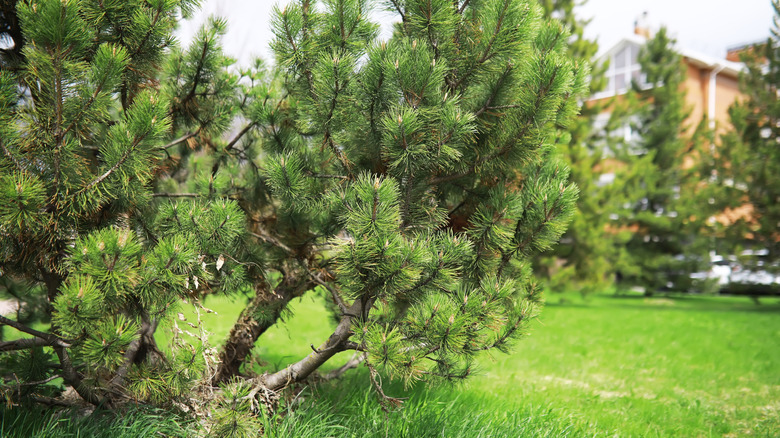
If you have pine trees in your yard, you may be trying to think of what you can do with all of those needles as they fall from the trees. There are a plethora of things you can do, from using pine needles as a natural mosquito repellent, to using them for crafts or drinking them in tea (yes, it's a thing). You may have even thought about using those fallen pine needles as one of the best things for mulch around your plants. Pine straw, as the matted mulch is also called, has some myths out there that have kept many people from using pine needles as mulch. The biggest of those myths is that the needles are acidic and will change the composition of the soil, rendering it so that some plants won't grow there. According to the NC Cooperative Extension, the acidity of dried pine needles isn't any stronger than that of other mulches, and even though pine needles themselves are acidic, they won't lower the pH of your soil. Despite that fact, there are reasons why pine needles may not be the best choice for mulch depending on where you use it, and one big reason is all about fire safety.
Before you gather up the pine needles and spread them around your plants and gardens, consider the warnings you hear around Christmastime about keeping your dried-out tree around your home, and keep reading — there's a lot to that warning. Since dried pine needles are the basis of pine straw, they pose quite a fire risk.
Bugs and fire love pine straw mulch
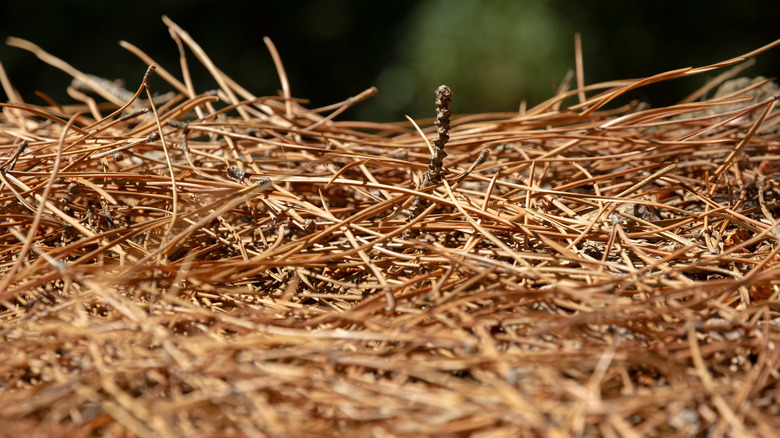
Dried-out Christmas trees are a great example of just how flammable pine needles can become. You wouldn't be collecting dried pine needles from beneath your trees in the yard if the trees wasn't dropping old needles in the first place. This means that even having outdoor lighting around pine trees during the holiday season can increase the risk of fires. With pine needle mulch, the dried needles can quickly catch on fire if ash or cinders from your bonfire blows onto them or if someone tosses a cigarette that way. As suggested by the USDA Forest Service, flammable mulches are best when used somewhere away from homes and other structures that could burn.
With all mulches, insects can become an issue. Pine mulch is no different. In the fall, the little hidden dark spaces and insulating warmth pine mulch creates attract earwigs and centipedes. If you want to keep bugs out of your home, consider creating flower beds in areas other than immediately around your living quarters. One option to reduce bugs setting up next to your foundation is to place a gravel barrier between mulched areas and buildings. Also, try not to make the mulch too thick (2 inches is usually enough), and rake your mulch regularly to help aerate that garden space and reduce tempting moisture (As it composts, pine straw is also producing its own heat). These are all things that will help keep bugs at bay.