

DIY A Cute Garden Trellis With The Help Of Leftover Fence Materials
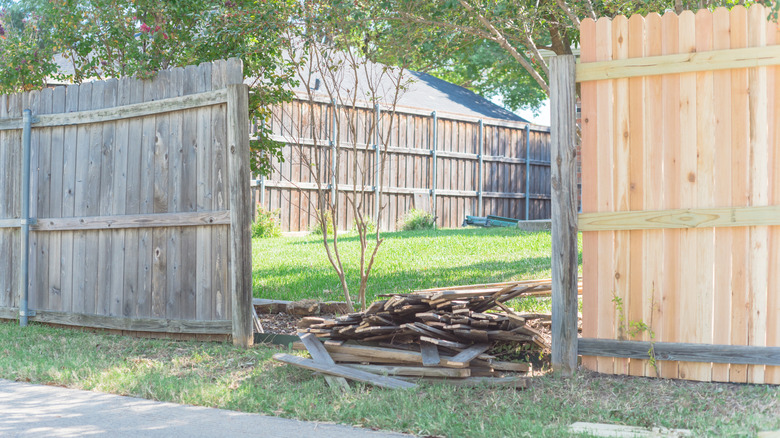
If you have tomato plants leaning under their own weight or pretty clematis vines trailing on the ground, it might be time to add a trellis. Store-bought options can be pricey — and they're not always the right size or style for your space. But if you have leftover material, you already have the makings of an amazing, customized garden trellis. Plus, if you've started noticing the telltale signs it's time to replace your fence, you can repurpose old pieces in your garden design. The benefit of a DIY trellis is that it lets you tailor support to your garden's specific needs. You don't need to retrofit expensive plant supports when you can customize your own with a rustic or contemporary design to match your garden space.
You will need to have your materials ready to go before creating a DIY garden trellis. Almost any fencing material can be useful to make a plant support system, including chain link fencing, but wooden posts and boards are ideal for a cute, whimsical touch to your outdoor space. Spare nails or screws will also come in handy to assemble a strong, stable trellis. It's also important that you have tools ready to go to build and install your trellis properly. For example, if you have large leftover wood pieces, a saw will be necessary.
Turning spare fencing into a bespoke garden trellis
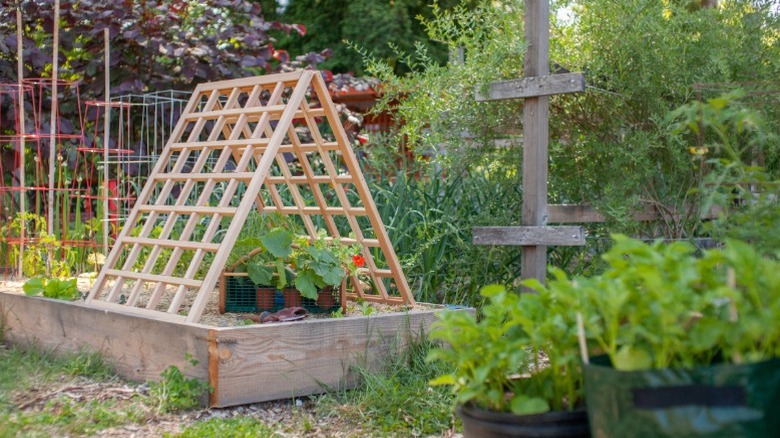
With the materials you have on hand, begin by laying out a basic trellis design. There's no right or wrong way to go about this process. A good place to start is to choose where the finished trellis system will be installed in your garden. It will really help you decide what type of trellis you will build, because a tomato trellis will look a little different from a garden trellis for your cucumber plants. A trellis attached to a raised bed or container will also have a few different components to one placed directly into the ground. If you want to bolster a tomato plant, a cage-like design might be the best solution for your garden. But a system for cucumbers or string beans should prioritize height to encourage these vining plants to climb and thrive.
If you decide on a tomato cage trellis, you will need four tall wooden pieces to form the angles of a square or rectangle. You can then attach shorter pieces to form the sides to connect these pieces, including some in the middle to serve as good supports for heavy tomato stems. A cucumber trellis, ideally an A-frame, will involve more pieces to create a tall structure to tie a climbing plant onto. Use a DIY hack to build a budget raised garden bed out of totes and plastic chairs to pair with either of these trellis ideas. It's the ultimate way to get higher yields in your garden without spending too much on materials by repurposing items you already have on hand.