

The Common Lawn Eyesore That May Be Causing Weed Problems
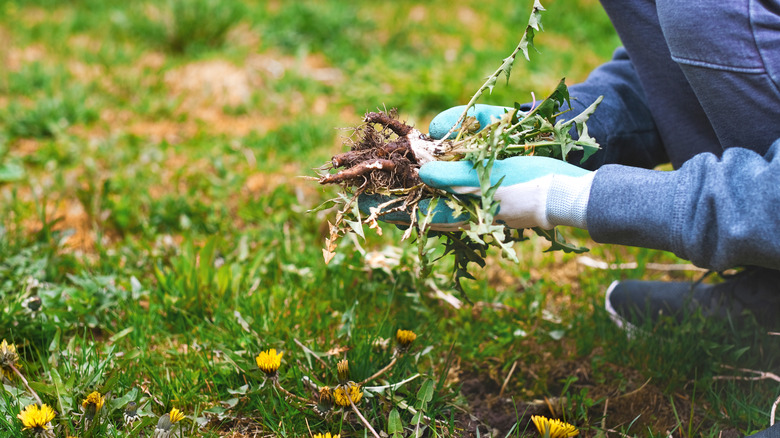
Everyone knows that invasive weeds are among the worst threats to a well-manicured lawn or garden. Weeds can be quite frustrating, spreading from any number of sources and choking out your healthy, happy plants. While most of these fast-growing plants come from seeds dropped by birds or carried by wind, some homeowners may be secretly ruining their lawn by unknowingly cultivating them with nothing more than a few earthworms. If you happen to have a number of earthworms on your property, you've likely located the little piles of mud that they leave behind when they burrow into the ground. These piles are called worm casts or worm castings, and they can be a major fuel source for weed growth.
Worm castings are small mounds of soil that contain excrement and other biological matter left behind by worms as they work their way through the mud, ingesting various nutrients. Thanks to their earthy lifestyle, this means that worms are essentially developing small mounds of organic manure, which boost the ground's natural fertilization properties and encourage microbial processes. Before you grimace at the idea of worm fertilizer in your lawn, it's worth noting that these castings are actually good for your grass and plants. Still, they make it easier for weed seeds to grow and take root, which in turn makes your lawn a breeding ground for things like chickweed, clover, English ivy, and the infamous couch grass.
Remove worm castings and mitigate the spread of weeds
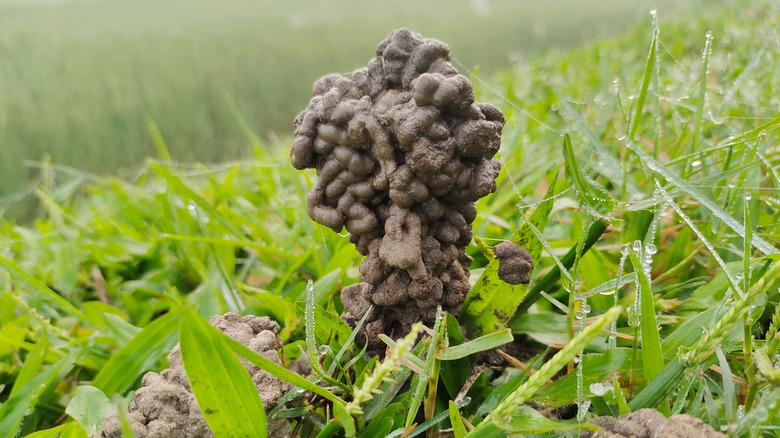
As stated above, worm castings are actually good for your lawn and garden, especially if your soil is lacking nitrogen. In order to get the most out of these free towers of nitrogen-rich worm droppings, you'll want to leave them alone until they dry up in the sun, then rake them away gently. Worm castings tend to be extremely moist when fresh, which makes them stick to anything and everything that they touch. If you try raking, mowing, or just snatching them off the ground before they dry, you'll not only be removing their nutrient rich properties from your soil, you'll also be creating a ton of extra clean-up work for yourself on the back end. Letting the castings dry allows some of the nutrients to soak into the ground below. From there, you can focus on banishing weeds from your yard before they grow out of control and tossing the dried bits of the casts into your compost bin or garden to squeeze out the last of their enriching properties.
If you find yourself completely inundated with castings, however, you may want to find a way to cut down on your lawn's earthworm population in general. While earthworms are usually considered beneficial for soil health, having too many of them can be a sign that your lawn is overwatered. Simply stop watering your lawn for a few days, allowing the soil to dry up, and the worms should rise to the surface. At this point you can collect the worms yourself, or wait for the early birds to host a feeding frenzy. At the end of the day, it all comes down to your own observational skills as lawn and garden maintenance can be a constant balancing act.