

Your Birdbath May Be The Reason Why Your Yard Is Swarming With Wasps
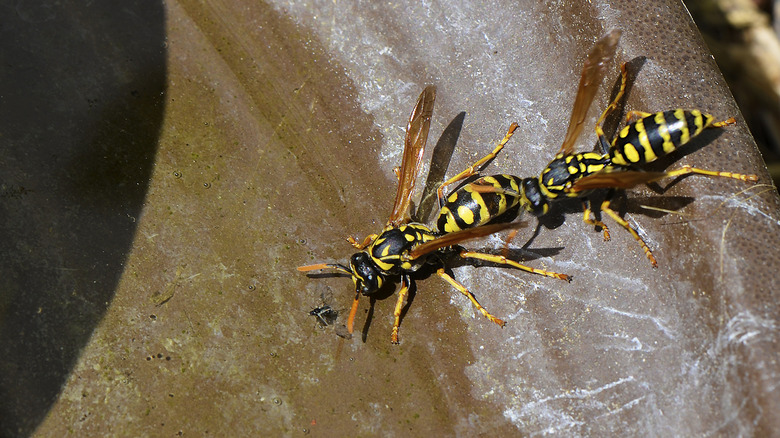
That birdbath you've put out to help attract more songbirds to your yard is also a favorite stop for a common back yard menace — the wasp. Like any wildlife that visits your garden, wasps need water to survive. So don't be surprised if your bath meant for feathered friends is bringing in buzzy visitors as well.
Many types of wasps are known for their aggressive behavior, making them unwanted backyard guests. Yellowjackets, hornets, and paper wasps all form colonies with nests that can grow quite large. A reliable water source is handy to these types of social wasps for their own hydration, especially in hot weather. Yellowjackets in particular will keep coming back all summer once they learn there of a reliable water source.
So even if you've spent a lot of time and money choosing that perfect birdbath size and style for your garden, you may want to drain it or put it away for a season if you have a particularly bad wasp year. The good news is that wasps aren't known to come back year after year to the same spots, and their colonies built all summer will die off once the cooler weather hits.
Beneficial wasps also like your birdbaths
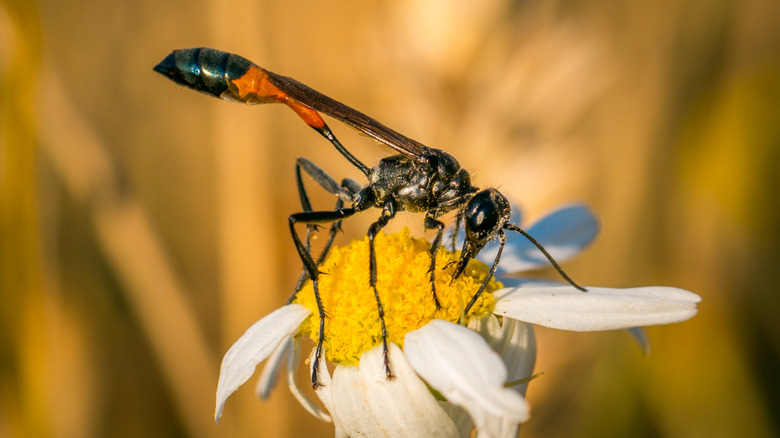
While some wasps are unwanted, many types of wasps are solitary, and will happily ignore you on their way to and from your handy birdbath. Mud daubers are a type of wasp that needs water to make its individual nests, and are a common site at pools of water collecting the drops they need to make their home. These wasps also prey on spiders, including black widows, so having their unique nests around your eaves can be a benefit. They are not aggressive and rarely sting, so seeing these slender wasps at your bath shouldn't be cause for concern.
Parasitoid wasps may sound scary, but they are stingless insects that are relatively small, and they also need that water from your birdbath to drink. These wasps are beneficial in your garden because they lay their eggs inside other insects you might not want around, like aphids and wood-boring beetles, which end up dying when the parasitoid wasp babies emerge.
Whatever kind of wasps your birdbath is attracting, remember that they are garden pollinators you may want to protect. While wasps don't feed their young pollen, they do buzz from flower to flower to eat nectar and insects, spreading the pollen collected on their bodies.