

A Drought-Tolerant Ground Cover That'll Have Hummingbirds Flocking To Your Yard
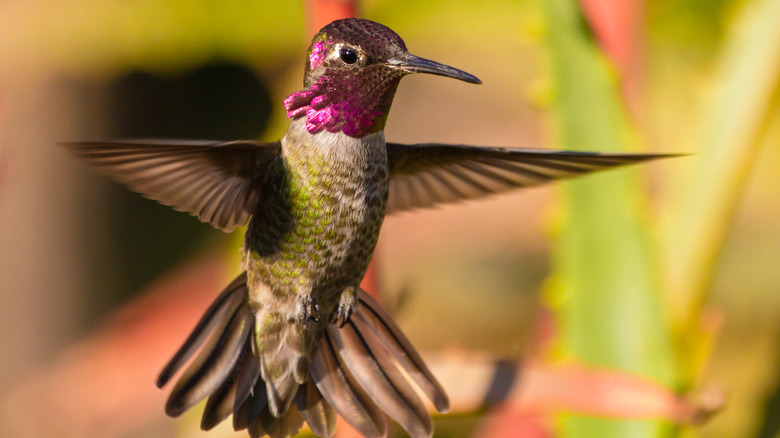
When drought strikes a garden, many plants wilt to communicate their desire for a drink. If the water shortage drags on, flowers and buds tend to turn brown. Blossom production may even grind to a halt as the plants try to conserve any moisture they've managed to retain. Unfortunately, fewer flowers means less food for hummingbirds. Though you can offer homemade hummingbird nectar during droughts by turning a soy sauce bottle into a feeder, this isn't realistic if you're strapped for time. Cleaning and refilling a feeder gobbles up even more minutes. An easier solution is planting flowers that tolerate dry spells. Drought-resistant wild potato vine (Ipomoea pandurata) is ideal for this role. It blooms in the spring, summer, and fall, then returns the next year, giving hummers lots of opportunities to feast on its nectar. Consider using wild potato vine as a ground cover since it likes to creep and climb.
Hummingbirds are wild about wild potato vine because its flowers are shaped like funnels. This makes nectar easy for their long, skinny beaks to reach but hard for problem-causing insects to access. The buzzing birds are also drawn to the reds, pinks, and purples found in centers of the creamy white blossoms. If possible, choose red — hummingbirds' favorite color — to signal that lots of nectar is available. When used as a ground cover, wild potato vine can help neighboring plants withstand droughts too. That's because it encourages nearby soil to stay damp, especially when raindrops are few and far between. Blanketing the soil with this native wildflower can also ward off weeds and reduce erosion, helping your garden stay healthy and beautiful.
How to care for a wild potato vine ground cover
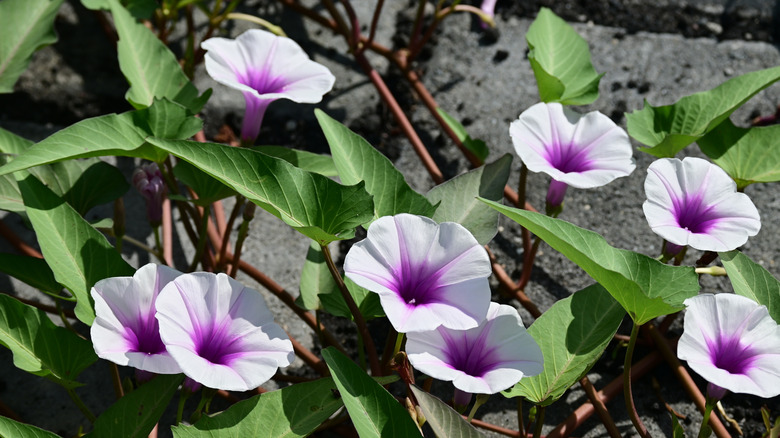
Taking good care of your wild potato vine ground cover should help your yard attract a steady stream of hummingbirds. Sometimes called manroot or man-of-the-earth, this plant is generally fuss free and suitable for beginning gardeners. It will accept nearly any soil texture and a planting site that gets parched or waterlogged from time to time. That said, do your flowers a favor by mixing compost into their soil. This amendment can improve water drainage and soil structure while enhancing your garden's nutrient profile.
In addition to having few soil preferences, wild potato vine isn't fussy about sunshine. As long as you don't grow it in deep shade, it's likely to be content. As for weather, this plant can handle the chilly spring of USDA hardiness zone 3, the sweltering summers of zone 8, and whatever the zones in between have to offer.
When deciding where to plant wild potato vine, consider its massive size — it can stretch up to 6 feet wide and 30 feet tall if you don't trim it. Wild potato vine is also a fast and vigorous grower, so avoid placing it next to plants that detest competition. Removing spent flowers can limit its spread, as this keeps it from dispersing seeds in your garden. Though this plant is an asset to hummingbirds, songbirds, and butterflies, keep pets at a distance since it's toxic to some mammals when ingested.