

Your Soil May Be The Cause Of Your Bumpy Lawn

If you've ever sat on the grass in your yard and it felt like you were sitting on a lumpy bag of rocks hidden under a thin layer of dirt, there's a fair chance the soil itself is the issue. Much like plants in the garden, lawn grasses thrive when soil conditions are ideal for them. A mix of sand, silt, and clay creates a loamy soil that's great for plants, but a lawn with too much clay will feel hard and lumpy in places because it's too compacted.
In fact, a lawn filled with clay may feel unpleasant to walk over certain areas while barefoot. And if you live in an area with winters that drop below freezing, that freeze and thaw cycle makes the clay heave and buckle, resulting in air pockets and a lumpy, bumpy lawn. While the clay is there to stay, there are some things you can do to bolster that bumpy lawn to smooth it out. Aerating the lawn and adding a topdressing are two things that can significantly improve the conditions of the soil beneath your yard.
Aeration removes small cores that leave holes in the ground, allowing more airflow and water into the soil, which benefits the roots of the grass. It also breaks the clay up a bit so it's less likely to expand and heave when it freezes. Topdressing leads to more glorious grass as the fine garden compost you add to the lawn filters its way into the soil over time, improving the soil conditions. It's also nice as a filler for any low spots.
How to aerate clay soil beneath a bumpy lawn
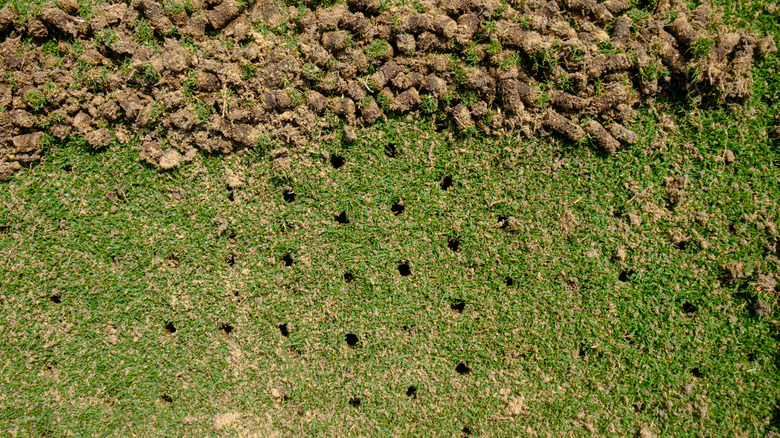
While there are different aeration methods to create holes in your lawn, core aeration is best. Core aeration uses specialty equipment to remove plugs of soil from the ground, depositing them atop the lawn so any nutrients eventually end up back in the soil. Spike aeration, on the other hand, jabs holes into the ground without removing the cores. The best time to aerate your lawn depends upon the type of grass. With cool-season grasses such as ryegrass, aim for the autumn because that's when the soil is the right temperature for roots to grow. On the other hand, if you have a warm-season grass like Bermuda, aim for aeration in the late spring. In either case, the soil should be moist but not waterlogged for ideal aeration.
Manually operated core aerators come in several types, such as a pitchfork-style device with hollow tubes that pull cores out as you step down on the tool. Another manual style has similar tubes on a cylinder, removing cores as you push the device around like a lawnmower. Then there's a tow-behind version that attaches to the back of a ride-on mower or lawn tractor, making the process easier if you're dealing with a large lawn.
To get your yard prepped, you'll need to mow a few days before aerating, and be sure to remove any clutter that might get in the way. Whichever aeration style you choose, aim for holes that are 2 to 3 inches deep and make sure they're 2 to 4 inches apart from each other. If all that clay soil has made your lawn especially compacted or bumpy, you may need to go over the lawn several times.
How to improve a bumpy lawn by topdressing it
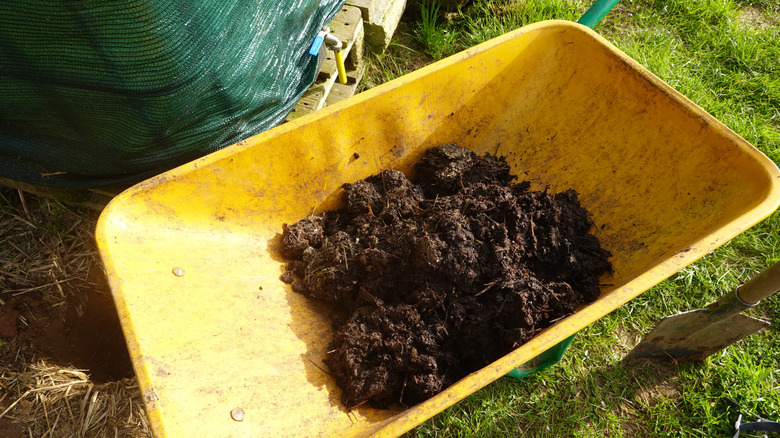
Topdressing — when you spread material like compost on top of your bumpy lawn — will fill in some of the low spots, and it also improves clay soil as the compost seeps into it over time. Topdressing can be done with or without aeration; if done after aeration, some of the topdressing material makes its way into the holes faster. When adding compost, a thin layer goes a long way, as you don't want to smother the lawn. Aim for a layer of 1/4 to 1/2 inch deep over the lawn. A good, fine topdressing compost smells earthy and is free from debris.
For a large area, it's easiest to deposit small piles every few feet across the lawn. Cart the compost around in a wheelbarrow and scoop out a full shovels full for each pile. Rake the compost out in every direction, using pressure to scratch the soil's surface a bit. Keep raking, and when spread thoroughly, the compost will settle down to the ground level, and the grass will stick out through the compost. Water the lawn with a sprinkler or light spray to help the compost soak in. Avoid overwatering, as that could cause the compost to run off, wasting your efforts.