

Keep Birds Away From The Grass Seed On Your Lawn With A Must-Try Trick
We may receive a commission on purchases made from links.
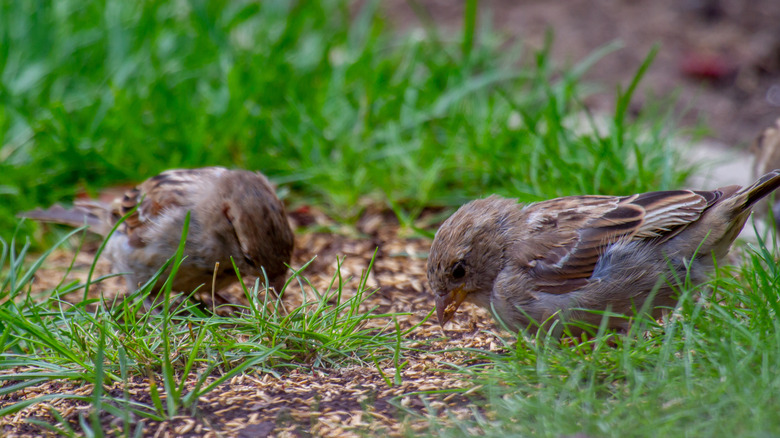
Whether you've just reseeded the entire yard or just a few patches where the grass was sparse, birds always seem to know. It's almost as if they watch you sow grass seed atop the soil and wait for you to leave, or perhaps they have an internal seed-detecting mechanism that guides them to new seed sources in the neighborhood ... even when those seeds aren't intended for bird consumption.
If you'd prefer that your grass seed sprouts rather than serving as a meal for birds, your best bet is to hide it from them. Covering the seed is the easiest way to hide it from birds; it's one of the benefits of placing straw down after seeding a lawn. Straw isn't the only solution, however. Burlap does an even better job of bird-proofing the lawn since the birds can't easily get to seeds covered by this loosely woven fabric. It's also a nice option to keep seeds in place when planting on a slope.
Doves, starlings, sparrows, and finches in particular are expert-level seed scavengers, so that light-colored grass seed dotting your landscape draws them in like an all-you-can-eat buffet sign. Seed-foraging birds are opportunists — as in when they see an opportunity to dine, they take it. Used correctly, burlap can help prevent these birds from consuming all your hard work.
How to use burlap over grass seeds in your yard
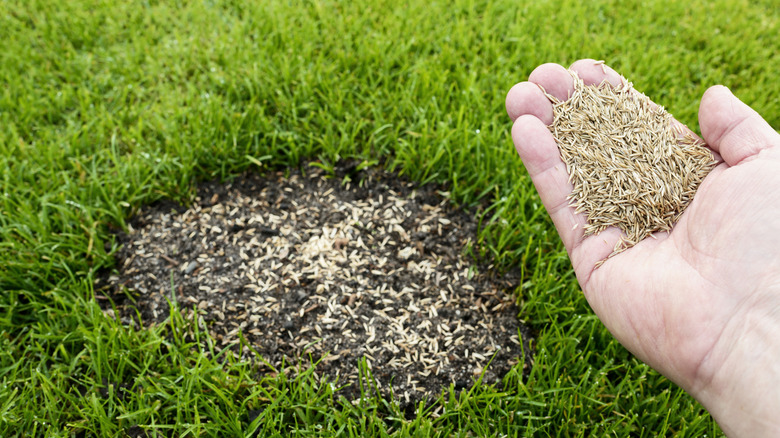
Once you replace dead grass with new seed or add it to cover bare spots, it's time to protect it from birds. Natural burlap, such as a Burloptuous roll, is untreated and suitable for garden use. Cut the burlap into strips slightly longer and wider than the seeded areas. It's okay if one piece doesn't cover the entire area; just cut additional strips and overlap them for complete coverage.
Keep the burlap where it belongs by using garden or landscape staples, stakes, or rocks to hold it in place. For rocks or other bulky weights, don't place them atop the new grass seed or it may not sprout. The burlap should sit loosely enough to give the grass some room to grow. Once the grass starts growing, it'll either lift the burlap a bit or grow between some of the wider holes in it. The material still allows sunlight and water through while also providing a little shade from scorching hot sunny days.
Lift the burlap up from a corner or two after a week or so to check the seeds' progress. In 10 to 12 days, the new grass may be strong and tall enough to remove the burlap. Gently tug at one area at a time to lift it off without pulling up any new grass blades. The weave is loose enough in burlap that the fabric should easily pull away from the ground. While an all-natural burlap eventually decomposes if left in place, removing it allows you to save it for another purpose, such as protecting garden plants from unexpected snow.