

Why You Should Avoid Using Gravel Around Hydrangeas And What To Use Instead
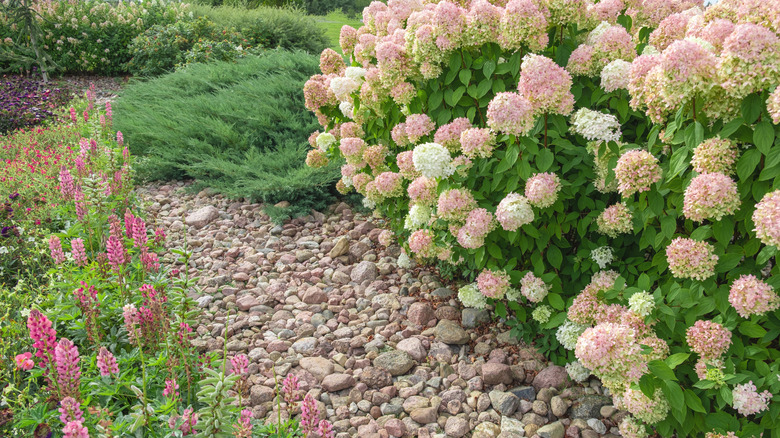
Hydrangeas are a gorgeous addition to any yard. They thrive well when planted in an optimal spot in the garden for hydrangeas that includes morning sun and afternoon shade in hot climates and full sun in cooler climates. These fast-growing plants gain as much as two feet each year with beautiful blooms in pink, purple, blue, and white that last all summer long and into fall. When planting hydrangeas, some gardeners use gravel around the plants to try and improve drainage but this can easily cause problems for your hydrangeas. In fact, gravel might be exactly what you want to avoid if you're aiming for drainage.
Gravel can have the opposite effect on the soil than what is intended, causing water to pool rather than drain, which can lead to root rot. The rocks also heat up during the day while the sun is up and hold that heat, basically cooking the plants even after the sun goes down. This will stress your hydrangeas and cause a multitude of growing problems. It's always best to avoid these common mistakes when using gravel in your landscaping and instead of using it around your plants, use mulch or compost instead. Adding mulch has many benefits: You're improving drainage, preventing weed growth, improving the soil by adding essential nutrients, and it looks beautiful too! If you want to take things another step further, you can really make a statement in your garden by planting hydrangeas with the stunning ground cover of blue fescue grass in or around the mulch. The ornamental grass truly complements the beauty and color of your hydrangea bushes.
Swapping out gravel for mulch provides nutrients and drainage
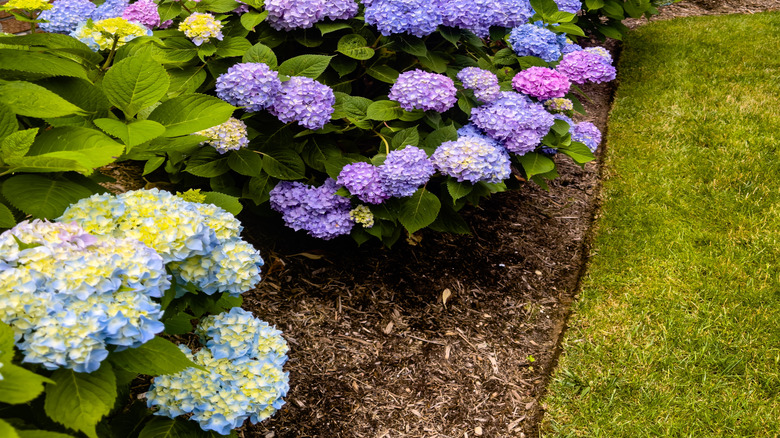
There are many different types of mulch that work well with hydrangeas, providing all the benefits that help your plants thrive. Pine needles are an ideal option to add needed acidity to the soil (hydrangeas like a pH between 4.5 and 7.0). As they break down, they foster excellent growth conditions enhancing the color and vibrancy of the blooms. Use 1 to 2 inches of pine needles around the base leaving 2 to 3 inches around the main stem for proper airflow. Another mulch choice is compost. The benefit to compost is that it provides plenty of vital nutrients to the hydrangeas as it integrates into the soil. Nutrients include phosphorus, nitrogen, and potassium. These nutrients result in vibrant blooms, lush foliage, and better root development.
Straw makes a good mulch for hydrangeas especially if you live in cooler climates, where it offers loose insulation around the plants. A couple inches of straw protects the roots from freezing while promoting air circulation. Straw decomposes slowly, dosing out carbon and other nutrients over time. When using straw, lay down 2-to-3 inches, leaving space around the main stem to avoid problems like rot. Last (but certainly not least) in the mulch lineup is bark, possibly the most popular choice when it comes to hydrangeas. Bark holds moisture well, preventing rapid evaporation which leaves the plant thirsty. This protection is especially important during the hot summer months. Lay down 1 to 2 inches of bark mulch around the plant, keeping clear of the main stem.