

How To Create A More Allergy-Friendly Garden
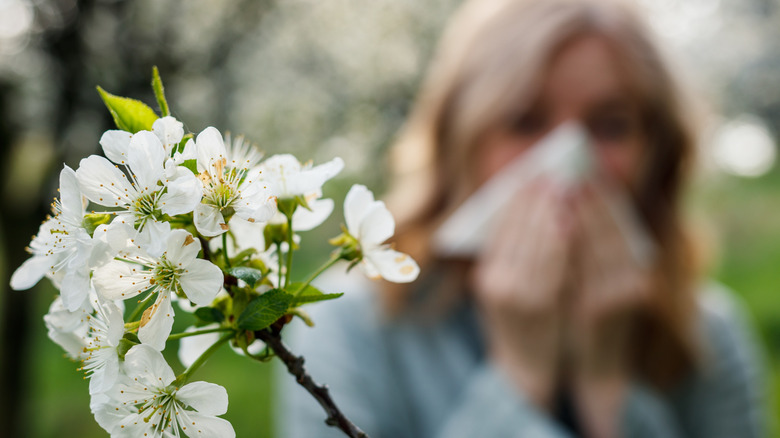
A garden sounds like a lovely idea ... unless you have seasonal or plant allergies. Then, maintaining your yard can be a real nightmare. No matter how much you might want a beautiful area filled with flowers, fruits, and vegetables, it feels impossible. Thankfully, it doesn't have to be. There are plants you can choose that are allergy-friendly and absolutely beautiful. You aren't limited to two or three plants either. There are a wide range of choices, including flowers, shrubs, and more to enjoy. Even some of the popular flower options – like roses, periwinkles, dahlias, and irises — can be added to a garden if you have allergies.
While creating an allergy-friendly garden won't completely eliminate your problems, it will make the outdoors a little less miserable. However, if you're wanting to create such a garden, you can't just throw some plants in your beds and call it good. You need to understand what makes a plant allergy-friendly, so you can avoid the issue in the future. For example, the first thing to know is that the reason for negative reactions isn't usually the flowers or fruits themselves (though it is a possibility). Instead, it's often pollen that's causing allergies, with the scents a plant produces being a close second.
Low pollen is key to an allergy-friendly garden
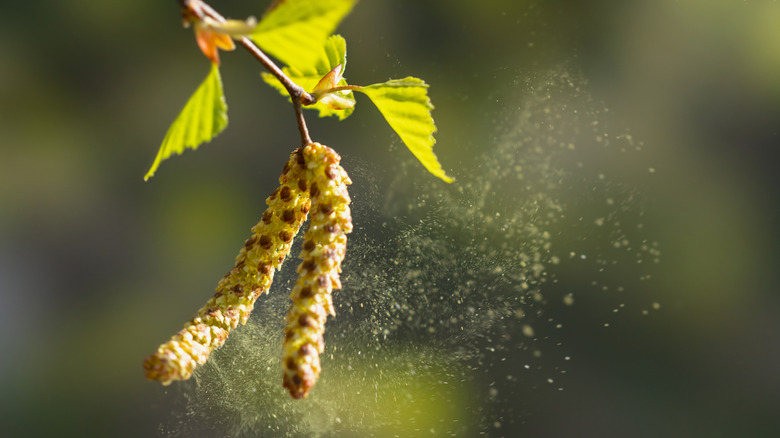
Because pollen is the driving force behind most allergic reactions, you want to look for options that produce low amounts of the yellow, dusty stuff. Some plants just naturally create less, but you can also look at getting female flowers, which tend to have even lower counts. Avoid male and monoecious plants, as they often create more pollen. Additionally, it's generally when pollen is airborne that it causes the most problems, which means plants pollinated via wind and those that have light, dust-like pollen particles are dangerous in terms of allergies. Thicker and stickier pollen — such as you find in flowers pollinated by animals — tend to be a lot safer.
As an example of a few plants you might want to avoid, many trees — including birch, oak, and maple — have pollen spread by the wind and are therefore not great for those with allergies. The same goes for daisies and juniper. Additionally, wisteria may be a simple way to add more privacy to your backyard, but it may end up making you miserable in the long run. Of course, you may be susceptible to only a specific type of plant as well, so it may be worth getting an allergy test to see if there are only a few plants causing you problems. Remember, pollen can come from your neighbors or even down the street.
Examples of allergy-friendly plants
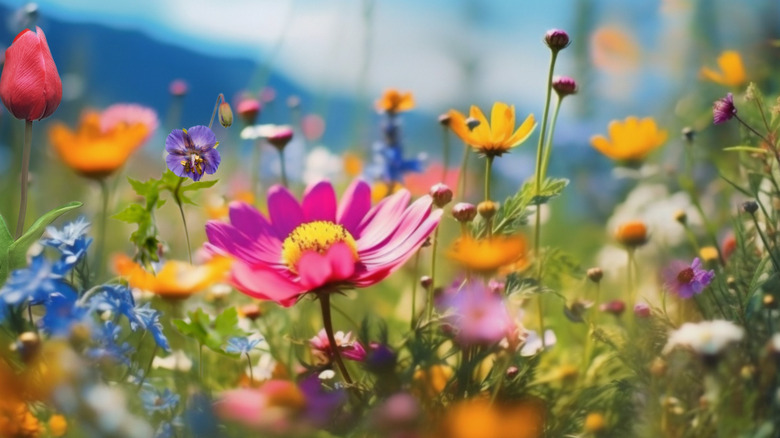
Though it may feel that every plant is out to get you, there are actually quite a few allergy-friendly options. Flowering plants are always a good choice, as many bright and beautiful flowers look that way in order to attract pollinators, as opposed to relying on the wind. Sweet peas, most species of clematis, peonies, daylilies, poppies, and impatiens are all examples of plants that will be a little nicer on your nose than others. Even roses can be a great call, as they produce heavier pollen (which doesn't float through the air), especially cultivated species.
Of course, if fragrance causes you the most issues, you may need to avoid some of the stronger-scented flowers. Instead, rosemary is a great option that has multiple uses in your garden and home, as well as lavender and mint, which is a plant that will repel pests from your garden naturally. Or you could choose plants with lower pollen production, whether spread by animals or wind. Hostas are a good example. Cacti can produce flowers, but they have a pretty low amount of pollen. In addition to these spiky plants, almost any succulent can be a good option, such as aloe vera, which is also a fuss-free plant great for gardening beginners.
Bushes and trees can be allergy-friendly as well, including persimmons and juneberry. Of course, if you want fruit trees, you can also look at getting female ones, as they don't produce as much pollen. For bushes, Cleveland sage, black chokeberry, and Chinese lanterns are just a few examples that'll work well in your allergy-friendly garden.