

Don't Throw Away Leftover Or Broken Bricks — Use Them For Plant Pot Filler
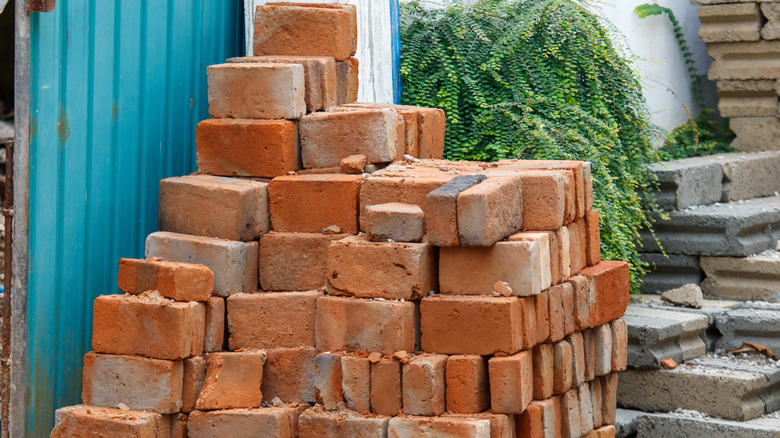
When it comes to bricks for patio and garden projects, it seems like there are always some left over. Maybe that pile of extras somehow even expands when one year blends into the next. Broken pieces are also inevitable, especially if the entire patio is made of brick and laid on the diagonal, with some bricks cut to fit the layout. While you may be tempted to discard those seemingly useless bricks, don't throw them away: Repurpose them as filler for plant pots.
Potted plants are a lovely addition to any porch or patio, but filling them up with potting soil can be expensive. Sometimes, it can also take loads of soil to get short plants to a height where they can be seen above a pot's rim. Bricks and bits of brick can be used as a space filler for the bottom of just about any plant pot, much like this money-saving soil hack for annuals that uses upturned nursery pots as filler. Full bricks add significant weight, but even that comes in handy for certain circumstances.
Using whole bricks as filler is one way to keep a lightweight but large pot from tipping over during strong winds or when a curious animal climbs inside to find out if you've planted one of its favorite snacks. Potted plants that are somewhat tall, such as palms or even a croton, benefit from having that extra heaviness in the base of the pot, as even large wind gusts aren't likely to make them tip. Still, there are some other factors to keep in mind here.
How to use bricks for plant-pot filler
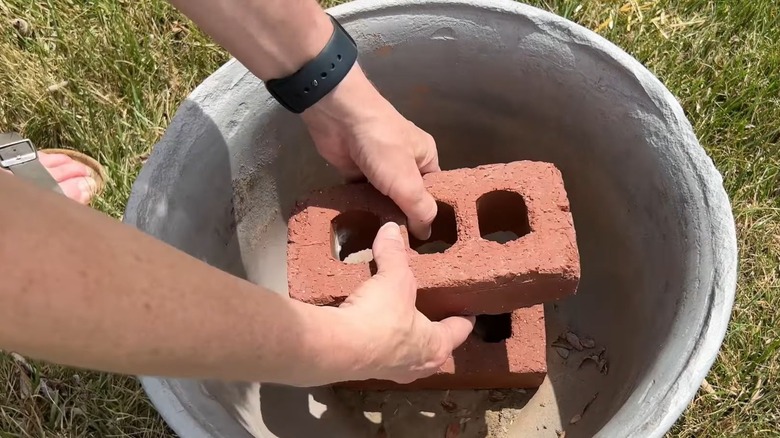
Since the weight of more than one brick adds up quickly (especially considering that dirt also adds weight), it's best to only add multiple bricks to pots that won't be moved or to ones with well-functioning wheels. If a pot doesn't have wheels and you know it'll be heavy, set it where you want it to stay before adding the bricks, potting soil, and plants.
For balance, either stack bricks in the center or equally space them out within the pot. If the pot has drainage holes, ensure they're not blocked by the bricks. Bricks with holes in the center could be positioned to allow water to flow all the way through them and out of the bottom of the pot. Make sure broken bits aren't small enough to get stuck in or come out of the drainage holes. If the brick pieces are somewhat large, water should easily drain around them.
When dealing with oversized planters that still have too much empty space, put plastic bottles in the bottom of the pots around the bricks to take up more volume with virtually no added weight. Upside-down aluminum cans are another plant-pot filler that adds negligible weight. Once you're ready, layer the potting soil atop the filler, then add your favorite plants. Read the stakes that came with the plants to determine the ideal depth for roots, and make sure there's room for a little more than that amount of soil.