

3 Clever Birdhouse Additions That'll Help Keep Pests Out
We may receive a commission on purchases made from links.
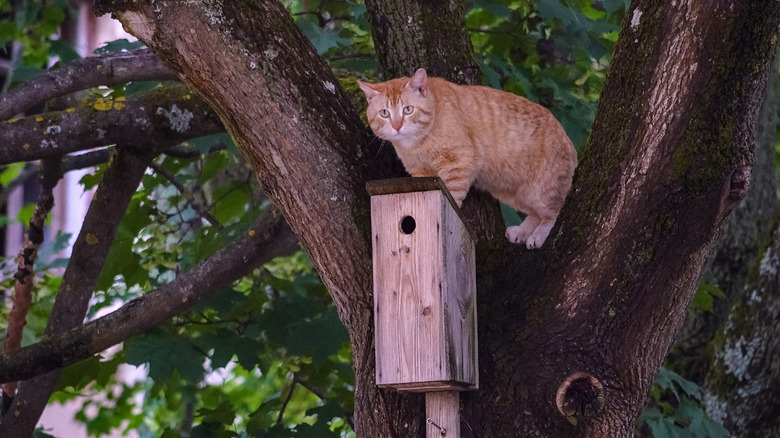
Imagine stepping outside in spring and hearing birdsong or watching as nestlings take their first steps toward flying. While it's important not to disturb any nests you come across, setting up birdhouses can be a great way to attract more birds to your yard and watch as their families grow. Whether you opt for a DIY mosaic birdhouse made from repurposed titles or a store-bought avian home, it turns out most birdhouses aren't predator proof, facing threats from birds, snakes, rodents, and more. As a result, you may want to consider adding some helpful features to make birds feel more at home and keep pests from accessing their nests. Metal barriers and cages help, as do removing features that actually help predators more than your guests.
Did you know you should avoid adding a perch to your birdhouse? Although a common feature, perches can actually make it easier for predators to access the precious nest inside. And while we imagine the residents need the perch to enter and exit, they're actually fine without it. When it comes to keeping your birdhouses a safe place for birds to raise their families, attention to detail is important, especially when it comes to features you add and those you avoid.
Using baffles to keep away climbers
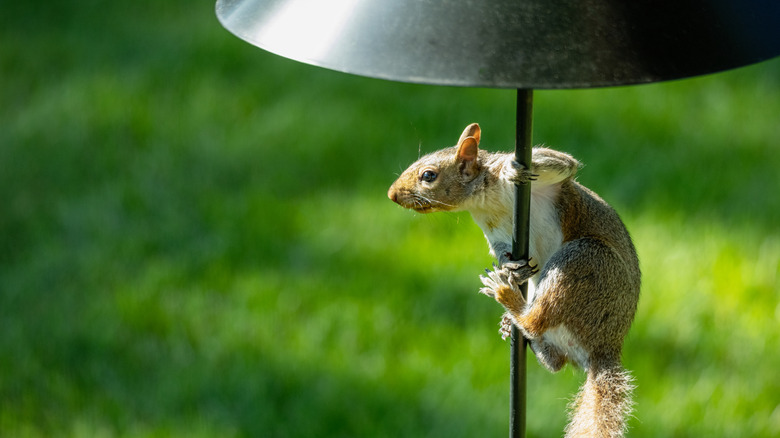
Have you ever tried keeping squirrels away from your bird seed by blocking their access to the feeder? If so, you may be familiar with this tactic. Baffles add a protective shield on both birdhouses and bird feeders. Typically, rather than attaching to the house or feeder itself, baffles are installed on the supporting pole to keep squirrels and other similar animals from climbing up. And, when it comes to your birdhouse specifically, there are two good options to consider.
The first is with a cone baffle, like the Woodlink wrap-around baffle. These baffles get their name from their cone-like shape, where the point attaches closer to the birdhouse and the base flares out away from the main pole. Predators find it challenging to ascend around this protective hood. Smaller cone baffles may only be effective against animals like squirrels, while larger options can also keep raccoons away. However, even larger cone baffles may not be able to deter big snakes.
Instead, you may want to look for a stovepipe baffle for even more effective predator control. While no method is guaranteed to keep all predators away, stovepipe baffles offer a broader range of protection. So long as you choose the right size, these can keep away cats, raccoons, squirrels and rodents, and snakes. However, it's important to choose a baffle that is wide enough around that animals can't easily climb up. Make sure it's slick and not ridged to make it harder to climb, and it should sit flushed to the pole so no snakes can slither inside the baffle.
Protect the nest with a Noel guard
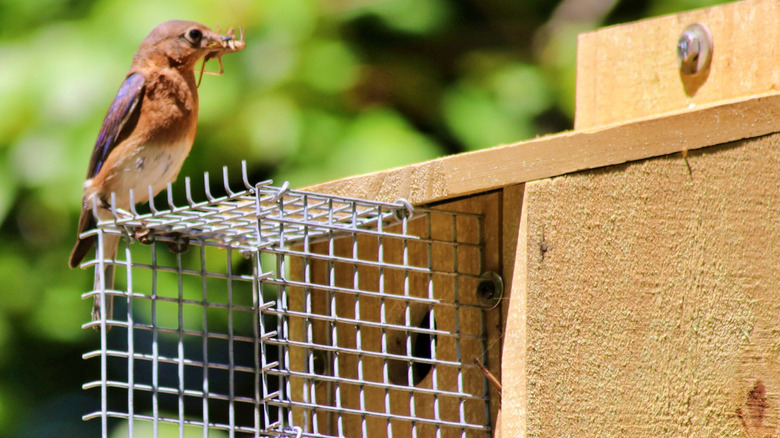
Baffles aren't the only way to keep predators at bay. Instead, pair them with another form of birdhouse predator protection: a Noel guard. Noel guards are mesh cages extending from the front of the birdhouse. Small birds can fly in past the Noel guard to reach the hole of the birdhouse, but predators won't have such an easy time.
These can be a good way to keep larger predators like raccoons, crows, and birds of prey from accessing your birdhouses, but they may not be the most effective choice for snakes, rats, or chipmunks that can bypass the mesh. As a result, pairing your Noel guard with a baffle provides two levels of protection against a range of predators. Aside from predators, Noel guards can be beneficial in other ways too. For instance, since they block off much of the front of the birdhouse, they can help prevent woodpeckers from causing damage.
If you plan on using a Noel guard in areas with roaming livestock, there are a few extra measures to take. This is because horses or other large animals will rub against the Noel guard, using it as a backscratcher. There's a risk of a horse bending the mesh and actually trapping nesting birds either in or out of the birdhouse. Avoid the situation by placing your birdhouse high from the ground — which also helps deter leaping predators — or in an area your livestock can't access.