

Birdhouse Features That'll Help Protect Your Feathered Friends From The Rain
We may receive a commission on purchases made from links.
Backyard birders often go to great lengths to attract more songbirds to their yards and gardens. These efforts typically include hanging bird feeders in safe places for the birds, and birdhouses throughout their property. As a result, many species of birds begin relying on these manmade abodes for their primary shelter and nesting areas. Given the important role it plays in the bird's life, it is important your birdhouse include features to help protect your feathered friends from the rain. In some instances, these features, such as a sloped roof, mimic the design of your house. Others, like holes in the floor, are quite different. However, each of these features serves a purpose when it comes to keeping birds, their nests, and their chicks safe and dry.
You may wonder why it is important for birdhouses to be designed to keep birds dry. After all, birds live in the wild. However, while birds do often get wet, they typically take shelter to avoid becoming saturated from prolonged exposure. Should this happen, soaked feathers and added weight from the absorbed water can make it difficult for birds to take flight and escape predators. Additionally, when birds become too wet, they cannot insulate themselves properly and lose body heat rapidly. This is a particularly dangerous situation for smaller birds and younglings.
With that in mind, it's important to incorporate design features into birdhouses that will help keep birds safe when it rains. If you are DIYing a safe wooden birdhouse, you should incorporate features in the design that help keep birds dry when it rains. When purchasing a birdhouse, look for models that have these features or that can be easily modified to include them.
Roof and floor design can keep birds dry
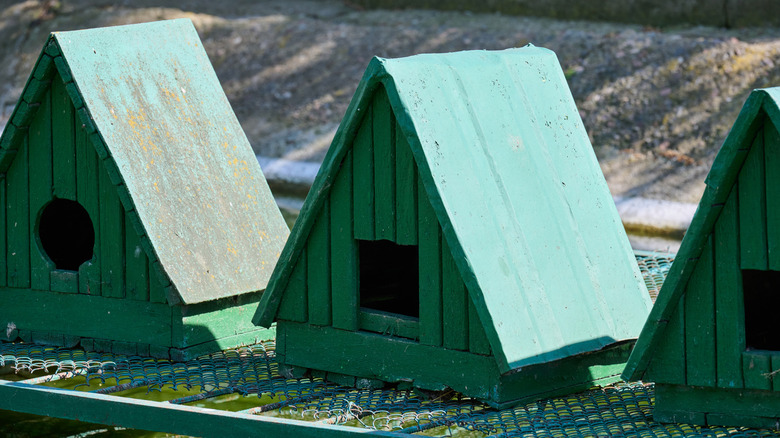
The most critical features for keeping birds dry in a birdhouse have to do with the roof. For starters, a sloped roof will allow water to drain away rather than sit and soak in. Whether the birdhouse has a peaked roof or a single panel, it should be sloped. Additionally, roof panels should overhang the bird house at least 2 inches on all exposed sides. An even longer overhang can be beneficial on the front portion in order to prevent rain from coming in the entrance hole. To help the water flow off the birdhouse, you can also cut grooves along the edges of the overhang.
While the roof is the first line of defense when it comes to keeping birds dry, there are features which should be included in the floor design as well. Having the floor recessed, as opposed to flush with the bottom of the walls, will help prevent water from entering crevices and pooling at the lower portion of the house. This feature can also extend the life of the birdhouse. You should add drain holes to your DIY birdhouse as well, to help drain any water that does find its way into the structure.
Where you place the bird house can also offer some protection. Hanging the birdhouse beneath the overhang of your own house or below a canopy of tree limbs helps shield it from the rain. Just be careful not to place it in a position that give predators easy access. You can also add another layer of protect to your birdhouse from rain (and squirrels and cats) by covering it with a baffle like the Kingsyard weather protective dome.