

How To Determine The Best Direction Your Birdhouse Should Face
Whether you spent hours shopping for the perfect birdhouse or built your own DIY like this mosaic birdhouse using repurposed old tiles, it's an exciting time. All that research and work finally cumulates as you wait with bated breath for a bird to find the tiny house you set out and turn it into a home. As a result, when offering your local feathered friends a place to build their nest, you want to take the time to find the perfect place to install your birdhouse. And part of that includes paying attention to what direction your birdhouse should face. it turns out weather is an important factor.
The key to picking the positioning of your birdhouse is to think about wind patterns, specifically prevailing winds. While prevailing winds only make up a portion of the wind you may experience in your yard, they are generally the strongest and dominate how plants and animals react in a given season or region. Knowing what to expect in your area can be helpful. Essentially, you want to protect your guests from prevailing winds. Then, you can tailor a birdhouse location to other factors, like where the sun is the strongest and what natural protection is available.
Picking the right location and direction for your birdhouse may take some time and research, but it can help create a safe, enjoyable home for your backyard birds. If you're not sure where to start, here's how you can determine prevalent wind patterns in your location and find the right location to hang your birdhouse.
Picking the right location for your birdhouse
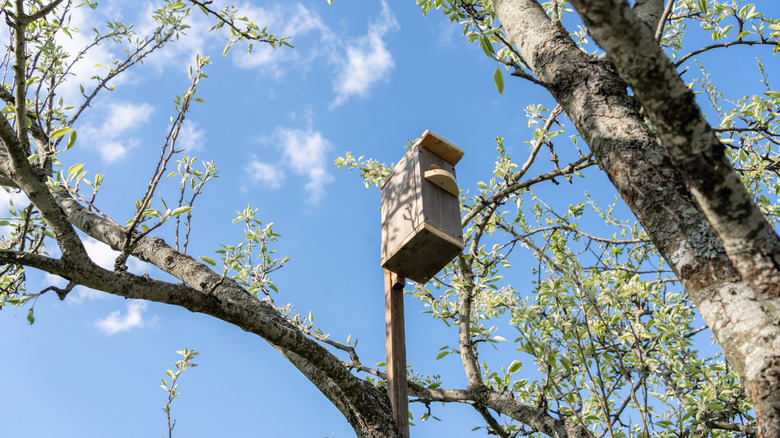
When you're picking the perfect spot for your birdhouse, you want to place it away from the prevailing (strongest) winds, as well as strong afternoon sunlight. This provides birds more safety from storms, heavy winds, harsh light, and other poor conditions that may make raising a family of fledglings difficult. However, depending on where you are located, rough weather can come from many directions, and some experienced birdwatchers have luck with their houses regardless of direction. Still, taking this extra step when possible can be beneficial.
To determine the dominant wind direction in your area, one of the easiest routes to take is checking with the weather app. However, you can also take a more hands-on approach by walking outside and checking what direction the wind is blowing periodically. Remember, though, that a "westerly" wind blows from west to east, not towards the west. Once you've decided where the wind blows hardest, you want to place your birdhouse in the opposite direction. For example (although your specific setup will vary based on where you live), the New Jersey Audubon recommends that the entry hole face south-southeast.
Researching wind patterns and determining the best direction your birdhouse should face is only one step in providing a safe home for your feathered friends. There are additional measures, such as avoiding adding nesting materials to your birdhouses. Although this may seem helpful, it can actually put more work on your backyard birds, many of which may be meticulous builders with a vision already in mind depending on their species. You can also take the steps to choose a well-designed birdhouse without a perch. Unfortunately, perches make it easier for predators to access the nesting box.