

Try This DIY Rooting Hormone To Help Your Garden's Seedlings Grow
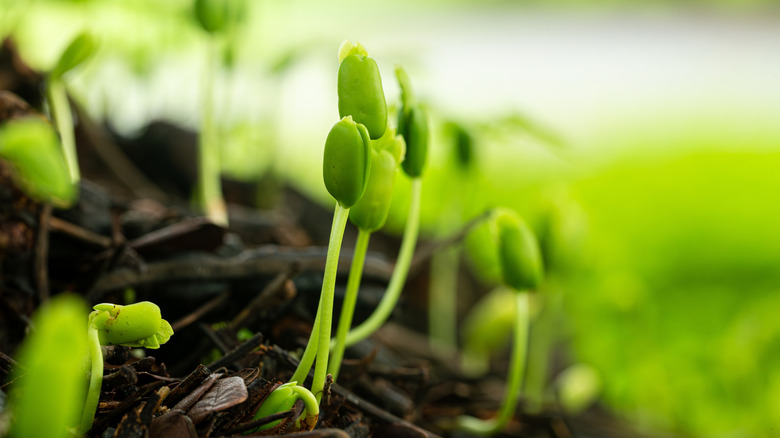
Generally speaking, gardening is a pursuit that requires patience. Though a garden can go from pitiful to bountiful in a few months, most of the magic doesn't happen overnight. That said, there are a few things you can try to speed up the process. Treating certain plants' seeds with vinegar can help them germinate more rapidly. Keeping seeds warm is a crucial step that facilitates fast sprouting and strong growth. Another trick is giving cuttings, transplants, or seedlings a dose of rooting hormone. Though you can buy lab-made hormone gels and powders for this purpose, making a rooting liquid at home is easy and costs next to nothing. All you need is water and fresh stems from a willow tree (Salix spp.).
In addition to helping cuttings form roots more rapidly, a rooting hormone can give hard-to-propagate plants a nudge. According to Michigan State University Extension, finicky rooters such as dahlias and heliotropes respond especially well to auxin, a type of rooting hormone that tells plant cells to divide and grow longer. Slow-rooting succulents and ornamental plants with woody stems — roses, for example — tend to benefit from this hormone as well. Willow foliage assists the rooting process because it's rich in auxin, which can be extracted through soaking or boiling. Dipping a range of cuttings in the auxin-infused liquid can supercharge root development, or you can dilute the liquid and feed it to seedlings to reduce transplant shock. You can even give it to mature plants to encourage them to grow more roots. This liquid is often called willow water or willow tea.
How to make willow water rooting liquid
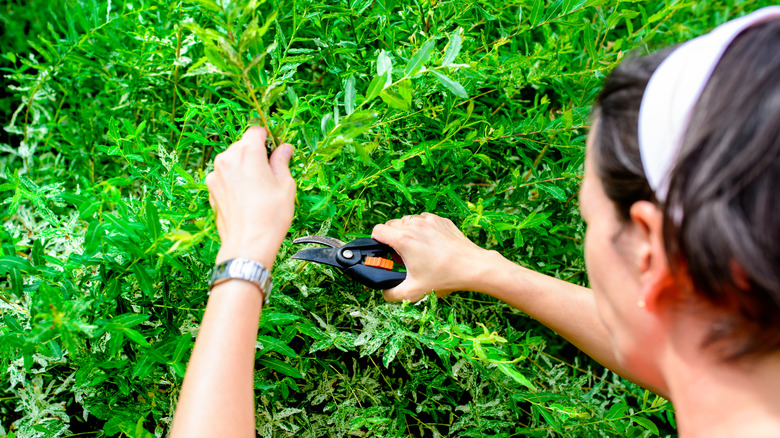
To succeed at making rooting liquid from willow foliage, you need to collect cuttings from the right parts of the plant. Make sure to snip the newest stems you can find, ideally green shoots and twigs that are less than a year old. The best time to do this is early in the spring. Gather enough plant material to fill a jar or two. Then, strip away the leaves and cut the stems into 1-inch pieces. Some gardeners also crush them to help release the auxin.
Your next step is soaking or boiling. Fill most of a jar with stem pieces and cover them with water. If you use room-temperature water, the mixture will need to sit for a week or so. If you use boiling water, let the stems steep in it overnight. After soaking or steeping is complete, strain the liquid into another container. Want to make another garden-boosting liquid at the same time? Let a scoop of rice ferment in water to create a pest repellant you can spray on your plants.
Ready to use your DIY rooting liquid? The amount of auxin needed varies from species to species, so be sure to study the hormone needs of the plants you're growing and dilute the liquid if necessary. If in doubt, add extra water to your DIY rooting hormone, especially if you're applying it to herbs, grasses, or other soft-stemmed plants. They usually need the least auxin to grow healthy roots. Hardwood cuttings tend to need the most.