

Be Sure To Check One Thing Before Putting Fresh Hummingbird Nectar In Your Feeder
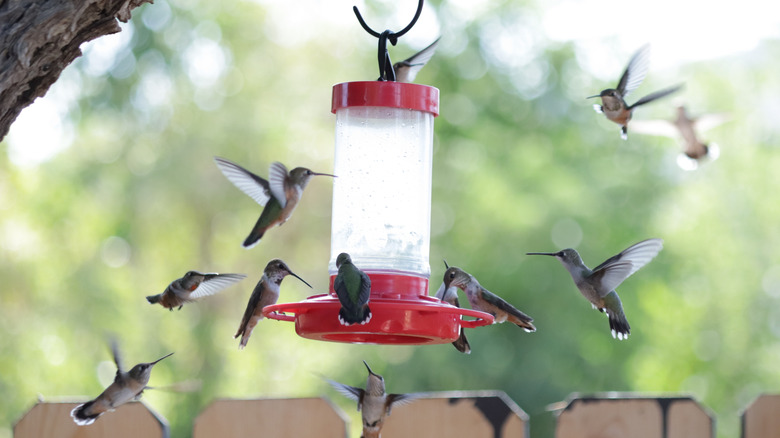
It's always fun when hummingbirds decide to make your yard or garden a regular place to visit, fuel up, and maybe even take a dip or a drink. There are many ways to attract hummingbirds and make your garden a place they enjoy spending time. Making sure the hummingbirds are cool and hydrated during the summer is one way to keep these little fliers happy. Providing food sources like these 13 stunning plants that will attract hummingbirds to your garden will also keep them coming back especially if you are consistently offering them something to eat. Nectar is a favorite additional food source that hummingbirds really enjoy. You can easily DIY the perfect homemade nectar for hummingbirds with these ingredients, sugar and water, and not have to worry about buying store bought nectar which can have additives and coloring. When making your own hummingbird nectar for your feeders, there is one thing you need to check before filling the feeders and that is the temperature of the nectar.
If the feeders have run out of nectar before you make any more, you may feel rushed to get the fresh nectar made and into the feeders as soon as it's dissolved so your little bird friends can go back to enjoying their boost of energy. Pouring hot nectar into the bird feeders can not only damage your feeders, but it can also harm the hummingbirds by negatively affecting their metabolic systems and even causing their tongues to have a burning sensation. Nectar needs to be room temperature before you pour it into the feeders, so allowing it to cool off properly will ensure that it is the right temperature for the birds.
The perfect temperature for your hummingbird nectar
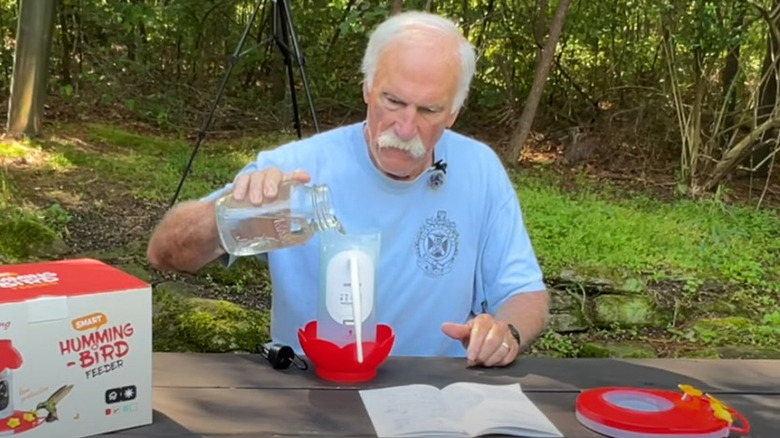
Once you have made a batch of sugar water for your hummingbirds, it is imperative that you allow it to cool off to room temperature. This could take an hour or so but if you check it periodically, once it gets to room temperature, you can add it to the feeders without causing harm to the birds or the feeders. In addition to making sure the fresh nectar has cooled off sufficiently before adding it to the feeders, you should also be aware that if the bird feeders are in the sun, the nectar can heat up to unhealthy temperatures that will contaminate the nectar and make it dangerous for the birds. When it is above 90 degrees outdoors, you will want to change the nectar in your feeders every two days or so.
Hot temperatures outdoors can cause the nectar to become contaminated with bacteria and mold which can make your bird friends really sick. Get into the habit of checking the clarity of your nectar. If it tastes bitter or is cloudy it needs to be changed. Make sure to clean the hummingbird feeder completely inside and out before adding the fresh, room temperature nectar to the feeders. If you have some stored in the fridge, letting it warm up to room temperature is a good idea as well, so the hummingbirds don't have to expend a lot of energy trying to warm the liquid's temperature.