

The Best Method For Preparing Your Lawn Mower Battery For Long-Term Storage
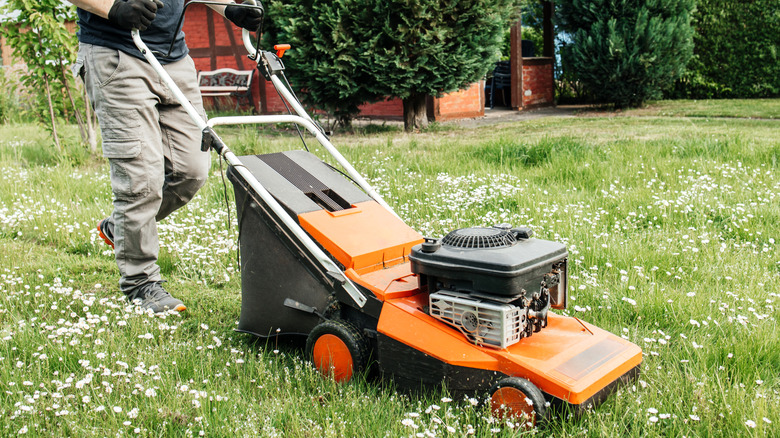
We may receive a commission on purchases made from links.
Proper battery care is essential for any lawn mower, whether you've chosen an electric model or a gas-powered ride-on with an electric start. This is especially true if you plan on storing your machine more than a few weeks. Neglecting your mower's battery can lead to it not working when you need it most, creating a surefire way to secretly ruin your lawn by disrupting your lawn-care routine.
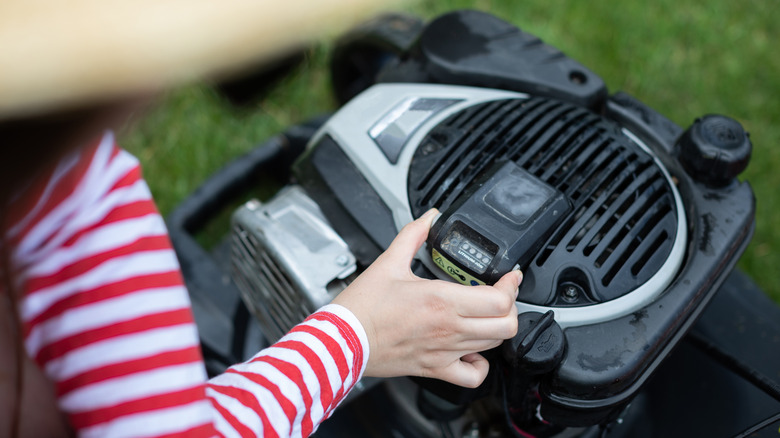
For many homeowners, a battery-powered model is the perfect lawn mower choice for their grass because it requires little maintenance — especially since there is no gasoline to buy or oil to change. Simply keep your mower's battery in good working order, and it should start quickly. A critical factor in maintaining your mower battery is simply removing it after every use and before extended storage somewhere in your home. That's because sheds and garages (where mowers are typically stored) can be subject to battery-damaging moisture and extreme heat or cold. Luckily, many electric mowers are powered by a lithium-ion battery, which should slide out easily from their designated compartments. Just be sure to close the door to the battery terminal after removing your battery so this essential component won't get exposed to moisture or debris. Head indoors and use the charger that came with your mower to power up your battery. (Most chargers are designed for indoor use only.) Then choose a cool, dry, temperature-controlled location for safekeeping your battery while it's not in use (don't store it where it's hot, like near heater vent or hot water tank — that can kill the battery). Store the battery separately from its charger to prevent accidental overcharging, which can weaken its strength.
How to optimally store your mower's battery
Unless you have a temperature-controlled garage or shed, it's also wise to remove the battery from your gas-powered, ride-on mower before storing itfor the long-term, as heat, cold, or moisture can damage it. Always begin by parking your mower in a level spot and consult your owner's manual for any specific guidance it may offer. Next, turn off your mower's engine and remove the ignition key and spark plugs to prevent accidental starts.
When disconnecting the battery, wear protective gear, like safety glasses and gloves, as some mower batteries can emit harmful gases and cause serious injury. Always disconnect the negative terminal (black cable) first, followed by the positive one (red cable) to avoid electric shock — electrical hazards are among the most common sneaky dangers of gardening to be aware of. To further maintain your battery, use a battery-terminal wire brush, like the Schumacher BAF-BI battery terminal cleaning brush and a cleaning solution to remove any corrosion.
Ride-on mowers often have a lead-acid battery, which can lose its charge over time due to a process called self-discharge. To prevent this and avoid permanent damage, periodically charge your battery every month or two while storing it. Or consider investing in something like the Noco Genius-2 smart battery trickle charger that slowly, consistently keeps your battery charged. Plug the charger or minder into an indoor outlet in a dry, well-ventilated, temperature-controlled room (most mower battery chargers aren't designed for outdoor use) and attach it to your battery. If not using a minder, be sure to remove the battery from the charger once the battery is fully charged. These steps require extra work, but they'll pay off in the long run since your battery will likely work better and last longer.