

The Unexpected Addition That May Just Save Your Waterlogged Garden
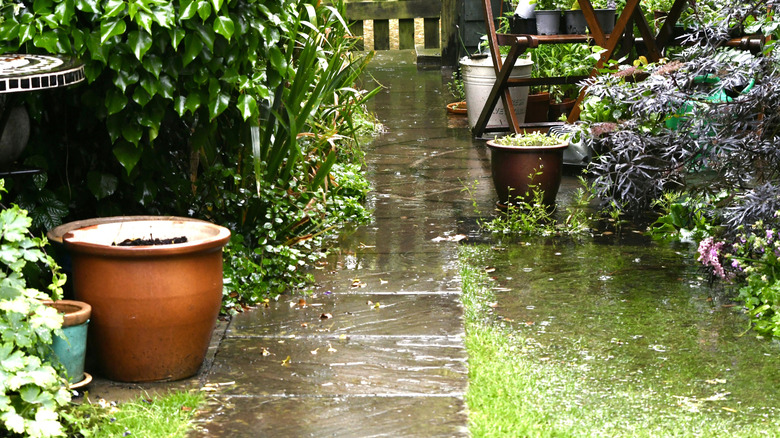
While every garden needs water, too much can become an issue. When water pools in certain areas of the garden or lawn and it stays wet for far too long, problems could arise for the plants. Water that doesn't drain properly creates issues such as root rot, when the submerged plant roots can't get the oxygen they need. Pathogens could also develop in the soil, and plants won't be able to get all of the nutrients they need from waterlogged earth. If the same area of the garden gets waterlogged every time there is a heavy rain, it's a sign of poor drainage. Poor drainage often means the soil is compacted and compressed too much for water to pass through it easily. It could also mean there's an abundance of clay in the soil, which inhibits drainage.
Helping your garden's soil drain better could be as simple as adding sand, but not just any sand, horticultural sharp sand. It is much coarser than sand found on a beach or used in a sandbox. When mixed into soil, horticultural sharp sand creates tiny air pockets that supply oxygen to plant roots. Those gaps also allow water to drain, eliminating those unwanted pools in the garden. Sand is an amendment that corrects a clay-based soil, too.
How to use horticultural sharp sand in the garden
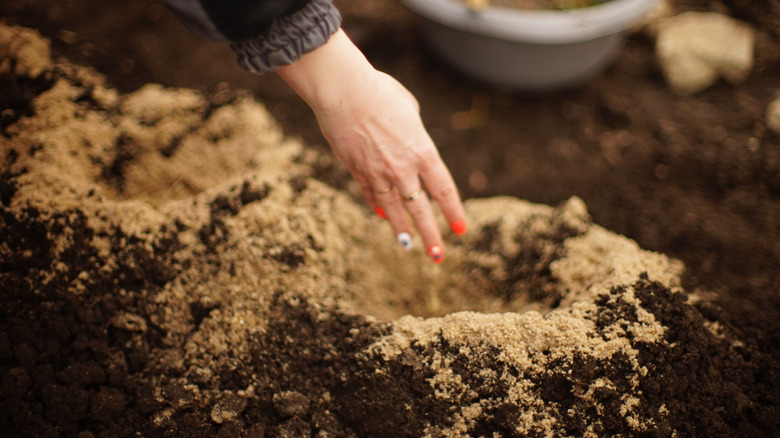
Horticultural sharp sand is different than regular sharp sand in that doesn't have lime and mineral salts in it that could change the pH of your garden soil. Otherwise, the two are fairly similar: They're both coarse, improve drainage, and won't clump like finer sand. Horticultural sharp sand is often the best option for gardens and an important first step in amending soil before planting seedlings outdoors.
To mix horticultural sharp sand into your garden, aim for a mixture of 1 part sand to 4 parts soil. Look for the areas where water pools after heavy rain, as these are the places where the soil needs the most help for sufficient drainage. Spread a layer of sand atop the soil, then mix it in to about 9 inches deep. If the garden has a heavy clay soil, layer horticultural sharp sand 3 to 4 inches deep atop the soil, then use a tiller or shovel to mix it to a depth of 9 to 10 inches.
If you prefer a raised bed over an in-ground garden, horticultural sand helps there, too. It can be mixed in with the soil before you even fill your garden structure, giving you complete control over soil and therefore optimal growing conditions. To help your raised garden bed thrive, use about half topsoil, slightly less than half compost, with a little horticultural sand mixed in for even better drainage.