

Nesting Materials You Should Avoid Putting In Your Birdhouse
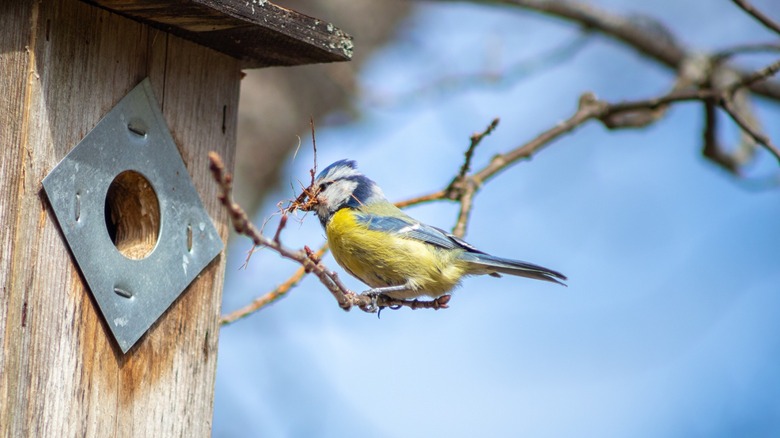
Birds use a lot of random materials to fill their nests. Looking at a nest, you could get a snapshot of all the places that bird has visited. It's common practice for humans, especially those fond of birding, to leave out little bits of fluff and stuff for birds to take back to their nests. These little offerings are a simple hack to get birds to flock to your yard. Despite our desire to be helpful and included, we should never forget that human intervention can often prove harmful to wildlife. There are several nesting materials that it's best to avoid. These are materials that are never recommended for placement inside of birdhouses, like plastic strips and dryer lint. Even though you may find them suggested by some sources, there are important reasons why certain materials should never be left for the birds.
Of course, it's important to bear in mind that placing too much of any nesting material directly in a birdhouse is not advised. It's alright to provide some supplies for birds, but for the most part they appreciate choosing their own supplies and getting it just right for their soon-to-hatch babies. Leaving out supplies somewhere they can find it is a good idea., like stuffed inside an inverted and suspended kitchen whisk. So, remember to avoid these materials and strive to provide natural items like twigs, moss, mud, and greenery.
Keep string and yarn away from birds
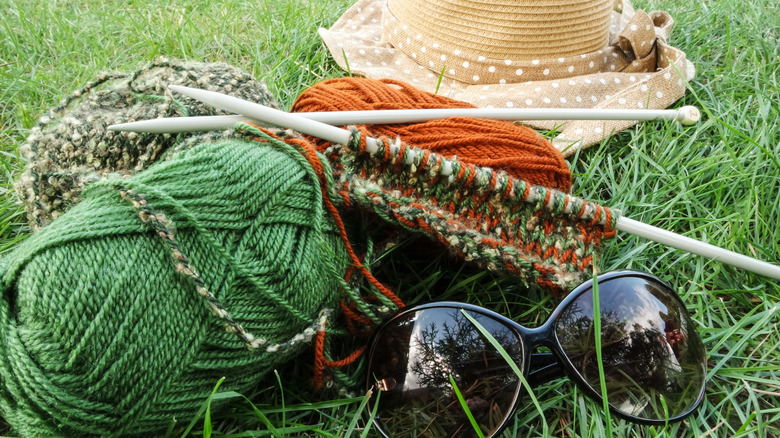
Any type of material that can tangle in the delicate legs of baby birds should be avoided. That means that string, yarn, even strips of old cloth should be discarded instead of repurposed for bird nests. It's likely that a baby bird will not even realize that the yarn or string has tangled around it. As they mature, it will hinder their growth and potentially cut off circulation in a wing or leg.
The further issue with yarn, string, and cloth is the harsh dyes and artificial fibers present. Dyes in yarn and fabric can bleed, exposing birds to potentially harmful chemicals. And artificial fibers are less likely to break down quickly like natural fibers do. If you can provide natural fibers, like jute or cotton, that have never been dyed, then it might be safe to offer yarn, string, and cloth. However, make sure that any long pieces are cut down to avoid tangling in tiny legs.
Don't promote the use of plastic and synthetic materials
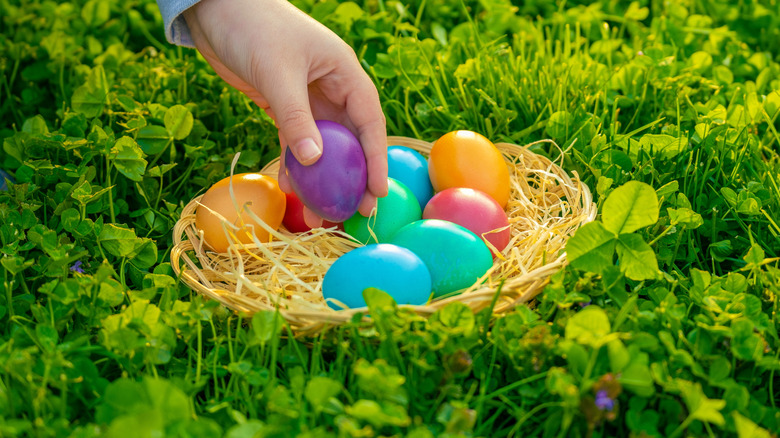
Although you might think that layers of Easter basket grass or tinsel will provide insulation or warmth, you should stay away from synthetic materials for bird nests. If you pay attention when you're cleaning out birdhouses at the end of the season or looking at nests in trees, you might see plastics and cellophane. But just because birds will use it doesn't mean that it can't be harmful.
Tinsel and aluminum foil are other common items that end up in bird nests. However, it's best to not encourage birds to use them. Tinsel is too thin and can tangle in the bird's legs like a string. Plus, it's not a natural product and doesn't have a lot of utility as a nesting material. Synthetic materials, including plastics, do not break down quickly, nor do they stretch the way natural fibers do. It's better to DIY an adorable birdhouse by reusing an extra plastic nursery pot instead of offering plastic as nesting material.
Just throw away pet fur and human hair
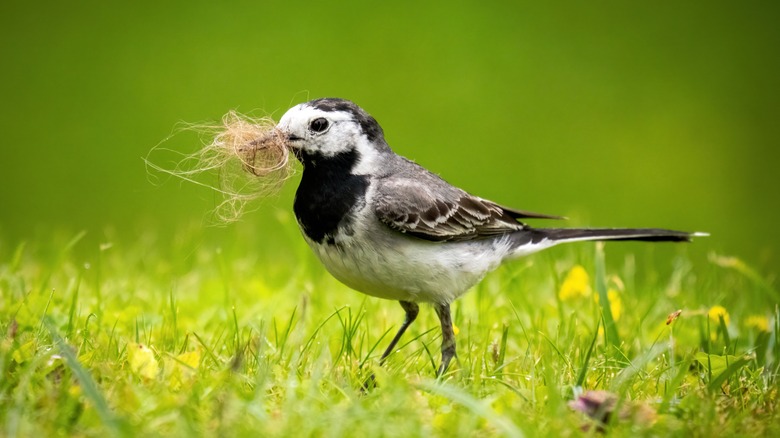
There are some who will recommend pet fur as a great option for bird nest material. It's a natural material that is likely to keep nestlings warm and dry, depending on the type of animal it's from. However, it's often better to just throw away pet fur instead of saving it for nesting material. Pet fur, especially on domestic dogs and cats, is often treated with chemical flea and tick preventative. Even if you think that it's been a while since your pets have been treated, these chemicals linger on the fur. The potential harm is too great a risk. If you absolutely never use chemicals on your pets, their fur can be a useful and insulating option for nesting material.
Human hair is just as bad for birds, if not worse. Human hair is often treated with chemicals and substances that can be detrimental for bird health. Plus, the hair people want to use for nesting material is long and thin, which will just tangle in the bird's feet. Another factor that can be harmful to birds is the unusual strength of human hair. When it becomes wrapped around a baby bird, it can easily injure it. Plus, hair can be eaten by curious, unknowing little birds, becoming a choking hazard.
Dryer lint is a subpar nesting material
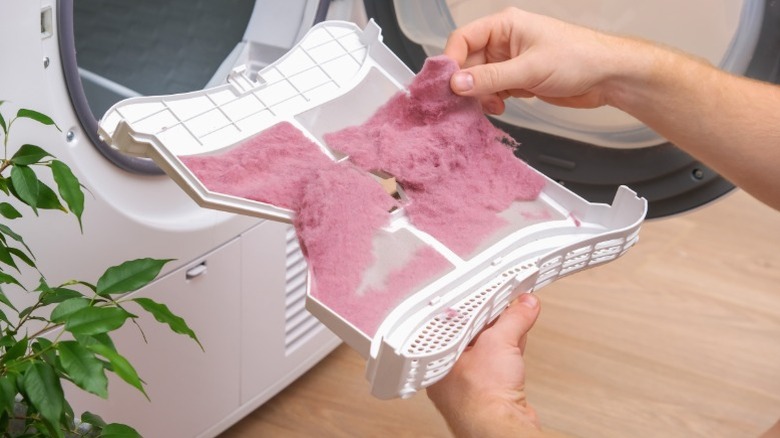
Another material that frequently gets tossed into bird's nests is dryer lint. At first glance, it's a fluffy, warm option that can turn a birdhouse into a cozy space. However, dryer lint becomes a mess when it gets wet. Instead of being cohesive, lint falls apart. The result is a wet, squishy mess that doesn't dry well and won't keep birds warm, and may encourage mold or mildew. Once it gets wet from the elements, a bird nest using dryer lint also loses its structural integrity. Even though you should add drainage holes in your DIY birdhouse to avoid accumulated water, it won't prevent moisture damaging dryer lint.
Dryer lint is also not free of dangerous chemicals. The lingering laundry detergent and perfumes present in dryer lint can have unknown effects on birds. It might also contain any number of tiny microplastics that are invisible to the naked eye. There's also an issue with strongly-scented dryer lint. Lingering odors can attract the attention of predators straight to birdhouses.