

12 Sweet-Smelling Flowers That Will Make Your Garden Smell Like Heaven
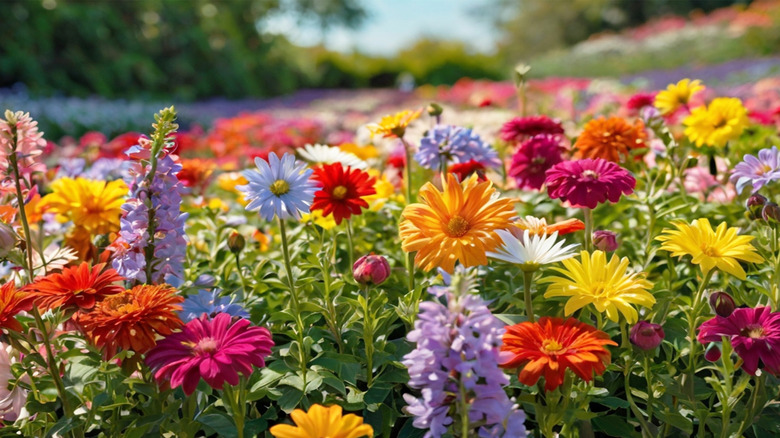
Beginner gardeners ask a lot of questions. What kinds of tools do I absolutely need? Should I use raised beds or in ground garden beds? Important questions both, but one of the biggest and most often asked questions has to be: what should I plant? The answer is not necessarily as straightforward as many would like it to be. That is because what you should plant depends on a lot of different things, such as climate, soil health, plot size and more. However, the best reason to plant something is because you like them. This is especially true when it comes to flowers.
Flower gardens can serve multiple purposes. The plants can draw beneficial pollinators like butterflies and bees to your yard. They can bring color and vibrancy to the garden. But one of the main reasons people plant flowers is because they smell so nice. If you've ever wondered what kind of flowers you should be planting for maximum fragrance, read further.
Not all flowers come with a scent. However, the ones that do, offer up their fragrance in abundance. From roses to lavender, to honeysuckle and even rosemary, the following 12 flowers are sweet-smelling varieties that will make your garden smell like absolute heaven. Oh, and they look exceptionally pretty too.
Roses
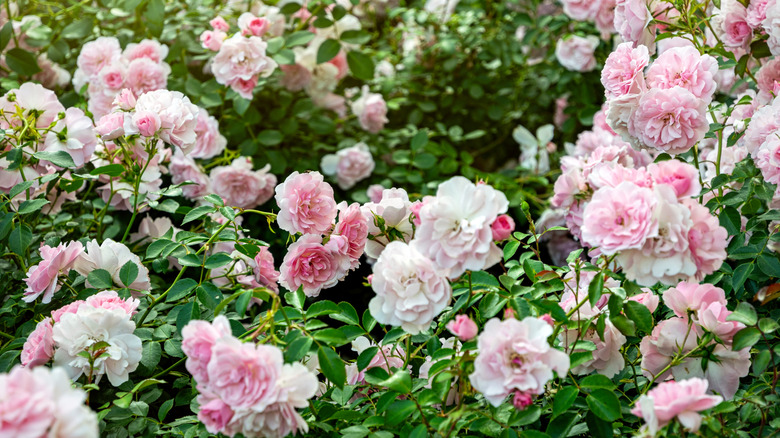
We had to start with roses (Rosa spp). Anyone who wants a fragrant flower garden needs to grow roses. They are considered by many to be the penultimate flower. This popularity stems not only from their abundant beauty, vibrant colors, and adaptability to a wide range of climates (depending on the variety, roses can survive in almost all the USDA hardiness zones), but also how they smell. The scent of a rose is considered to be one of the most recognizable and beloved scents in the world, and is one you can very easily bring to your garden. As Shakespeare wrote, "A rose, by any other name, would smell as sweet."
Roses are typically split up into three categories: species roses, modern roses, and old garden roses. The latter is going to provide you with the most fragrance. Old garden roses are the ones that we most commonly associate with smelling "rose-y." It's that sweet, fresh, and slightly woody fragrance everyone immediately recognizes as a rose. However, this isn't the only scent they come with.
Other smells associated with roses include tea leaves, myrrh, citrus, anise, licorice spice, raspberry, apricots, lemons, and clover. The best way to experience the scent of your roses is to walk in your garden every day while they are in bloom. A good rose bloom will last four about two weeks, with some plants cycling their blooms from late spring to early fall. This gives you plenty of time to admire your roses before they go dormant. And don't forget to give your roses some companion plants to add to their vitality.
Lavender
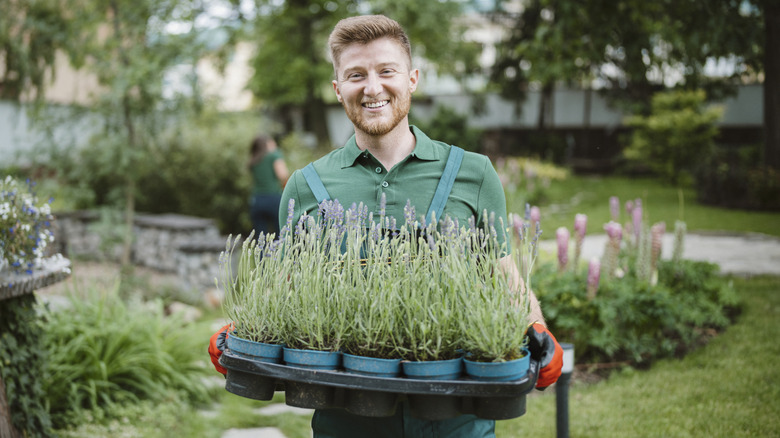
Like roses, lavender (Lavandula spp) has one of the most recognizable scents in the entire world, though not everyone is a fan. Known for its calming and pest-repelling capabilities, this stunning purple perennial is a vibrant, stalky plant that thrives in numerous different conditions, from hardiness zones 5 through 9 for most species. When planted in well-drained, gravely soil with a neutral pH, and provided enough sunshine, lavender will thrive in your garden. Its distinctive, small purple flowers come in light and dark shades, and attract various kinds of beneficial, pollinating insects to your garden.
Despite being a member of the mint family, lavender doesn't come with the cooling, almost peppery smell we associate with mint. Instead, lavender is a mixture of fragrances that range from sweet and woody, to herbaceous and earthy. While most people love it, some people react negatively, and may even feel nauseous, which may be genetic or tied into a memory.
There are over 40 different species of lavender, but gardeners are most familiar with two types: English and French. English lavender is the stronger of the two, with a more pronounced, sweet scent that carries throughout the garden. French lavender has an earthier scent that is more often compared to rosemary. It's not nearly as strong, but could be preferable to those with more sensitive noses. It's also worth noting that while English lavender will withstand cold conditions better, French lavender gives you flowers over more of the season.
Bee Balm
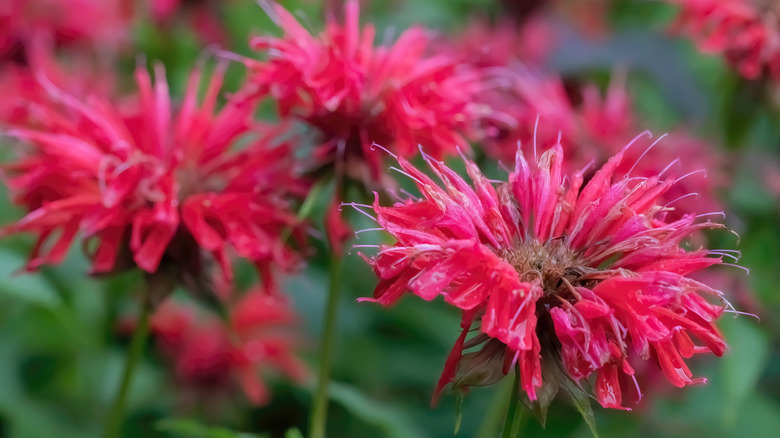
Bee balm (Monarda spp) is one of those excellently colored, hardy perennials you can plant once in your garden and they'll never leave. With blooms extending four feet above the lower foliage, bee balm makes a pronounced statement. Among the most vibrantly colorful perennials — coming in shades of red, purple, white, and pink — bee balm does the work of bringing honey bees buzzing to your yard, benefitting the overall health of your garden. They're hardy in Zones 3 through 9.
But it's not just the vibrancy of the colors that draws the likes of hummingbirds to your stunning bee balm — it's the scent as well. Bee balm has a scent that is almost reminiscent of bergamot citrus. The resemblance is so strong, in fact, that the two plants are very often mistaken for one another. However, bee balm's citrusy notes are slightly more muted, and often come accompanied with stronger notes of mint, and sometimes oregano.
One fun historical fact is that American colonists used to use dehydrated bee balm foliage to make a lightly scented tea. This was done when British black tea was unavailable or unaffordable. You can do exactly the same as they did, and have a lovely cup of your own Oswego Tea, as it was called, right from your own flower garden.
Geranium
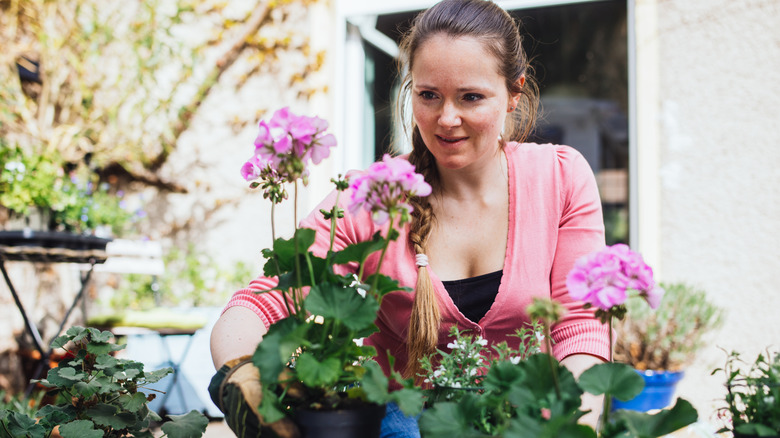
Geranium is an interesting flower to put on this list. It is interesting mostly because most of the species in this family don't have noticeable scents. In fact, only geraniums from the genus Pelargonium are ones with any noticeable scent. This refers mostly to what are known as scented leaf geraniums. Keep in mind, these are not true geraniums in the sense that they do not come with the recognizable blooms we all recognize as geranium. However, if you are looking to get that noticeable geranium scent in your garden, look for ones in the Pelargonium genus.
It's important to note, especially with scented leaf geranium, that the scent might not be noticeable right away. You need to gently agitate the leaves in order to get a scent emitted. For a sample, pinch a leaf off and rub it between your palms like a mint leaf. When you do, you'll receive a wonderfully complex fragrance that hints of several other types of plants, including, but not limited to, citrus, green apple, rose, mint, citronella, camphor, and sage.
While the scented leaf geranium does contain some small blooms, it is mostly a foliage plant. If you're looking for a geranium that has a more sweet and heavily floral scent, look for a rose geranium. They have larger, more pronounced flowers that will add an additional layer of color and texture to your garden.
Honeysuckle
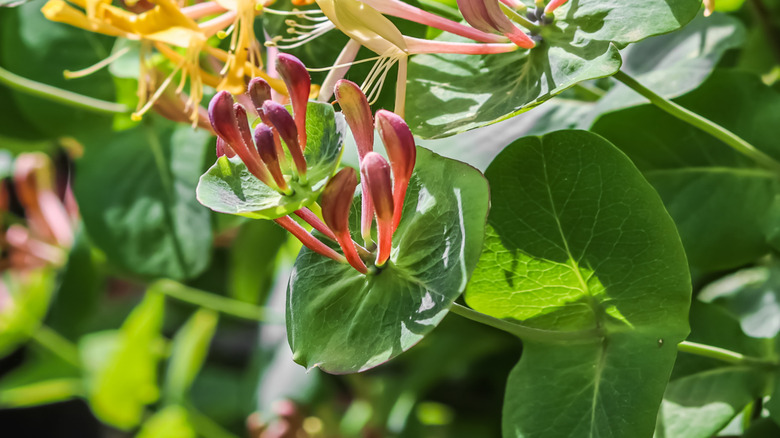
When it comes to climbing plants, you do want to think twice before planting them next to your house. They can do a certain amount of damage to a home, which is why most climbing plants should be kept in check utilizing zip ties and some kind of arbor. That said, climbing plants do add a lovely height to your flower garden, and can make potentially drab garden structures come to life with blossoms and foliage. No plant does this better than honeysuckle (Lonicera spp).
With flower heads resembling multicolored crowns, honeysuckle is another hardy, easy-to-grow perennial. They thrive in hardiness zones 4 through 9 with plenty of sun and partial shade. However, more than its obvious beauty, honeysuckle is beloved because of its unique scent that seems to hang in the air on a warm summer day.
Obvious notes of honey and vanilla hit your nose when you walk past honeysuckle. It is not an overpoweringly sweet scent, but one that is delightfully subtle in its approach. Like a gentle wave, honeysuckle merely stops to say hello before moving on. But honeysuckle isn't just limited to summer. If you plant the variety known as 'Winter Beauty', you get wonderful small flowers that emit a beautiful scent in the often bleak months of January through March.
Peonies
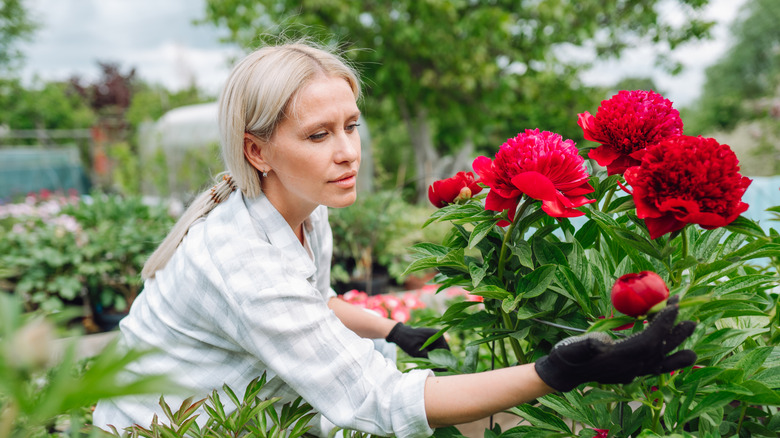
One of the consistent themes you'll notice on this list is that all of the flowers highlighted are perennials. These are an excellent choice for any garden, because they continue to bloom year after year without replanting them. Known for its striking array of colors and complex blossom structure, peonies are highly sought after, and are a perennial (pun intended) favorite amongst gardeners.
Much like the other flowers on this list, The peony (Paeonia spp) has a fragrance that can vary in strength depending on the variety. Regardless of which type you choose (they are cold hardy in zones 3 through 8 and need cold dormant months), a few thoughtfully planted peony bushes will only serve to enliven your garden. The flower is known to range in fragrance from a sweet perfume to a more citrusy body with spicy undertones, though it should be noted not all peonies have noticeable scents.
With scents as complex and deep as their blossoms, it's hardly a wonder peonies are so sought after for gardens and bouquets. Some of the strongest varieties, such as the 'Pecher' or 'Festiva Maxima,' come with outstanding large blooms that emanate fragrance throughout your garden. If you don't want overly strong scents, but still want some fragrance in your garden, go for lighter smelling varietals like 'Sarah Bernhardt' or 'Garden Treasure.'
Lilac
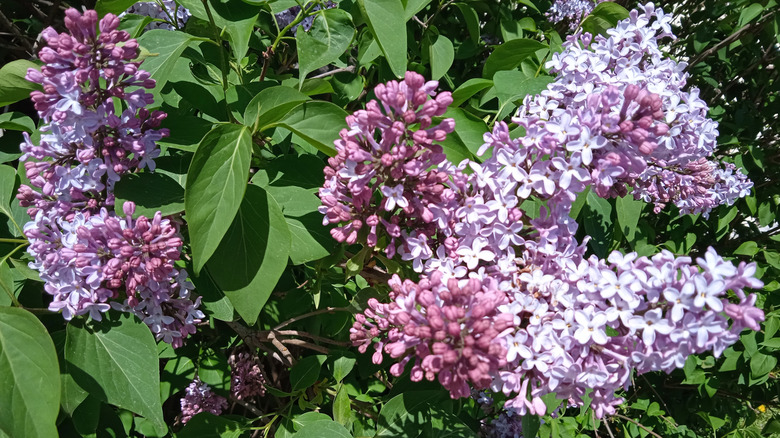
You need to be cautious when it comes to lilacs (Syringa spp). They are a plant that can grow to immense size in a relatively short period of time, and can easily block sun from the rest of your flower garden. That said, though, they make for excellent alternatives to hedges, and come in an array of white, purple, pink, and even yellow blooms that have one of the most intense scents in the whole of the flower world.
The smell of lilacs is a unique blend of vanilla, almond, honey, and rose. Thanks to high quantities of thick blooms, you can smell lilacs from virtually anywhere in your garden. This strength makes them popular among perfumists, and you can even use the petals to make teas and jellies. Lilacs are cold hardy in zones 3 through 8 and most need cold winters to lie dormant. They thrive in full or partial sun.
Another reason to be cautious with lilacs is that their smell can be too intense for those with sensitive noses and allergies. However, since lilac blooms are notoriously short lived, they won't be around long for too much discomfort. While the blooms don't last long, lilacs are a hardy perennial you can enjoy for years to come. In fact, they're so tough, they have been known to live up to 100 years.
Gardenia
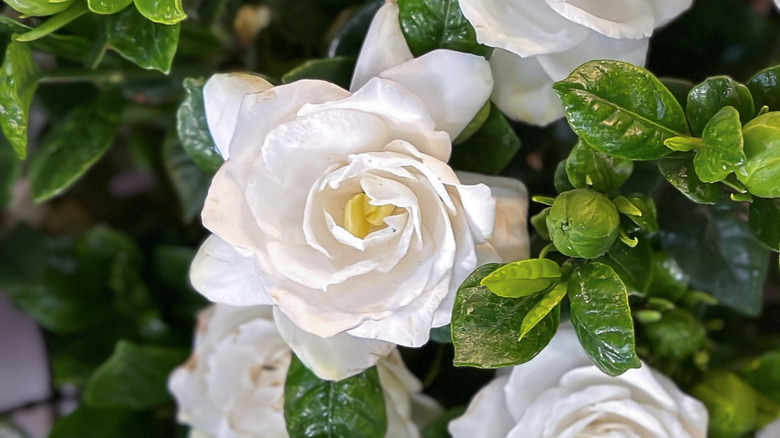
Gardenia (Gardenia jasminoides) is something of a dangerous beauty. With lush white petals centered around a yellow eye and set against a backdrop of dark green foliage, gardenia is unquestionably stunning in terms of looks. However, it is notably toxic if ingested. It may cause mild reactions in humans, and some varieties have edible flowers, but all parts of the plant will cause more serious reactions in animals like dogs and cats. It should only be grown for its looks and scent alone.
The rich fragrance of gardenia has made it very popular among perfume makers, and is used by famous fragrance houses like Chanel and Marc Jacobs. The scent is floral and creamy, providing notes of jasmine, musk, and light hints of rose. It's even been described as zesty, with herbaceous undertones that really enliven the top scents.
While they thrive outside in moist, well-drained soil in zones 7 through 11, gardenia will also thrive as a houseplant if it is kept away from areas that are overly humid. That said, owing to the previously mentioned toxicity, we wouldn't recommend having it as a house plant for those with pets or young children.
Hyacinth
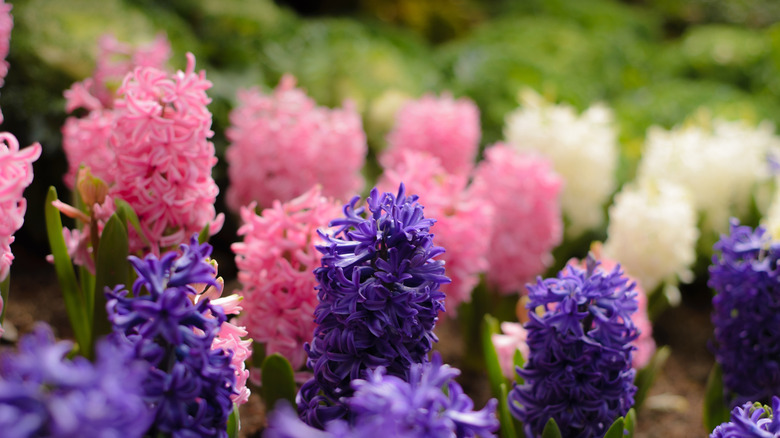
If you've seen hyacinths, you immediately understand they are one of the coolest looking flowers around. While their clustered blooms resemble something of a cross between lupins and trumpet vines, hyacinths (Hyacinthus spp) don't grow all that much in terms of height. Growing from bulbs like tulips, hyacinths are often treated like annuals and replaced with new bulbs year after year. They are, however, perennials when cared for properly (interestingly, there are only three species of hyacinth around today). This actually makes them far easier to manage for the gardener looking to bring a lot of scent to their outdoor space.
Upon first scent, hyacinth can come across as fresh and springy, though it's another flower with vehement detractors. If you take another sniff, you'll likely pick up hints of lavender, rose, chocolate, wine, wood, honey, and even a little bit of allspice. The overall fragrance is that of sweetness, but once it lingers in the air for a while, you will pick up and notice the earthier scents. They are hardy in zones 3 through 8 and need full sunshine and a cool dormant period to be perennial.
Hyacinths come in a wide range of colors. You can easily create a whole pastel colorscape in your garden, filling it with blues, yellows, oranges, pinks, purples, whites, and reds. Anyone looking to create a cut flower garden will love that hyacinth blooms add vertical height and a unique scent that brightens up any bouquet.
Jasmine
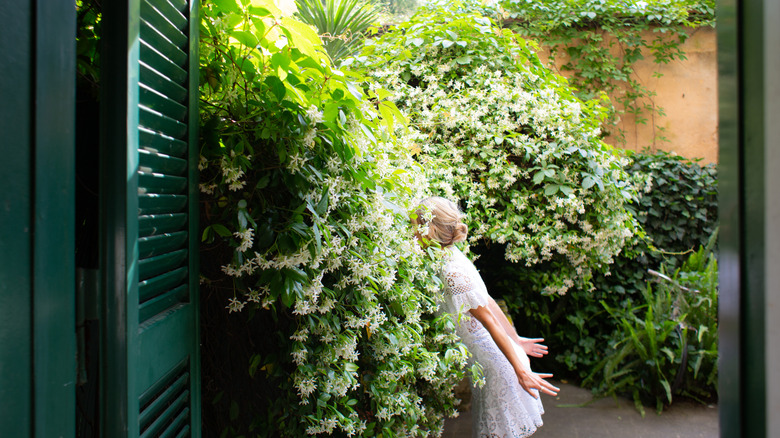
Scented flowers are often as good looking as they are smelling. However, some that take the looks department to dramatic heights. Jasmine (Jasminum spp) is one of those flowers. If left to their own devices, jasmine will grow into incredibly large, creeping bushes of deep green foliage dotted all over with delicate white flowers that last all summer into fall. They can look like cascading waves of foliage and blossoms, are hardy in zones 7 through 10, and are sure to add visual appeal to any garden.
In terms of scent, jasmine can be tricky to nail down, though once you know it, you know it. It can be multiple things at once, all of which combine to create the unique scent we know as jasmine. There is an immediate sweetness and freshness to jasmine, followed by lingering tones of musk, crisp greenery, and pops of fruit. It's a scent reminiscent of summer, which is why these flowers are a popular choice for summer wedding bouquets.
Jasmine will be a stunning addition to any garden wall if you let it grow freely. If you prefer something more maintained, try growing it in pots and pruning it to suit your preferences. It's worth noting that jasmine reaches its peak fragrance in the evening. So, if you love sunset strolls through your garden, jasmine will be there to greet you with its enticing, sweet scent.
Rosemary
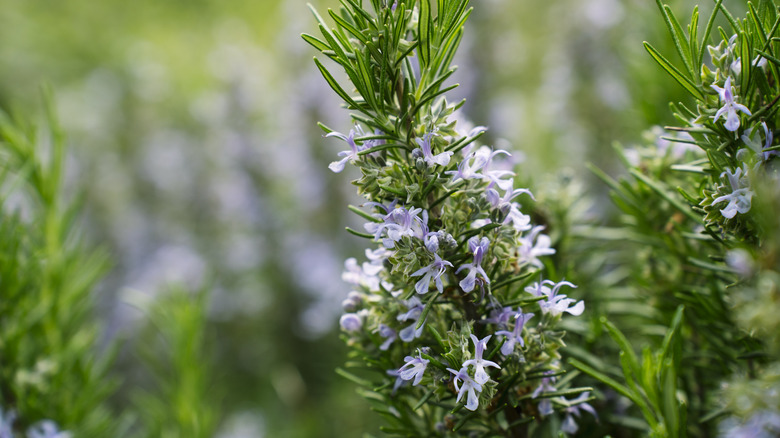
Rosemary (Salvia rosmarinus) might seem like an unusual addition to this list, but bear with us. Despite being known primarily as a woody kitchen herb, rosemary does actually flower if you let it grow long enough. If left alone and not harvested as a flavoring for your next roasted chicken, rosemary will grow clusters of small, purple or blue flowers. Rosemary is also one of those scented herbs that will keep pests away.
While not necessarily sweet in terms of scent, rosemary goes a long way to adding aromatic depth to a garden. It's a fresh smell brimming with astringency, often releasing notes of woodiness, eucalyptus, and camphor. Lavender is one of rosemary's best friends, as the two tend to balance each other out and make for a unique blended scent.
Another exceptionally tough perennial that can grow up to 6 feet tall, rosemary is an herb that can thrive in multiple different weather conditions. They're perennials in zones 8 through 11, or grown in pots in cooler climes. There are several different cultivars of rosemary, each with varying degrees of strength in terms of scent. For example, the 'Collingwood Ingram' rosemary is an upright variety producing blue flowers and comes with a healthy dose of that signature woody scent.
Lily
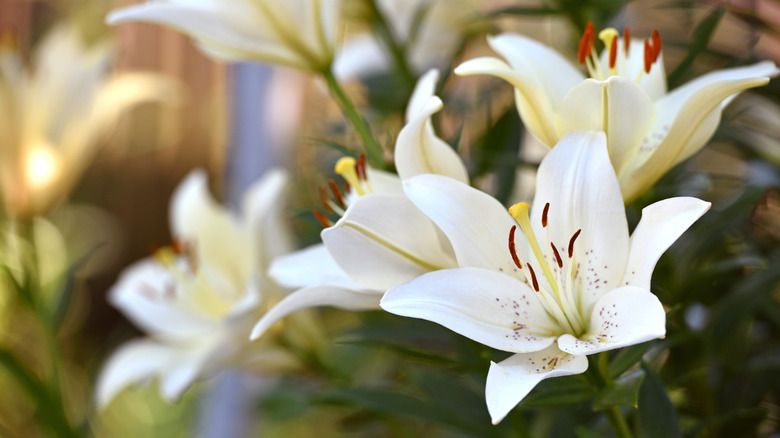
Finally, we come to lilies (Lilium spp). With a sweet perfume that can fill an entire garden space, growing lilies is going to add an extra level of fragrance to your garden. It is difficult to describe the scent of a lily as anything other than strong. It's got a sweet and heady, floral quality to it that can be considered fresh and welcoming, or a little overpowering. That is the main challenge with lilies: They can sometimes be a little too much on the scent for those with allergies or sensitivities. So, if you're planting them, be aware they can take over as far as scents are concerned.
Like other flowers, the strength of a lilies scent depends a lot on what type you decide to grow (there are around 100 species and countless cultivars). Asiatic lilies are prized for their lack of scent, while Oriental and Orienpet lilies are beloved due to the strength of their scent. It all boils down to preference in the end. Lilies thrive in zones 3 through 8 and enjoy full sun to partial shade. You'll get to enjoy fragrant blooms most of the summer.
When it comes time to plant fragrant flowers in your garden, choose those that you know you will like. Don't purchase and plant any of these flowers without smelling them first, as they may be around for a long time. The last thing you want to do is plant a flower garden that you don't want to take a stroll through!