

The Popular Camping Trend That RVers Are Absolutely Loving
We may receive a commission on purchases made from links.
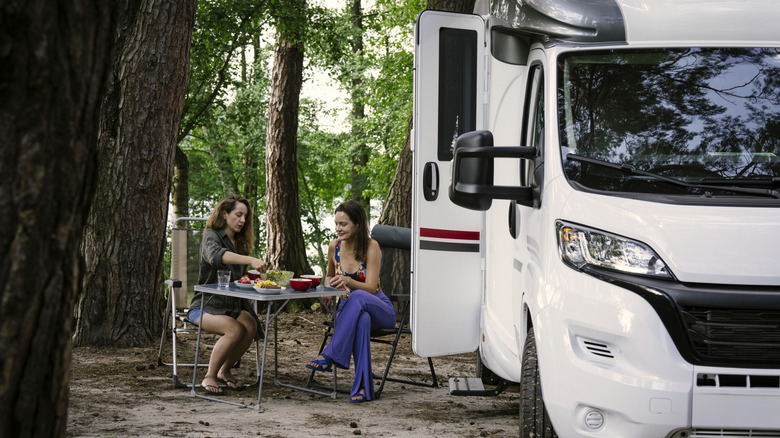
Camping in general has grown in popularity in the U.S. over the past decade. Within that group of campers, however, RV camping has become particularly favored for various reasons. Generally speaking, many see RV camping as somewhat of a middle ground between tent camping and staying in a hotel. Essentially, they feel they can get the comforts of a hotel while still escaping to the natural world that most campers seek. For millions of RVers, a typical trip involves parking in a full-hookup spot in an established RV park or perhaps a state or national park that offers RV campsites. However, an ever-growing number of RVers are cutting loose from these full hookup sites, quite literally.
Dry camping, which is sometimes referred to as boondocking, is the popular camping trend that RVers are absolutely loving. This is basically the RV version of wild camping, in that it involves parking and making camp in an area that offers no hookups for water, electricity, or sewer. While dry camping gives RVers a great deal of freedom — and typically more privacy than parking at a campsite — it also comes with some limitations. So, before hitting the road for a dry camping adventure, it is important to weigh both the pros and cons of this untethered form of RVing.
Why you might want to try dry camping
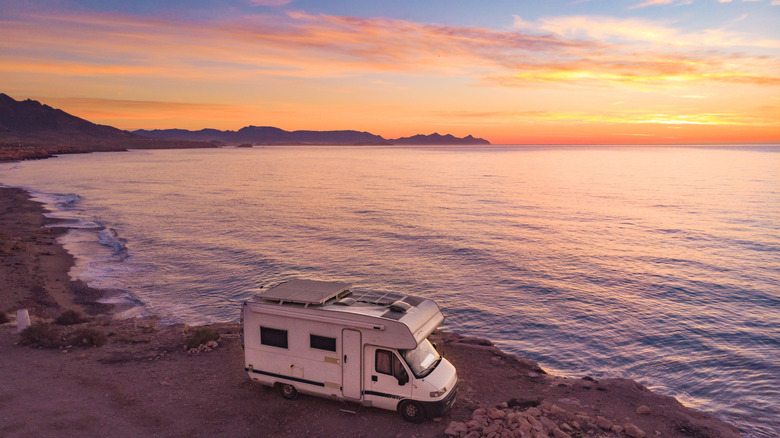
There are basically two approaches to dry camping. Some RVers have to spend time dry camping out of necessity, as no hookups are available where they happen to be. However, an ever-growing number of RVers are drying camping by choice, purposely seeking out areas where there are no hookups and relishing in the benefits of being untethered. They are also willing to accept any downsides or additional work that comes with it.
What most people see as the biggest advantage of dry camping is two-fold. One, whether you have an RV, fifth-wheel or travel trailer, you have the ability to set up camp when and where you want to, for the most part. While there may be some restricted areas on public land, on private land you can pretty much park where you want. Additionally, with the exception of some state and national parks, you don't need reservations, either. This means you aren't locked into a particular spot, nor do you have to check-in or out at a certain time.
The second part of that equation is dry camping is a cost-effective method of overnighting. Again, some areas, such as certain state or national parks, may still charge a small fee, similar to what they do for some primitive tent camping permits. However, even then, dry camping spots are always cheaper than those with hookups. Furthermore, in many instances, dry camping is a great way to park your RV for free on private and many public lands, as well as some big box store parking lots.
A few dry camping downsides to remember
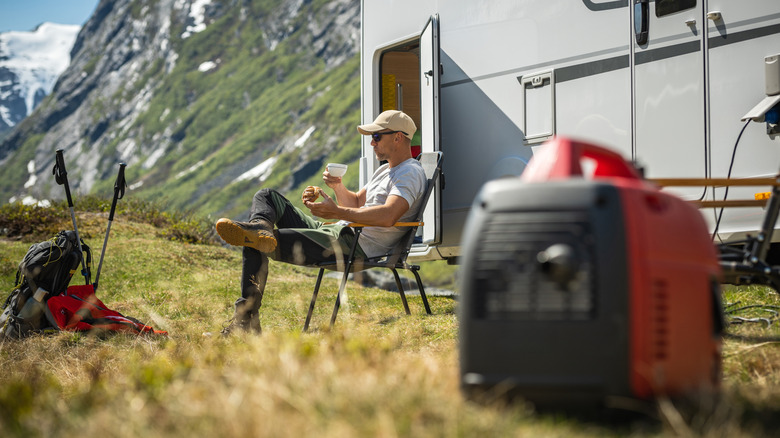
Of course, like anything in life, there are some downsides to dry camping as well. While some RVers shrug off these issues as being a fair trade to experience the advantages of boondocking, others may feel it's just not worth it. For one thing, since you will not be hooked up to water, electricity, or sewer, dry camping trips require a bit more advanced planning and additional gear and supplies. For example, you will need to make sure your water tanks are full and may still need to bring additional water jugs or a water filtration system. Additionally, if you want to be able to use your RVs electrical components, you will need a generator or ample amount of solar panels.
There is also a bit more work involved with dry camping, as there are no perfectly level and cleared campsites. Additionally, if you fill your sewer tanks, you will need to empty them into a Camco Rhino Tote Tank or similar container until you reach a dump station. You will also need to pack out all of your trash, as there are no trash dumpsters or trash pickup, unlike most campgrounds. Furthermore, there are no additional amenities such as bathhouses, pools, or BBQ pits when you are camping in undeveloped areas.