

A Simple Method That'll Save You Time While Trimming Your Lawn
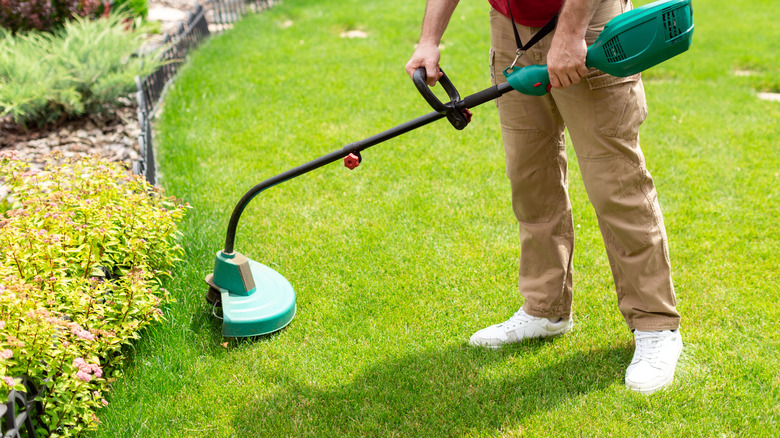
When a guest comes to visit your home, your lawn is the first feature they see. And, while having a well-manicured lawn is a great way to make a good first impression, it takes time and effort to cultivate it — especially when it comes down to tackling weeds, tight spaces, and lawn borders. Even if you enjoy the time it takes to sculpt your dream yard into reality each week, you may be wondering if there are any tried-and-true techniques for saving time.
Thankfully, before you even break out the weed whacker, there are several ways to reduce weeds in your yard. This includes avoiding cutting your lawn too short, a common mistake that leads to crabgrass. However, when weeds do pop up, especially around the edges of your lawn, there is one time-savvy technique that can help you control where your grass clippings land and save you time in the long run. And the best part? It's as simple as trimming your grass in one direction.
When it comes to saving time, where your clippings land may not seem like a big deal. But cleaning up cut grass from garden bark, a gravel path, or among hedges is much harder than off your lawn. Also, allowing your clippings to land in curbs or pavement drains isn't recommended due to potential impacts like affecting water quality. As a result, if your clippings end outside of your lawn, you'll need to invest the extra time in cleanup. That's where trimming your yard in a counter-clockwise direction — keeping all your clippings confined to the lawn — comes into play.
Trim from right to left along your yard to save time
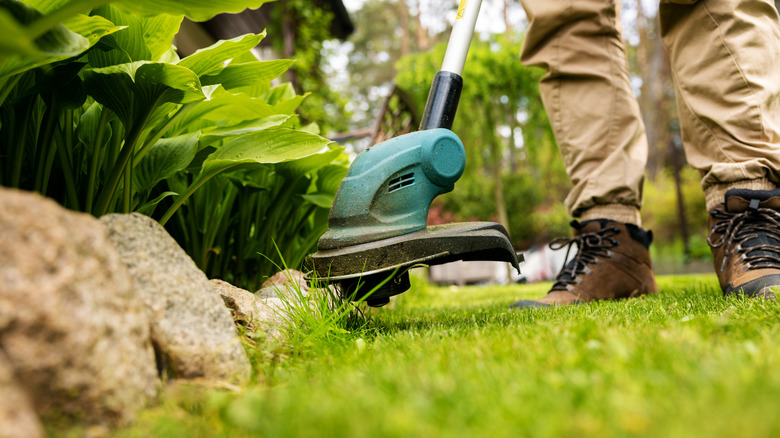
Cleanup can easily add to your yard maintenance time, especially if you let grass clippings scatter haphazardly across your lawn. As a result, you can save yourself time by learning which way your trimmer rotates and working in the same direction. While most trimmers rotate counter-clockwise, you'll want to double-check before you try this trick.
If your trimmer rotates in a counter-clockwise direction and you work left to right (clockwise) across your work area, the grass clippings will fly into the area you're working in. This means when you're trimming around garden beds or pavers, your clippings may end up in the wrong area — which means more cleanup later on. However, if you work from right to left, you can confine your clippings to your yard and save yourself time cleaning. Weed whacking in one direction is also important for safety. Working with the rotation of your trimmer rather than against it can help reduce the likelihood of debris being thrown back at you, or damage to the trimmer if you're running along a wall.
Trimming in one direction can be a great way to save time, but it may not always be a perfect solution. You may find that clippings still end up on the curb or in your garden beds. And you may want to think twice about using your trimmer to edge your yard, as hitting sidewalks and driveways can cause unnecessary wear. However, like mowing for weed control, this technique can help cut down on your workload by reducing the amount of clippings thrown into other areas of your lawn.