

How To Repurpose Old Soil And Mulch Bags To Suppress Weeds In Your Garden
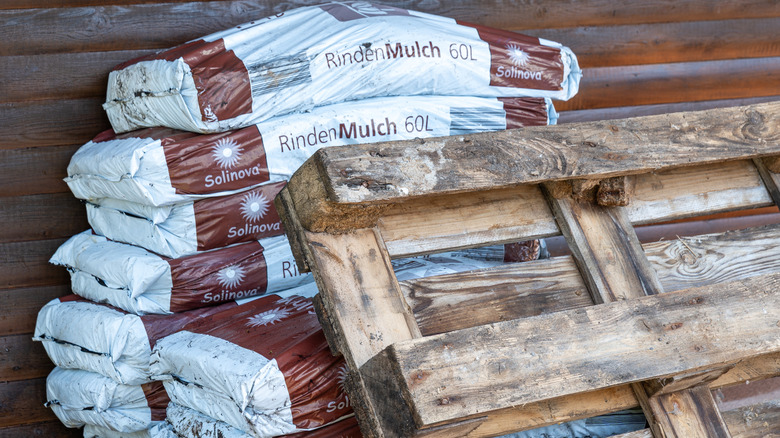
Unwanted plants can get out of hand if they aren't pulled before they go to seed, a problem that strikes even the most conscientious gardeners. Plus, weeds may keep coming back if you've turned your garden's soil with a rototiller, unearthing buried seeds that sprout dandelions, thistles, and more when exposed to sunlight. Large, thin pieces of plastic are a terrific tool for controlling weeds that just won't quit. You don't have to buy a tarp, row cover, or landscaping fabric to take advantage of these benefits. When purchasing soil and mulch by the bag, save the packaging. Each bag is essentially a small plastic tarp that has the power to suppress weedy garden invaders.
These plastic bags are capable of killing mature and immature weeds as well as weed seeds near the surface of the soil. Lay the bags over a patch of weed-infested ground, and they'll get to work quickly when the weather is warm and sunny. If the plastic is clear enough to let sunlight in, it cooks unwanted plants attempting to grow beneath it, a process known as solarization. If it's opaque, it starves weeds of the sunlight they need to thrive while heating the soil to temperatures they can't handle, a technique called smothering or occultation. Once the weeds have met their demise, you'll probably find them easier to remove. You can also use soil bags as part of a prevention strategy. Try placing them between rows of vegetable plants to keep weeds from stealing resources such as nutrients and water. Just make sure not to cover milkweed, white clover, and other beneficial garden weeds you shouldn't pull.
How to control weeds with soil and mulch bags
There are several ways to fight weeds with soil and mulch bags. For example, you can flatten the bags and overlap their edges to cover sizable areas of ground. Overlapping also discourages weeds from creeping through gaps that provide access to sunlight.
A collection of bags is good for smothering or solarizing a specific parts of your vegetable gardens, flower beds, or lawn. Solarizing is the faster option if done when there's adequate sunlight and warm enough temperatures. However, many soil bags are opaque, which means you'll have to go the smothering route. For additional smothering power, pile mulch on top of the bags after you've arranged them on the ground. You can even cut holes for specific plants to pop through and let the remaining plastic prevent weed growth in the areas surrounding the specimens you've provided with sunshine.
No matter which weed-control method you choose, maximize each bag's surface area by cutting the top and bottom seams. This creates larger, single-layer sheets of plastic. Tack down the edges of the sheets with landscape staples, just as you'd do to secure landscaping fabric. This keeps the plastic from blowing into neighbors' yards. It also prevents shifting that creates gaps, giving weeds a handy escape route.
If you run out of soil and mulch bags mid-project, incorporate garbage bags, which can be used in the same way. Looking for an eco-friendly weed blocker that will decompose over time? Add cardboard to the bottoms of raised beds and atop weedy portions of in-ground gardens. Then, repurpose your soil bags as containers for herb and vegetable plants.