

Why You Should Reconsider Using A Birdbath Heater During Cooler Months
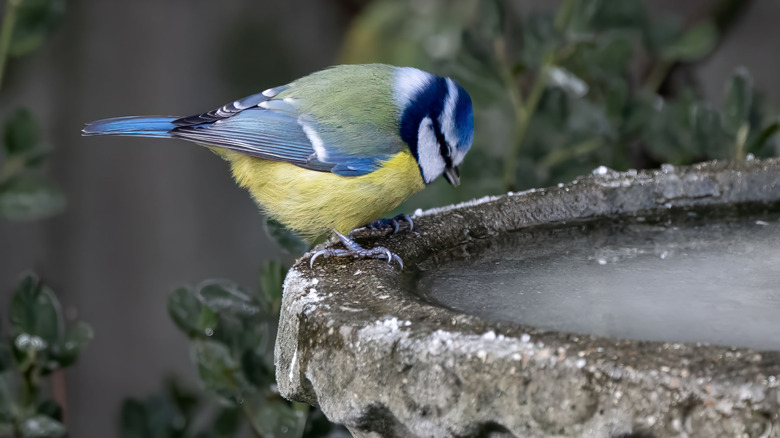
From drinking to cleaning their feathers, water is essential for birds, and adding a birdbath is a great way to convince birds to flock to your yard. However, while birds may readily visit your birdbaths when the weather is warm so long as you avoid putting your birdbath in direct sunlight, you may wonder the best way to provide local birds with the water they need when the thermometer drops. As a result, you may turn to birdbath heaters.
If you live in an area that regularly experiences below-freezing temperatures, a birdbath heater can offer a variety of benefits. One of the most notable benefits is the burden of maintenance it takes off your shoulders. While you'll still need to maintain a regular cleaning schedule, gone are the days of trekking out in the cold to break up ice. Opting for a heater can also help protect your birdbath, especially if you chose a birdbath material like concrete, which may not be the best option in freezing conditions. As the weather fluctuates, with ice forming and melting, it can take a toll on your birdbath and may even lead to cracks. A heater can help reduce these risks, preserving the lifespan of your birdbath.
But as beneficial as a birdbath heater is for you and the local birds who call your yard home, there are still some potential downsides to be aware of, from installation safety issues to bird safety in freezing weather. Familiarizing yourself with these beforehand can help you decide if a heater is right for you.
The potential downsides of heated birdbaths during the winter
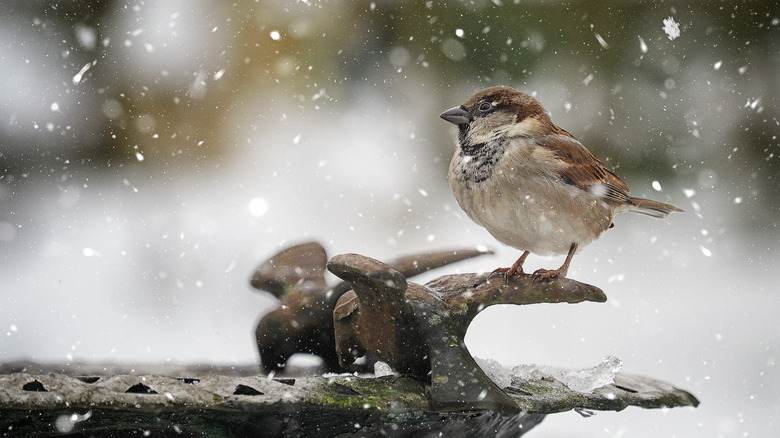
One of the main concerns with a heated birdbath is improper installation. Although most birdbath heaters are insulated and come with the proper hardware to reduce risk, water and electricity can still be a dangerous mix. That's why it's essential to ensure your heater is plugged into an outdoor ground-fault circuit interrupter (GFCI) outlet. Without this, you run the risk of electrocuting yourself or the birds who visit. During installation, whether you choose an added or built-in heater, it's important to always follow the included instructions and make sure you only use a heater and cord certified for outdoor use. If you're unsure about a step, you may want to consider consulting an electrician.
There is also some concern of birds taking a bath in the warm waters of your heated birdbath only to emerge and be left unable to fly because of ice on their wings. While much of the information surrounding this is anecdotal (birds are pretty smart), it's still something to keep in mind. Thankfully, most birdwatchers have noticed that when the weather is cold, most birds only opt to drink from the birdbath, not bathe in it, even though the water itself is warm. While anecdotal, it's important to take precautions to prevent accidentally harming your feathered friends. This can include purchasing a cover that leaves only enough space for the birds to drink, maintaining just enough water for a quick drink but no bath, or other options to help keep your local birds safe.