

How Striping Your Lawn Is Helping You Grow Healthier Grass
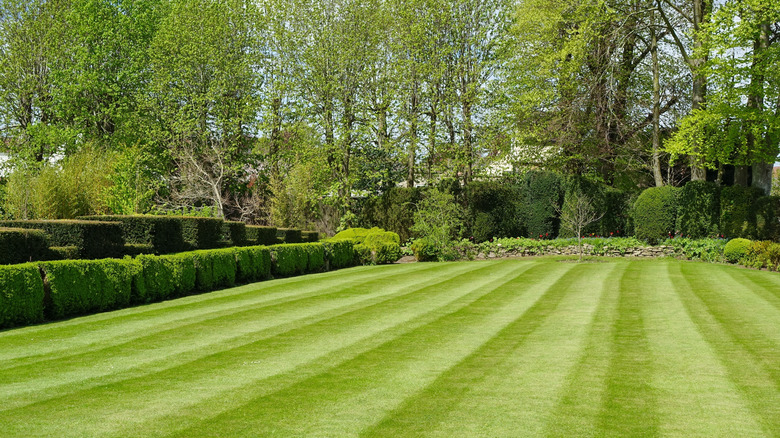
All other things being equal, there's something about a striped lawn that sets one yard apart from another. A striped appearance makes a lawn look luxurious, even when it's really the exact same grass variety as the neighbor's unstriped lawn. A lush striped lawn looks like it's maintained by the same top-notch, full-time yard crew that handles the professional sports fields in town. The real secret to striping is alternating directions with each pass of the mower, slightly overlapping each one, and using a mower outfitted with a striping kit. The striped effect happens by keeping the mower deck height a little higher than normal, resulting in taller grass blades that bend a bit in one direction, then the opposite direction for the next mowed row. It's all an effect of shadows and light, and it's stunning.
Sure, striping looks fantastic, but does it really have any effect on the lawn's health? Yes, it's helpful in several ways, but that's especially true if the striping isn't done in the exact same paths each time the yard is mowed. For instance, if the first row is mowed to the east one week, mowing it to the west the next time keeps the grass healthy. Striping minimizes stress on the grass blades, improves the lawn's ability to absorb water, and also improves the lawn's health as a whole. With striping, sharp mower blades keep the lawn beautiful and bright.
How striping benefits lawn grass over time
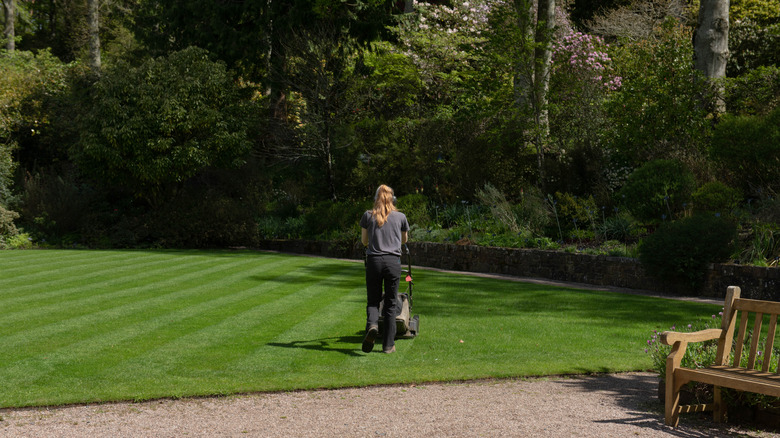
Lawn striping minimizes stress on individual grass blades by cutting them from a different direction from one mowing session to the next. This works because the lawn grass will bend in one direction one week, allowing the sun to hit it from that angle, and then bend in the opposite direction the next time the lawn is mowed. This results in better grass health, much like rotating a potted plant to get more sun. Mowing the lawn from the same direction time after time could cause repetitive stress to certain areas, affecting both the look and the health of the grass in that spot.
Striping the lawn improves the water absorption of the area too. The opposite would be mowing the same areas the same way week after week, which compacts the soil and makes it harder for water soak in and nourish the grass roots. Healthy soil means healthier grass. And do you remember learning about photosynthesis in school? Even the lawn grass uses photosynthesis to grow healthy and strong. When the blades of grass are striped to lie at angles that vary from mowing to mowing, this ensures that no particular area of the lawn is shaded by tall grass all season long, resulting in a healthier lawn as a whole.
Since striping requires somewhat tall grass to achieve that luscious look, it means the grass stays healthier than if mowed too short. Mowing it too short is one of the ways to accidentally ruin a lawn because short grass is more susceptible to diseases, stress, and even weeds. With striping and any mowing technique, following the one-third rule keeps the lawn in top shape.