

If You Have A Weed Problem In Your Yard, Your Bird Feeder May Be The Culprit
We may receive a commission on purchases made from links.
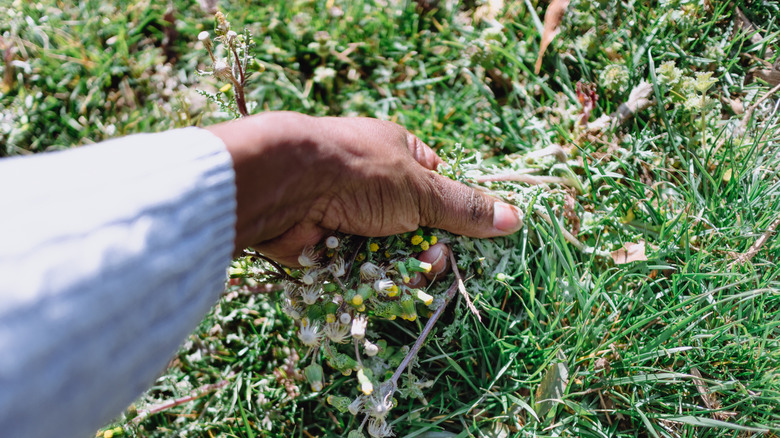
Where there's a lawn, there's likely a weed lurking below the blades of grass. No matter how often you weed or how particular you are when choosing new grass seed when patching the lawn, weeds happen. While it's natural that weeds might randomly show up since their seeds can even be spread by the wind, if they keep popping up in one specific area of your yard, there could be another culprit: the bird feeder. Bird feeders, especially those filled with a mixture of seeds, could inadvertently contribute to a weed problem when seeds drop from the feeder. Much like bags of grass seed, packaged bird seed blends often contain other seeds as filler, and some of that filler could sprout into weeds.
Separate studies from Oregon State University and the University of Missouri examined an array of packaged bird seed blends found numerous weed species among the blends. Among the weeds found were bull thistle, ragweed, and quite a few weedy grasses such as crabgrass. The birds themselves could be responsible for some of the weeds too. A single house sparrow creates around 200 droppings in a single day, which means there's likely quite a mess near the average feeder frequented by many different birds. It's anyone's guess what the birds ate before they came to your feeder.
How to control weeds near the bird feeder

A few tasks can cut back on weeds that are indirectly caused by the bird feeder. If you plan to keep using a seed blend in the feeder to attract more bird varieties to the yard, purchase one offering sterilized or non-germinating seeds. You could also sterilize any birdseed blend yourself by baking it on a cookie sheet at 250 degrees Fahrenheit for 15 minutes. Some no-mess seed or no-waste blends also won't germinate; look for options that contain hulled sunflower seeds, hulled millet, peanut chunks, or dried fruits. As for single-seed offerings, Nyjer is a small black seed that goldfinches and house finches love. It's too small for some types of feeders, so it's often used in a sock-style feeder. All Nyjer seed is already sterile so there's no chance of it sprouting.
The right place for a bird feeder makes the birds feel safe; consider such a place that's also over an easier-to-clean area, such as a spot above a large paver or other hard surface where stray seed can be easily swept up. A birdseed catcher tray is another option that makes cleanup easier. For example, the FoldTier Universal Wild Birdseed Catcher is a large circular tray that hangs beneath any bird feeder, similar to a hanging plant basket but up to 30 inches wide. Any seed the birds spill or discard end up in that tray instead of on the ground.
Offering several feeders, each with one type of seed or food, is another way to cut back on bird feeder mess. Birds tend to have their favorite snacks, much like people, and will go to the feeder that offers their preferred meal, rather than one with the food they don't like. This option is far less messy since birds (and even squirrels) won't keep digging through a blend to find what they like, discarding other seeds in the process. Another DIY upgrade to keep the bird feeder mess-free is to offer or make a bird block, which is a solid mass containing seeds.