

A Must-Plant Perennial That'll Attract More Hummingbirds To Your Garden
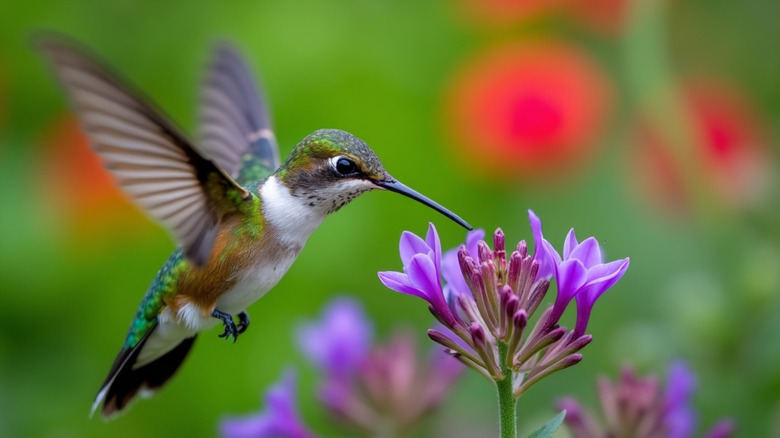
Planting nectar-rich flowers is one of the easiest ways to turn your yard into a hummingbird haven. If we could survey these buzzing birds, they'd probably tell us that fireweed (Chamerion angustifolium) is one of the hottest plants around. This flashy perennial lures hummingbirds and native bees for months at a time, typically June through September. Its blossoms are usually bright pink or purple, colors that hummingbirds interpret as a signal for tasty nectar ahead. Fireweed is also a tall plant, reaching up to 9 feet when it's fully grown and blooming. In other words, it's easy for hummers to spot as they flit through your backyard.
Fireweed is an excellent choice for cooler climates since it thrives in USDA hardiness zones 2 through 7. It's indigenous to many parts of North America, where it pops up in pastures, prairies, and ravines. This wildflower is even found in areas that flames have turned to ash, a fact that inspired its memorable nickname. After Mount St. Helens erupted in 1980, fireweed helped restore life to the area before most other plants could gain a foothold — or a roothold, as it were. It's common for each fireweed flower spike to flaunt 50 or more blossoms, a stunning sight that's bound to bring hummingbirds to your garden.
Brightening your yard with fireweed and hummingbirds
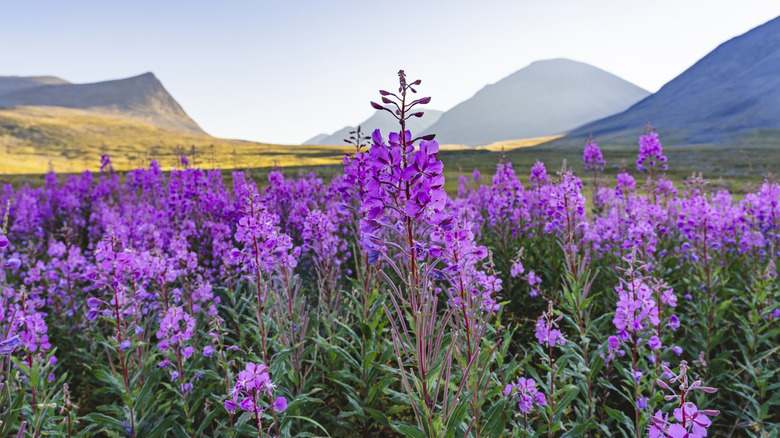
Fireweed is most attractive to hummingbirds when it's in bloom, so give this plant the conditions it needs to make lots of nectar-filled flowers. This vibrant wildflower prefers damp, rich soil that drains well and has a neutral or slightly alkaline pH. If you live in an area that experiences intense heat in the summer, plant fireweed in a spot that receives some afternoon shade. This can help ward off wilting. Otherwise, place it in full sun to promote blooming. Also snip off spent blossoms before they form seeds. This action tells the plant to produce more flowers.
In addition to hindering flower production, letting fireweed go to seed encourages it to spread profusely. Each flower turns into a seed pod that releases 300 to 500 seeds, which can easily blanket a large swath of your yard. Fireweed reproduces through rhizomes as well, so it can be tricky to remove completely. These aggressive tendencies make it a good candidate for growing in large planters or raised beds that help curb its expansion. In fact, fireweed makes a nice addition to a container garden designed for hummingbirds, especially when paired with shorter plants in contrasting colors. If you grow it in this way, consider staking its lengthy stems and watering often since containers don't hold moisture as well as in-ground flower beds. Apply a layer of mulch to help keep the soil damp and cool, even on hot summer days.