

Deter Pesky Wasps From Fruit Trees With A Must-Try Trick
We may receive a commission on purchases made from links.
Just-picked produce is so flavorful that many gardeners find fruit trees worthwhile to grow at home. Growing your own fruit lets you harvest it when it's perfectly ripe, and if you consume it quickly, it also provides more nutrients than most fruit from the supermarket. That's because vitamin, mineral, and antioxidant levels drop after a piece of fruit is picked. The longer the fruit's journey to the store and its time on display, the lower its nutrient content is likely to be.
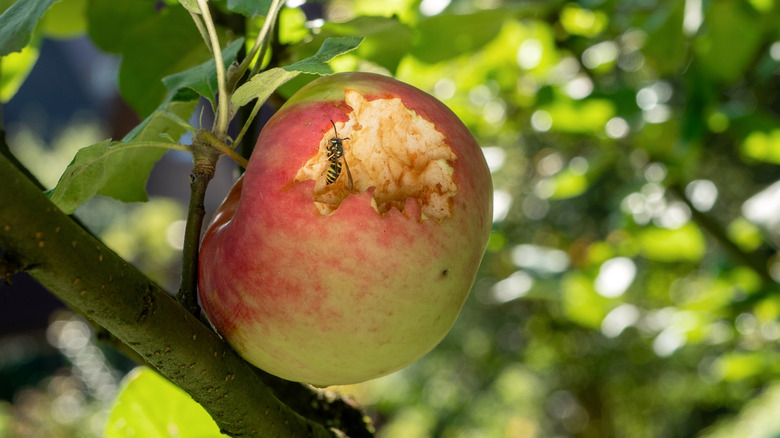
But even though many fruit trees can be grown in patio pots as well as gardens, some people avoid them because of wasps. These insects are especially fond of ripe fruit that's high in sugar — peaches and apples, for example. They make harvesting a headache when they descend upon an unsuspecting tree. Thankfully, there are protective bags that can keep wasps from eating your fruit, stinging you while you tend to your trees, and building nests in your garden.
Protecting developing fruit with bags is a wise choice because it doesn't kill wasps and other important pollinators. Instead, it creates a barrier around the fruit that convinces wasps to look elsewhere for a sugar high. The barrier can also keep avian visitors away from your fruit. This eliminates the need for bird netting, which can be dangerous for smaller species. As an added bonus, these bags can prevent bruises, sun scald, and other blemishes on your fruit. They've even been shown to extend the shelf life of certain types of fruit — mangos, for instance. You're most likely to be successful if you choose the right bags for your trees, then use them at the optimal time.
Tips for repelling wasps with protective fruit bags
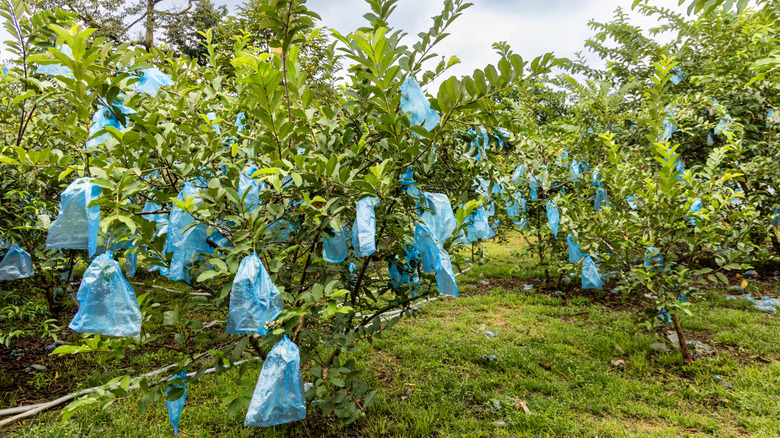
When it comes to protecting fruit trees with bags, timing is the most important factor. The bags should be placed over fruit that's nowhere near ripe, before wasps take note of its delicious sugar. Only bag fruits that are free of disease. If you're growing large fruit — say, mangos or Asian pears — you may need one bag per piece. Some fruit bags have drawstrings that must be pulled tightly to keep out wasps as well as crafty birds and rodents. Planting daffodils nearby can help deter rats and mice too.
There are several types of protective fruit bags available, including DIY and reusable options. The most inexpensive choice is typically paper bags. They're easy to find, and they let in enough air and sunlight for fruit to grow and ripen. Plastic bags with zipper seals work well for many types of produce but should be avoided for stone fruits, which need pouches that provide better air circulation. Reusable organza bags are more expensive but often come with drawstrings that help keep pests away if used as intended. In addition to keeping wasps at bay, they can ward off moths that bother apples and pears and slugs that chew through a variety of fruits.
Nylon mesh bags like those in the 100-pack of Rifny fruit protection bags are one of the strongest options, and they provide excellent protection from both insects and the elements. Like organza bags, they can be used again and again. Or you can repurpose laundry bags to protect fruit trees from pests. If you're using bags that don't have drawstrings, tie them shut with twine.