

What To Know Before Using Natural Pine Bark Mulch In Your Garden
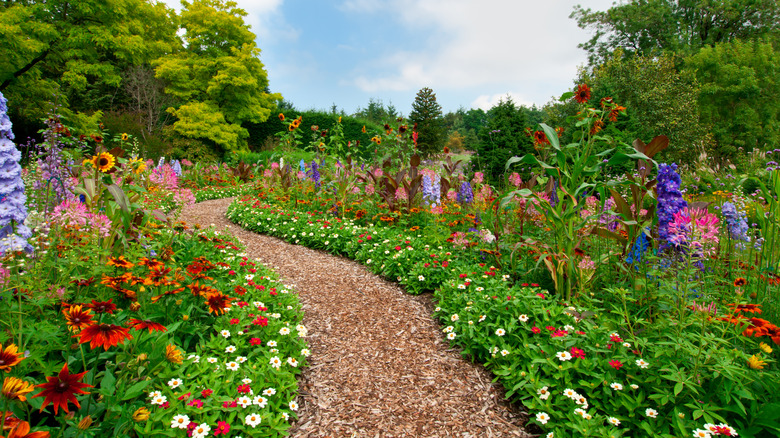
Wood mulch is a gardener go-to for creating tidy pathways and weed-free beds of flowers and vegetables. The purpose of mulching your garden is not only for aesthetics but for enriching soil, retaining moisture, and preventing erosion. When you're looking to choose the best mulch, there's a lot to consider, like cost and effectiveness for your particular landscape. Natural pine bark mulch is an affordable choice that comes in larger chips or smaller shreds, is lightweight and easy to apply, and provides a neat appearance to garden beds while serving its protective purpose. But it also decomposes rather quickly, can wash away in a heavy storm, and may not be a good choice for some veggie patches.
Pine bark is great at retaining the moisture your plants need to thrive, cutting down on watering time while also enabling air to move throughout its layers. It also decomposes well and won't become a compacted mat like hardwood mulches made of oak, hickory, or maple. But its lightweight nature also means pine bark can blow away in a windstorm or wash away in heavy rain. Pine bark will need to be refreshed fairly often – about once every year or two and more often for very wet areas. As pine bark mulch decomposes, it adds nutrients to your soil. It can also lower the pH, which is great for acid-loving perennials like azaleas and dogwoods as well as berry plants and some vegetables like potatoes and rhubarb. In other veggie patches, larger pine bark nuggets aren't a great choice because they can create a perfect little habitat for veggie-munching bugs and slugs.
Alternative wood mulches to consider
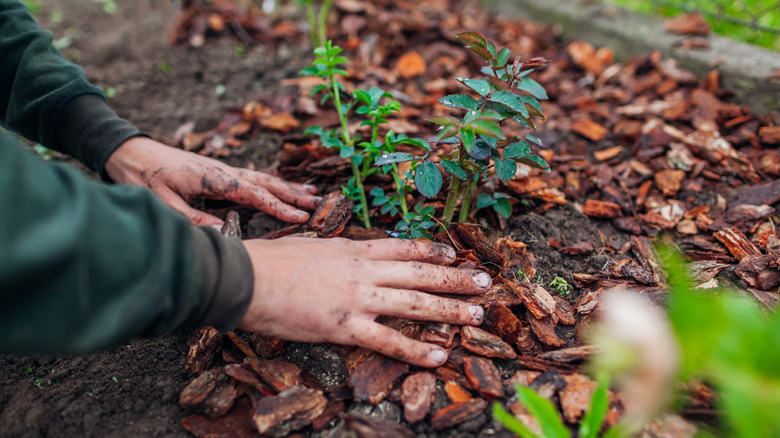
If cost isn't an issue, more expensive cedar mulch is an alternative to pine bark that's long-lasting and looks and smells great in your garden. Cedar has the added benefit of resisting mold and insects, and it won't significantly impact your soil acidity like pine bark will. But don't use cedar mulch if you have chickens roaming your garden, as the birds can get respiratory illnesses from cedar.
Arborist wood chips, a by-product of trees being sent through a wood chipper, are often available for free from local tree trimming companies, making them an economical alternative. The mix of woody debris in arborist wood chips — which includes branches, bark, leaves, and all sorts of tree parts — makes for a diverse and rich layer of landscaping that works well in perennial gardens. This type of mulch isn't great for newly established veggie gardens, however, as it can rob new plants of nitrogen as the mulch decomposes.
Whatever mulch you choose, remember that natural wood mulch placed directly on the soil is healthier than using a layer of landscape fabric, which is not as effective long-term for weed suppression and can block needed nutrients from reaching your soil.