

Lure Songbirds To Your Yard With A Beautiful Cat Paw-Like Shrub
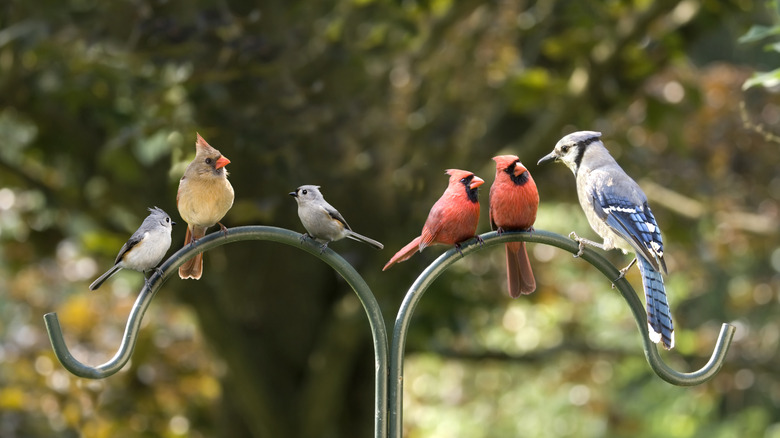
There are so many flowers in the world, and quite a few of them do a great job of attracting songbirds. Because of this, it's easy to find a plant to fit your needs and wants. If you're looking for something that lasts a long time, is relatively easy to care for, and does well in damp soil, then the glaucous or pussy willow (Salix discolor) is an ideal option. This plant is known for its bright white and fluffy catkins resembling cat paws.
It is native to much of North America. As the common name suggests, the plant is part of the willow family, and enjoys growing in wetter areas, including near streams and woodlands. It does best in USDA zones 4 through 8. They are a perennial and have been known to live up to 50 years when cared for properly. The pussy willow does an amazing job of attracting local songbirds, including a few birds that serve as little helpers in your garden. It also brings in dozens of pollinators. Another huge benefit to the pussy willow is that it's great for many yards. Because of its dense structure, it works well as a hedge or a windbreak. Additionally, if your yard has a problem with erosion, it helps mitigate and reduce soil erosion.
While this plant is beautiful, it isn't one to steal away attention from other plants. The females are rather plain, producing bright green catkins. The males are a little brighter, with yellow and white instead. They are still beautiful, but definitely not show stoppers, and do well when grown alongside bright native plants and wildflowers. You can also pair it with other simple methods for attracting more songbirds to your yard and garden.
Caring for glaucous willow
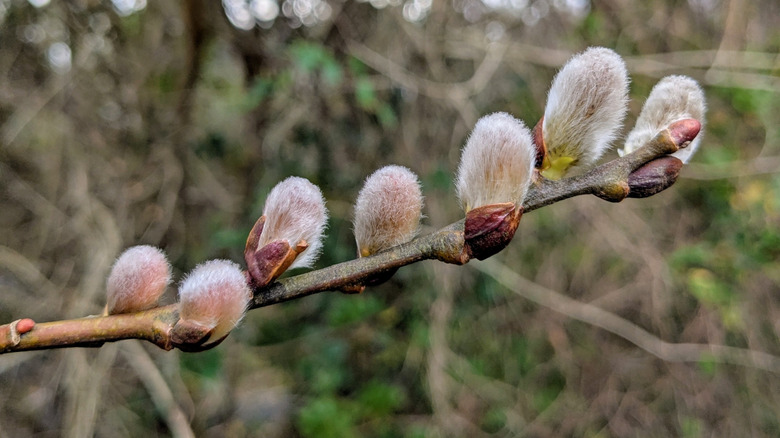
When planting glaucous willow, try to find wet, but well-draining soil. However, these willows also do well in slightly drier soils on occasion. They like to have full sun, which means roughly six hours or more of direct sunlight a day. Another reason they are a good option is the fact that this species sprouts up early in the growing season, making them a great way to attract early pollinators and offer a beautiful sight as soon as spring arrives. Despite growing rather fast, they don't need a whole lot of fertilization. A little bit of compost is more than enough to keep the glaucous willow happy.
These plants are not considered invasive in any particular state. However, if their habitat is too ideal for them, they can aggressively grow out of control if not cared for properly. They can easily turn into a shrub or tree that reaches 25 feet tall and 15 feet wide. Unless you want this plant to dominate your yard, keep an eye on them. Generally, to control their growth, you will want to trim them back every three to five years. Additionally, when deciding where they go in your garden, try to avoid any sewers or pipes underground, as their roots may clog these areas up in a constant hunt for water.
The pussy willow produces shallow, but spreading roots, which means other plants grown near it might not do well as they compete for water, space and resources. However, it does work alongside a few plants, such as ninebark (Physocarpus opulifolius) — another plant that works as a native alternative to a pretty but invasive shrub that brings ticks into your yard.