

A DIY Fertilizer That'll Make Use Of Weeds You've Pulled From Your Garden
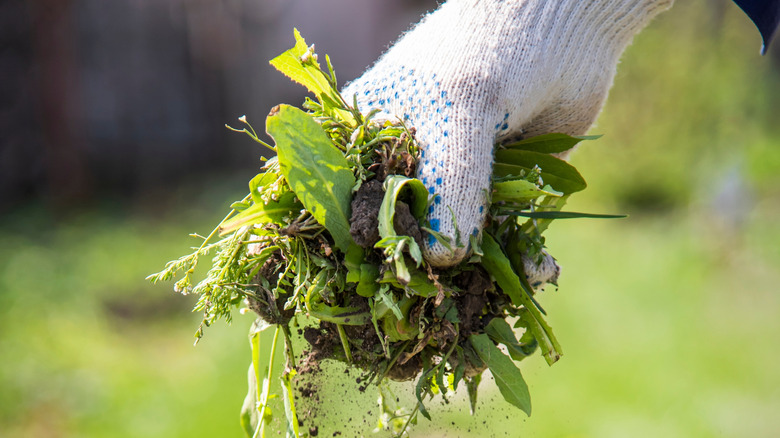
Weeds are notorious for stealing water and nutrients from neighboring plants — say, the residents of your vegetable garden. However, these much-maligned plants are capable of giving back to their communities. One of the best ways to make use of them is turning them into fertilizer. Most weeds, even invasive ones, can be soaked to create a nutrient-rich liquid fertilizer for the plants that belong in your garden. Certain weeds are especially rich in vitamins and minerals that many other plants don't possess in abundance. Take comfrey, for example. Comfrey is a great natural fertilizer for fruit trees, but you may find it too weedy for your backyard. If you have a patch of this plant, it's the perfect ingredient for a DIY fertilizer tea. Even if a plant is an absolute nuisance in your garden — we're looking at you, bindweed — it can be a great help once it's out of the ground and steeping in a bucket of water.
To make fertilizer "tea" from weeds, find a 5-gallon bucket and some mesh to cover the top of it, which will keep mosquitos from gathering there. You could also use cloves to banish mosquitoes from the area. You'll also need a large rubber band to hold the mesh on the bucket and a tool for straining the concoction once the steeping process is complete. Make sure your garden hose is in good working order as you'll need plenty of water, and then start gathering weeds. You'll need enough to fill the bucket at least halfway, and you may want to search for varieties that are rich in particular nutrients.
Making liquid nutrient boosters from weeds

Once your bucket is filled halfway with weeds, pour in enough water to saturate the plant matter, plus a little extra to account for evaporation. Use non-chlorinated water, as chlorine can have an adverse effect on plants. If you've collected rainwater recently, it's perfect for this project. Next, place your mesh over the bucket's opening and secure it with your rubber band. Then, let the mix sit for at least three days. The longer it sits, the more concentrated its nutrients and beneficial microbes will be.
Stir your concoction once a day and strain it once it's done steeping, making sure to remove weed seeds. Dilute the final product with 10 parts water if you're feeding it to sensitive seedlings. Speaking of sensitivity, wear gloves and avoid allergenic plants such as poison ivy when gathering weeds. Learning some tricks for identifying poison ivy can prevent a great deal of itching.
Any weeds will work for fertilizer tea, but consider looking for species that are rich is specific nutrients your garden needs. Dandelions are a good source of the potassium and calcium, which can help keep tomato plants and other heavy feeders healthy. Chicory, a blue-flowered weed found by roadsides and in abandoned fields, contains lots of these two nutrients as well. If your plants need a boost of phosphorous, tea made from stinging nettles can help. This weed is also a generous supplier of nitrogen, as are legumes such as clover and alfalfa. Almost any green weed you add to your bucket is likely to supply some of this nutrient, which is essential for growth, flowering, and fruit production.