

Repurpose Old Laundry Bags To Easily Protect Plants From Pests
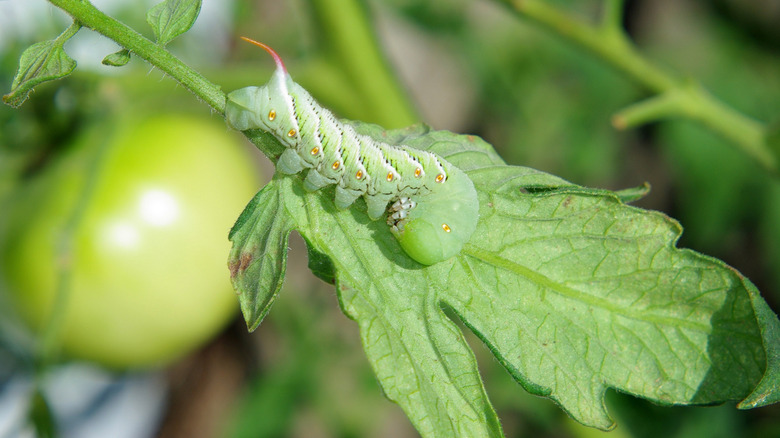
There's nothing more disappointing when gardening than successfully raising thriving plants, only to have them damaged, nibbled upon, or completely decimated by a plethora of pests. Insects chomp leaves like they're competing in tryouts to become the next Very Hungry Caterpillar. Adorable deer and rabbits turn your plants into their own personal salad bar. You can tell if squirrels are stealing that first cherry tomato popping up in your container garden, when they discard it in the driveway after taking only a bite or two. It's frustrating, to say the least. While traditional garden row covers come in handy for large-scale gardening and community garden plots, sometimes only one or two plants need protection from pesky perpetrators, and there's a handy hack bopping around TikTok that easily solves the problem: mesh laundry bags.
This simple solution may already be in your laundry room, or at very least, the local dollar store. Mesh laundry bags have fine enough holes to keep pests from plundering your prized plants, and the synthetic material is deliberately tough. If you have several different sizes of bags, even better! You'll be able to protect a variety of plants, large and small. The mesh on a laundry bag also shades the plant slightly while (again, deliberately) letting water in, making it a valuable resource for both potted plants and individual garden plants. If you find you have extra mesh bags, repurpose some of these laundry room staples into DIY budget grow bags for even more successful plant possibilities.
Mesh laundry bags over frames make perfect plant protectors
To make your own pest-proof plant covers, look through your old mesh laundry bags, as some mesh has larger holes than others, or may be torn. The great thing about the mesh size in most laundry bags is that it's usually small enough to use as a wildlife netting that's safe for birds or chipmunks that could otherwise become tangled in netting with larger holes. If you can poke your finger through the mesh holes, they're too big to be animal safe for use as garden netting.
The bags with drawstring closures and duffle-like constructed bases are easier to use for plant covers than their zippered, envelope-shaped counterparts because it's far easier to pull the whole thing over a plant or cage, and then gather the bag around the base of a plant or plant pot using the drawstrings. While damaged mesh laundry bag with gaping holes won't help much to protect your plants, you can still put them to good use: Stitch them up, or salvage useful sections to cover small plants.
One important caveat: Don't use these bags before plants have been fully pollinated, or you won't get flowers, fruits, or vegetables. Once these are set, however, you can even bag individual fruits to protect them from birds.
If the plant is sturdy, such as a sunflower in a pot, simply placing the mesh bag over it and tugging the drawstrings closed is perfect. For larger plants without sturdy stalks, place a tomato cage or bamboo stakes around the plant to support an enclosed mesh tent. If insects are a problem all around your garden, you're going to need more than mesh bags: Add these plants to naturally help repel pests.