

11 Types Of Scorpions, Ranked By Danger Level
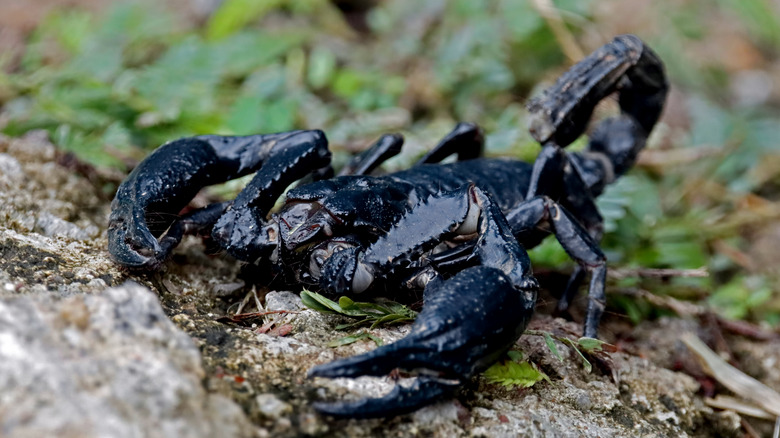
Over the years, Outdoor Guide has compiled informative lists of some of the most recognizable and dangerous animal species on planet Earth. Whether it's the obvious suspects like types of snakes ranked by danger or a more surprising and subtle ranking of dangerous types of monkeys, our goal has been to provide you with the most accurate information on animals that could — if you're not careful — result in your demise. Today, we're tackling perhaps the most visually terrifying animal — the scorpion.
There are nearly 1,500 species of scorpion around the world. Found on every continent except Antarctica, these predatory arachnids are defined by their segmented, heavily armored bodies, large pedipalps (pincers), numerous legs, and long tails with stingers on the end, and have been part of the ecosystem for almost a half-billion years, appearing over 200 million years before the earliest dinosaurs. While they come in a wide variety of shapes, sizes, and colors, the fact remains that scorpions can easily strike fear into anyone who gazes upon them.
There is a good reason for this. Those scary, stinger tails contain venom that varies in potency among species. A sting from the right scorpion can cause a range of different after-effects, from numbness to uncontrollable twitching and drooling, and even death in severe cases. The scorpions on this list have been ranked based on the frequency of their stings, aggressiveness, and sting discomfort. From annoying to severely painful and potentially fatal, here are 11 types of scorpions ranked by danger level.
Northern scorpion
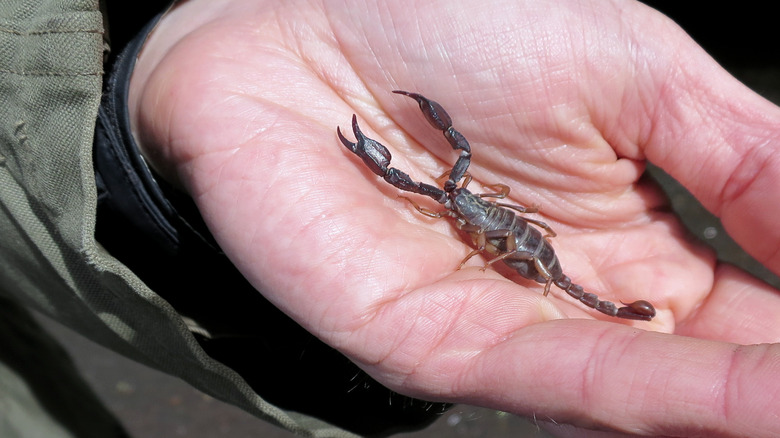
The western United States is known for its amazing scenery, stunning coastline, and vibrant cities and towns. Much of its landscape is characterized by thick forests, mountains, and rain, home to some of the most dangerous types of bears in the world. But the eastern sections of Oregon and Washington, along with southern Idaho, eastern Montana, and much of western Canada are home to extremely dry (but often cool) climates, making them a haven for our first armored stinger, the northern scorpion. In fact, it's the only scorpion found in Canada.
With a preference for dry, southwestern facing slopes, the northern scorpion (Vejovis boreus – Girard) is extremely common but not often seen. This is due in part to their small size (30 to 40 millimeters in length) and the fact that they do the bulk of their living and hunting during the night. In addition, adult specimens tend to not use their stingers much for hunting or defense. This does not mean, however, that they don't occasionally interact with humans. While not generally aggressive, these small, golden or dark-hued scorpions do possess a decent sting, but it is not one that is going to be sending you to the hospital in an emergency situation.
Thanks to its reclusive nature and relative mild temperment, the Northern scorpion stands at the bottom of our ranking for these dangerous arachnids. Though their venom is not potent enough to cause significant damage, there is always the possibility of an allergic reaction. So knowing what to do if you get stung by a scorpion is paramount to ensuring your optimal safety.
Emperor scorpion
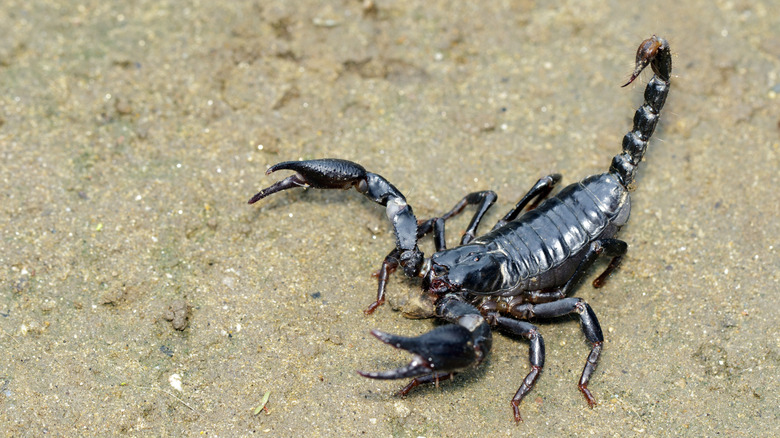
Native to the rainforests of Western Africa, the emperor scorpion (Pandinus imperator) is one of the most recognizable scorpions in the world. Averaging between 5 to 8 inches in length, and coming with a long, black armored body, sizable pincers, and a menacing looking stinger, emperor scorpions are the very definition of their bark being worse than their bite. They look scary, but are actually extremely docile, and rarely use their stingers, even in the wild. Their mellow nature, and the fact they can live up to eight years, has led to these scorpions becoming a popular choice as a pet.
In general, they are not in the habit of harming humans, preferring instead to use their pincers and venom to keep insect populations under control. This does not, however, mean they are not capable of inflicting damage should they choose. Their venom is not overly potent, but can still cause localized swelling and pain at the sting site. Thankfully, it will not cause death (being about as potent and painful as a bee sting), but could cause allergic reactions in rare cases.
This can easily be avoided by handling the scorpion with care if you are keeping one as a pet, or keeping your distance if you come across one in the wild. However, the latter situation is not likely, seeing as they are primarily nocturnal and prefer to avoid larger predators.
Giant desert hairy scorpion
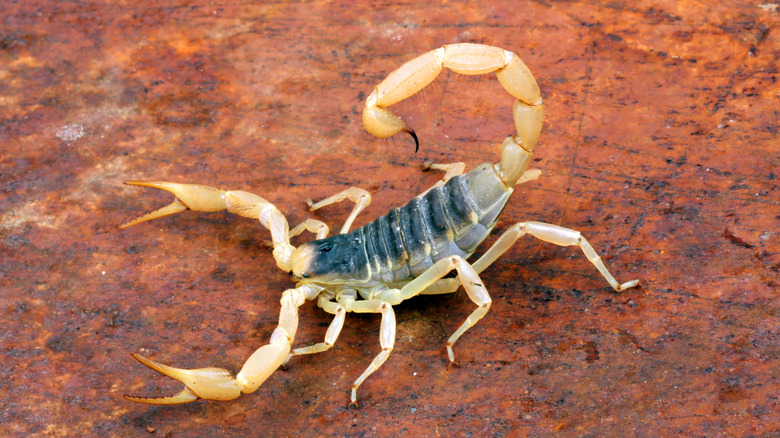
The giant desert hairy scorpion (Hadrurus arizonensis) is the largest variety in North America. Native to the deserts of the southwestern U.S., this scorpion can grow 5 to 7 inches long when fully spread out. Its tan-and-black coloration make it perfect for blending into its desert environment. The "hairy" part of their name comes from the hairy tendrils they use to seek out prey. Thanks to their size, these desert giants have been known to take down lizards and small mammals during their nocturnal hunting sessions.
Like all scorpions, the stinger of the giant desert hairy scorpion is infused with venom. The potency of this venom is minimal, being only slightly more powerful than that of the Emperor scorpion. Those who have been stung equate the pain to that of a bee sting. Allergic reactions are possible, though not common.
It is highly unlikely you will ever be stung by a giant hairy desert scorpion at all. They prefer to retreat from humans as opposed to confronting them. However, if properly miffed, they will use their pincers and stingers as defensive tools. This is especially important information to know if you plan on keeping one as a pet. If you're outdoors and want to make sure all is clear at night, consider a must-have black light flashlight that makes spotting scorpions easier, since almost all scorpion exoskeletons glow under UV light.
Vietnam forest scorpion
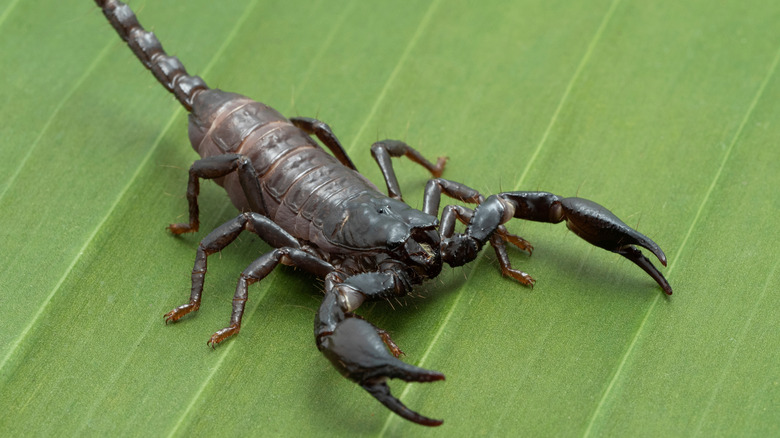
Also known as the Asian forest scorpion (Heterometrus spp), these terrifying creatures get their official name due to their particular fondness for the humid and insect-filled forests of Vietnam. These enormous scorpions look more like black-shelled, land-dwelling lobsters than any of the others we've met thus far. Averaging between 4-5 inches in length, and equipped with enormous pincers and an awfully menacing looking stinger, these forest scorpions are by far the most aggressive (or more accurately, defensive) we have yet come across.
While they are generally docile when on their own, almost any act towards them can be viewed as an immediate threat. Their response is to sting and pinch as hard and fast as they can. Their venom is thankfully not harmful to humans, but they can still cause localized swelling and irritation.
While popular among enthusiasts as a pet, we'd generally not recommend dealing with this scorpion at all if you can avoid it. Like other species, the Vietnam forest scorpion likes to do its hunting during the night. Therefore, the chances of actually coming across one in the wild is minimal at best.
California common scorpion
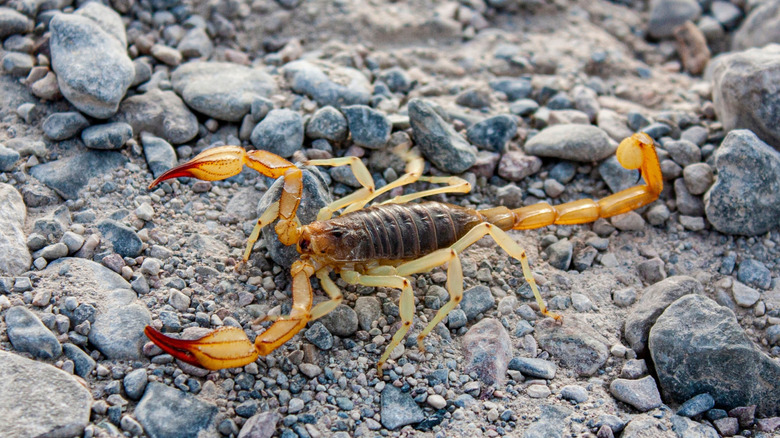
There are numerous types of animals you don't want to be coming across in the California desert. The California common scorpion (Paruroctonus silvestrii) is one of them. This is a large umbrella name that actually encompasses over 84 different species. However, they are similar enough in mannerisms and venom potency that most naturalists and scientists group them together. These scorpions are not particularly aggressive. In fact, they are less likely to attack you than the previously mentioned Vietnam forest scorpion. So, why are we rating them as more dangerous?
It is their proximity to some of the most densely populated cities in the world that ranks them more dangerous than the other listed scorpions so far. Los Angeles County alone accounts for nearly 10 million residents. The more people there are to interact with, the higher the likelihood of a sting, per the Mayo Clinic. Fortunately, their sting is still fairly mild, equivalent to a bee or wasp sting for most people.
All scorpions will sting if they feel threatened. However, you don't need to be particularly threatening in order for that to occur. Many scorpions will sting you even if you stumble upon them by accident when moving a rock or opening a windowsill, or even putting on your shoes. So, these common California scorpions are more likely to sting owing simply to the number of people they have the potential to interact with.
Striped bark scorpion
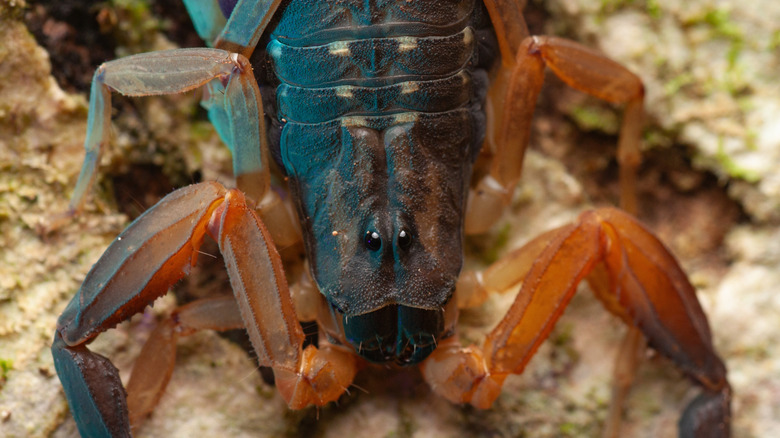
This is the last of the less-dangerous scorpions on this list...but we're stepping into more painful territory (literally). Thanks to its status as the most widely distributed scorpion in the United States, North American residents are more likely to interact with this type of scorpion than any other species (it extends into northern Mexico as well). Notable for the dark brown stripes across its pale yellow body, the striped bark scorpion (Centruoides vittatus) takes to hiding under rocks or tree bark, hence its name. Therefore, anyone who is hiking in areas where it predominates — mainly the south-central U.S. including Missouri and Texas — are likely to come across it if disturbing tree debris.
Striped bark scorpion venom is a lot more potent than the other scorpions we've already listed. Their close cousin — the Arizona bark scorpion (Centruoides sculpturatus) — is considered the only truly dangerous species in California, for example. A good sting from one won't just cause swelling and irritation, but has the potential to do more serious damage as well. Symptoms from a sting can include numbing, involuntary muscle twitching, drooling, vomiting, and increased heart rates. Fatalities are extremely rare, but emergency medical care should be sought out immediately following a sting.
While they don't come looking for trouble, the striped bark scorpion won't run away from it either. If it feels threatened — accidentally uncovering it from its hiding place, for example — it will attack you. Therefore, it always pays to be cautious when exploring areas these creatures are known to inhabit.
Arabian fat-tailed scorpion
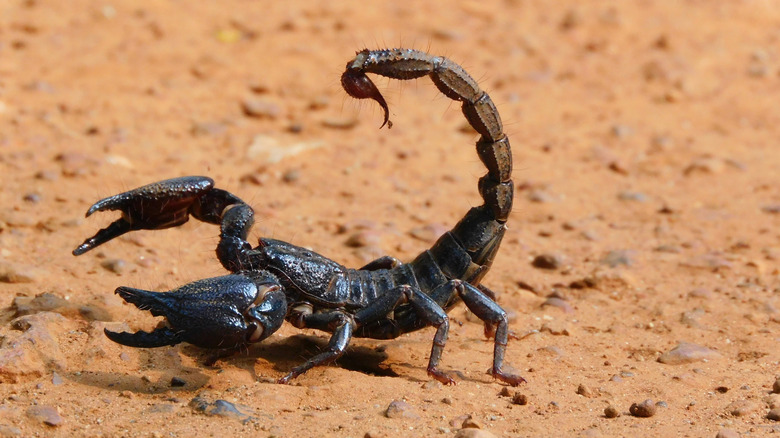
These final five scorpions are ones you do not want to mess with, under any circumstances. This first of the most dangerous, the Arabian fat-tailed scorpion (Androctonus crassicauda), is an utterly horrifying looking creature. While all the other scorpions we've discussed tend to have skinny tails, these fat-tailed (or fattail) scorpions have tails that are so large they take up the majority of their body. These thick, dark, heavily armored scorpions may only average about 3 inches in length, but they pack an absolute wallop of a sting that could, if you are not careful, cause immense damage to your body.
The sting from a fat-tailed scorpion is filled with a poison known as neurotoxins. When entered into the bloodstream, these toxins target the nervous system, causing difficulty breathing, blurred vision, and heart inflammation on top of localized pain and swelling. It has also been known to cause death, which is a first for the scorpions on this list. And stings aren't rare, they're among the most commonly reported scorpion stings in their native habitats. The good news is that their toxin also has potential medical benefits, including as a possible breast cancer treatment.
Dominant across Northern Africa and the Arabian Peninsula, the fat-tailed scorpion is a far more common sight than most are comfortable with. Matched with their aggressive temperament, this arachnid is easily considered one of the most dangerous animals in the world.
Yellow fat-tail scorpion
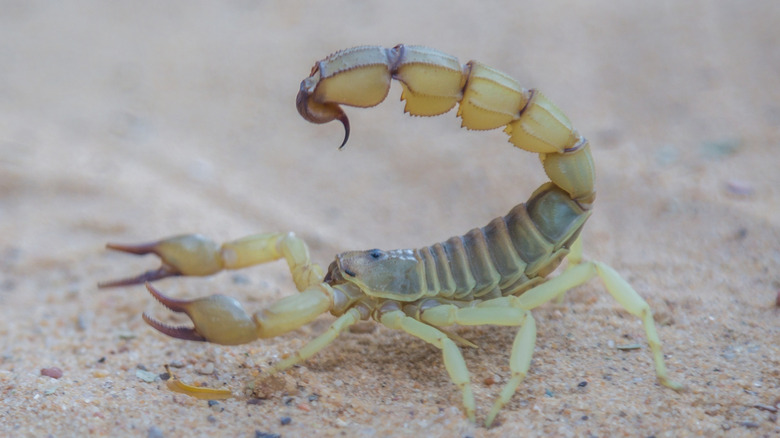
A sister species to the previously mentioned Arabian fat-tail scorpion, the yellow fat-tail (or fattail) scorpion (Androctonus australis) is also found in North Africa, and is just as dangerous. In fact, by some measures, it's considered the most venomous scorpion to mammals, and is responsible for a high number of fatalities. Once again, this scorpion is notable for its small size and incredibly large tail. Its pale yellow, sand-like appearance makes it seem almost more menacing than its dark sibling species. It may almost be more frightening, as it blends into its sandy dwellings, making it easy to miss.
While death is not a common result from a yellow fat-tail sting, elderly and younger victims can be susceptible owing to the strength of the neurotoxins in the venom. A sting from one of these scorpions can cause severe pain, muscle spasms, labored breathing, and heart failure. Like its cousin, the venom has been studied as a potential ingredient in cancer medications. In tests, the toxins isolated and slowed cancer growth, meaning this deadly scorpion also has the potential to save lives.
Still, the territorial nature of this scorpion means it is not to be trifled with. Remember, scorpions will defend themselves even if you startle them by accident. In the case of this deadly arachnid, you'll likely regret ever bothering to see what that interesting shape in the sand was.
Brazilian yellow scorpion
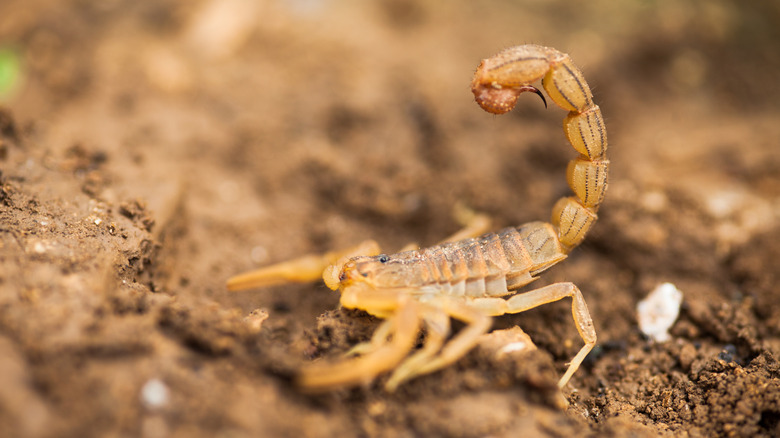
While it may be easy to assume that all the various kinds of dangerous animals lurking in the Amazon Rainforest (think jaguars or poison dart frogs) must be the chief predatory concerns in Brazil, the reality is quite different. The fact is that scorpions have become the deadliest animal in all of Brazil thanks to increased urbanization and warming, that as a result has decreased the number of predators and increased the arachnid's food supply. The most dangerous of all the region's stingers is the Brazilian yellow scorpion (Tityus serrulatus).
Another small scorpion with a pale body, prominent pincers, and a menacing looking stinger at the end of a long tail, the Brazilian yellow is the most widely found scorpion in the country. As such, it is responsible for more medical emergencies than any other type of scorpion in Brazil.
The danger comes from both their aggressive behavior, and the potency of their venom. Loaded with toxins that target the nervous system, death can occur from a sting in as little as 6 hours depending on the prior health of the person stung (lethality also seems to vary among yellow scorpions by region). The most mild cases come with localized pain, nausea, dizziness, and vomiting. Children and the elderly are particularly susceptible, especially seeing as the majority of the stings occur in highly built-up urban areas.
Spitting thicktail black scorpion
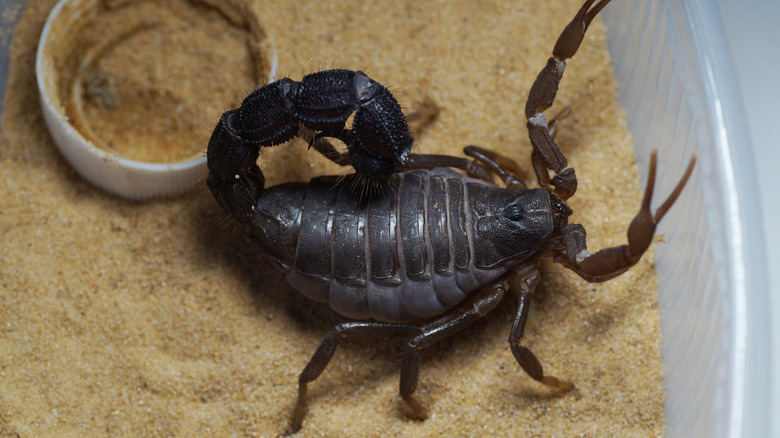
Much like tiny animals that are as cute as they are dangerous, this scorpion is one you should not judge by its small size. Averaging approximately 2.5 inches in length when fully grown, (though that extends to 6 inches with the tail stretched out) the spitting thick-tail black scorpion (Parabuthus transvaalicus) is a native of South Africa and considered to be one of the most dangerous and highly venomous scorpions in the world. Known for their outward aggression as a predator, this scorpion has a party trick up its tail that makes it even more fearsome than it already is.
There is a reason it is called a spitting scorpion: It can literally shoot (spit) its venom from of its tail like a squirt gun, and accurately hit a target up to one meter away. This venom, which can enter an animal through its pores, is loaded with highly dangerous neurotoxins that can have extremely damaging effects. Importantly, its venom is designed to take out mammalian predators, which is why it affects humans so significantly (it can also shoot a less toxic pre-venom when hunting insects and small animals).
This venom will attack the nervous system, which can lead to muscle failure and even cardiac arrest. Death from a sting by this scorpion is not common, as it generally likes to keep to itself out in the wild. However, if you are ever unlucky enough to get stung by one of these, you're in for a lot of pain, and potentially shuffling off this mortal coil.
Indian red scorpion
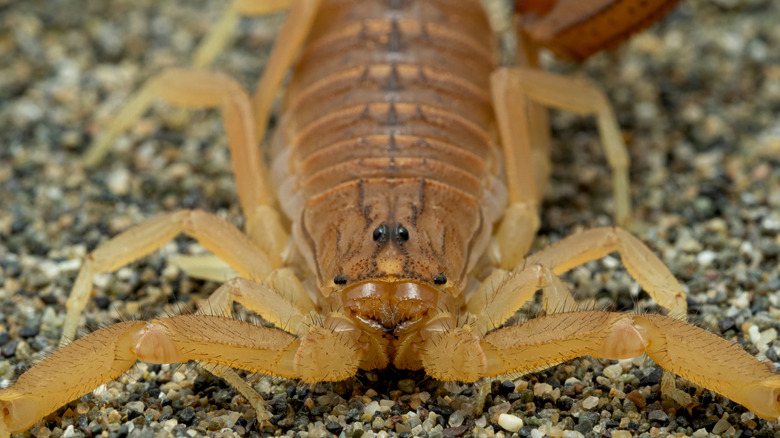
What was once known as the Indian subcontinent today consists of the countries of India, Pakistan, Bangladesh, Nepal, and Sri Lanka. It is an enormous place, filled with its fair share of dangerous creatures, including snakes, bears, and spiders. However, there is one small creature that tends to strike fear into anyone who comes across it: the Indian red scorpion (Hottentotta tamulus). Found in all of the above countries, this native scorpion can cause severe pain even with its mildest sting, and is often considered the most lethal of all scorpions. While relatively small — averaging around 3 inches in length — and with recognizable brownish red bodies, these scorpions pack enough toxin in their venom to kill between 8% to 40% of the people they sting, with an estimated 2,600 fatalities annually in India alone.
This fatality rate is caused by the dangerous neurotoxins found in their venom, and the fact they're comfortable living among humans in rural and urban settings. They have been known to cause severe strokes that have left patients immobilized for the rest of their lives. In the worst cases, as noted by the percentage, a sting from this scorpion can cause death.
Owing to India's massive population and the fact that this scorpion is commonly found across the country, stings often occur. Many rural Indians who do not have access to the immediate healthcare required to help prevent death, can succumb to the venom in as little as 72 hours. So, whether you're planning on keeping any one of these scorpions as a pet, or traveling to where they are, understand the risks that come with a sting, and act accordingly. It could save your life.