

How To Determine The Best Material For Your Birdbath
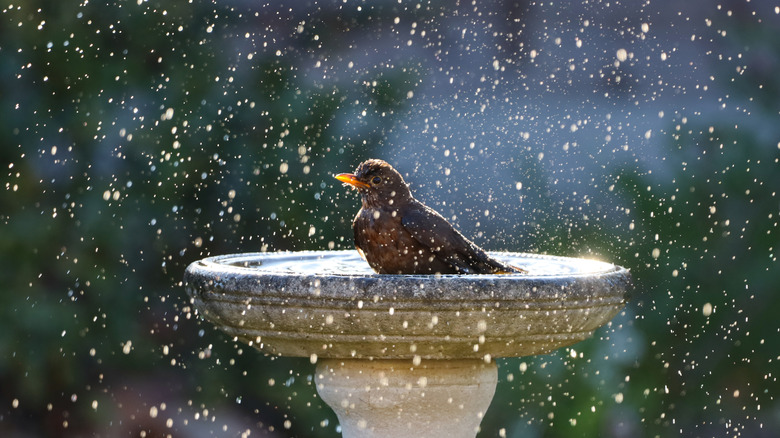
One of the simplest methods to attract songbirds to your backyard is to set up a birdbath. It will provide a fresh water source where birds can drink, wash their feathers, and cool down on hot days. If you live in a dry environment, birdbaths provide fresh water when most other water sources have dried up. If you live in a cold environment, you can pour warm water in your birdbath when other sources have frozen over. The bath itself also adds a decorative element to your yard. For example, stone baths can evoke a Classical aesthetic while cast iron baths harken back to the Victorian era.
This garden feature can be found throughout the global historical record and the earliest influences may date back thousands of years to the ancient garden spaces of Persia. The courtyards of Ancient Rome had basins to capture rainwater, and the royal estates of 17th century Europe boasted artificial waterways that deliberately attracted swans and ducks. The basins on pedestals that we today identify as birdbaths became widespread during the mid-19th century when the Industrial Age brought about their mass production in iron.
Whether you have a large country garden or a simple patio space outside your city apartment, a birdbath can bring wildlife, atmosphere, and beauty to the environment. You add a touch of your own personality to the space, and there are a myriad of options.
Stone and concrete are durable but heavy
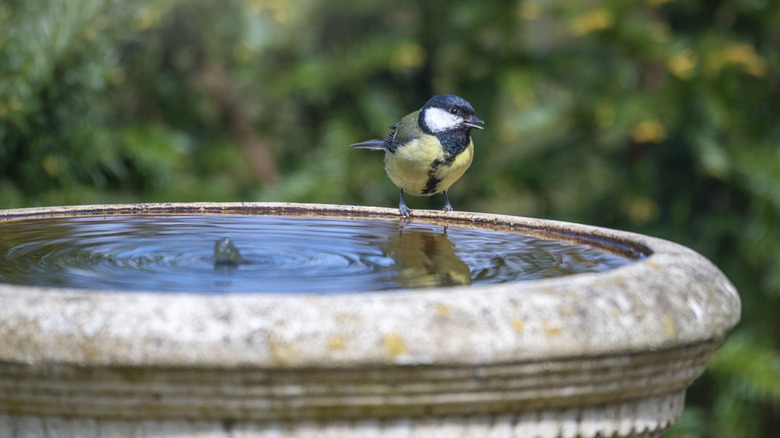
Birdbaths made of tough materials like stone and concrete tend to hold up for a long time in the elements, but they can still crack from ice. These types of birdbaths rarely hang from trees because of their weight. If you decide to hang a stone birdbath, make sure it's secure; otherwise, it poses a risk to anything underneath it. People also appreciate stone and concrete birdbaths for their natural look. They blend in well especially if you have stone features in your backyard, like walkways or boulders.
Some people might decide not to buy stone or concrete birdbaths because they are hard to carry home from the store or move about the garden. These baths might even require a couple people to move. Once you have one set up in your backyard, it will probably stay in that spot for many years to come. Unlike hanging birdbaths, these are also somewhat inconvenient to cut grass around and can break if you knock them over with your mower, particularly if they hit a patio surface or rock garden.
The process of maintaining concrete pedestal birdbaths
There are other reasons why some folks pass on pedestal birdbaths. These baths won't maintain themselves. If you own one, you'll have to refill the water regularly, especially in the summer months. It's recommended you change the water every other day.
Pedestal birdbaths, like all birdbaths, need to be cleaned frequently to prevent the spread of diseases like avian pox and salmonellosis. Diseases like avian flu and Zika virus (from the mosquitos that often live in birdbaths) can even spread to people. Pedestal baths also have a tendency to capture leaves and lawn clippings, which decay and make the water murky. When the weather is warm, algae can grow inside that murky water. This algae can become a home for harmful bacteria, and the porous nature of concrete and some stone adds additional cleaning challenges.
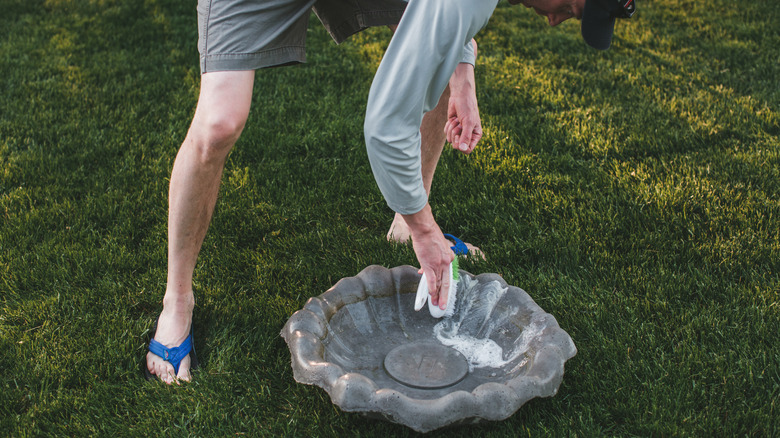
The cleaning process is simple. All you have to do is empty the old water, remove all debris, and scrub it with a mixture of vinegar and water. The solution should be made up of nine parts water and one part vinegar. Avoid using soap on your birdbath because any residual soap can strip oils off bird feathers.
Cast iron lasts for generations, but is prone to rust
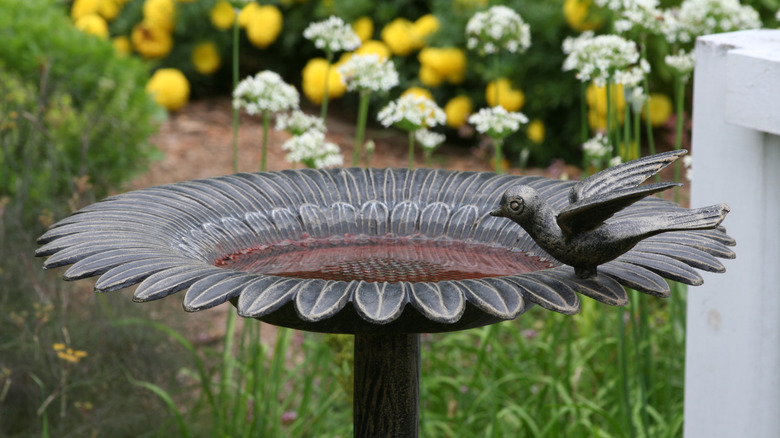
If you can find an antique cast iron birdbath, you'll probably never have to replace it because this is one of the toughest materials you can find. These baths also offer classic beauty and charm sure to enhance your outdoor space. Like stone or concrete, baths made out of cast iron are usually too heavy to tip in the wind. You will want to set up this bath on flat, even ground, otherwise its top-heavy design may cause it to tip.
All good things require some effort to maintain, and the biggest hassle of owning a cast iron birdbath is that you have to treat iron for rust and corrosion. You can get rid of the rust by scrubbing the bath with steel wool and sandpaper. Then apply a rust converter to chemically break down any remaining oxidation. Once those steps are complete, spray the bath with primer, and coat the outside with food-safe paint. These baths tend to heat up in the sun, so you'll have to change the water regularly to keep them from becoming a breeding ground for mosquitoes and algae.
If you do go the antique route, be aware that many 19th century birdbaths were cast in lead or zinc. While decoratively appealing, you don't want to fill them with water, as leached lead is as bad for birds as it is for us. You can also find classic and modern pedestal birdbath contours in low-maintenance stainless steel or brushed pewter.
Hanging metal feeders offer flexibility in small spaces
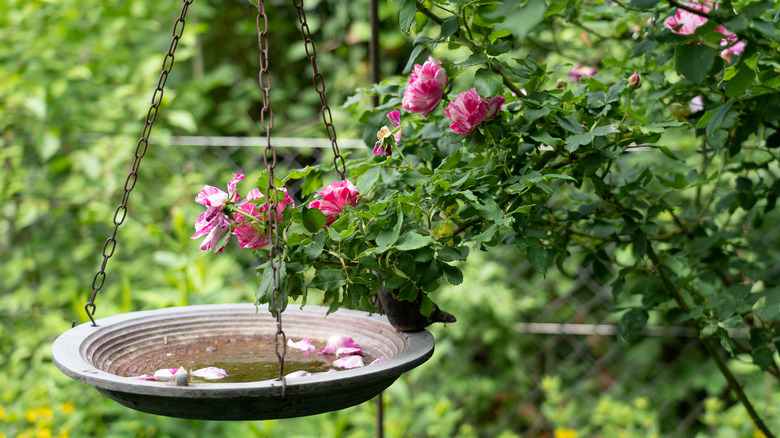
If you don't have available space on the ground, a hanging birdbath is often the way to go. You can suspend from the eaves above your balcony or hook it to the branch of a tree. This allows flexibility in where you place it, and can provide natural shade and cover. There are some who feel a hanging bath attracts a greater variety of birds, because a feeder swaying in the wind mimics moving water, which birds especially like.
In most cases, it's a good thing for a birdbath to be elevated from the ground, because that will make it harder for predators to access it, though it helps to provide additional protections against climbing snakes and cats. Cinnamon is a common scent that will stop snakes from slithering in your yard, and you can wrap sheet metal flash around the base of your tree to prevent cats from climbing it.
Stability may be somewhat of an issue for hanging birdbaths, particularly for larger birds. These baths are usually smaller as well, so you'll probably need to refill them more often. But they are easy to clean, remove, and replace as needed.
Ground level ceramic birdbaths are preferred by many species
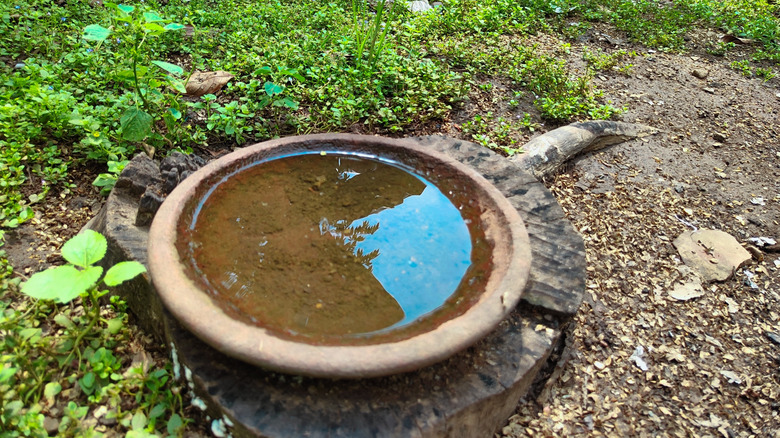
There are plenty of good reasons to simply place your birdbath on the ground. Plenty of birds almost exclusively prefer to drink water at ground level, so if you want to attract doves, ducks, and quail, but also bluejays, robins, and woodpeckers, this is your best bet. Since you can place these baths anywhere, it's best to set them in the shade: You want to think twice about putting a birdbath in direct sunlight where algae thrives, and both birds and water can overheat. Unlike a pedestal bath, a ground level birdbath won't tip during windstorms. To birds, it also tends to be more natural for water to be on the ground. Add rocks in the bath for birds to stand on, to create a more comfortable spot for your feathered friends.
One of the main challenges that birds face when drinking from ground level baths is that they are more vulnerable to predators. A cat could always be hiding in the bushes ready to pounce. That's why it's important to place the bath a good distance away from brush or shrubbery. These baths also require frequent cleaning because it is much easier from runoff to get into them. When spreading mulch in the spring, don't pile it too high near a ground-level birdbath. Since many ground-based basins are crafted in glass, clay, or ceramics, be aware they are prone to breakage if something drops on them. They can also crack in cold winters more easily than concrete or stone as any standing frozen water expands.