

Keep Ants From Building Hills In Your Yard With A Simple Lawn Care Task
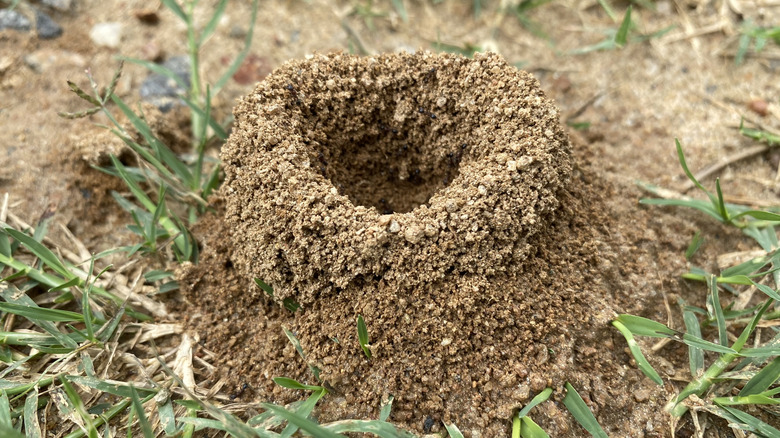
Ant hills are common in most backyards, but homeowners still try to mitigate them. While most ant species don't harm your grass (and there are even some surprising ways ants can benefit your garden), there are a few good reasons why you'd want to get rid of ant hills. The main reason to eradicate those mounds is that the colonies allow air to circulate around grass roots, which can dry them out. Some homeowners also find the hills to be unsightly. As colonies grow, the hills can spread, making your yard resemble desert terrain. But maybe you don't want to spray insecticide all over your yard because it will also kill bugs that are important to the ecosystem, like bees and caterpillars. That's why some landscapers get rid of ant hills by just raking or tilling them.
If you have a fairly healthy lawn with grass that you don't want to get rid of, then avoid tilling the earth. It's a waste of time and effort, and it will mess up your lawn. However, if your yard is overwhelmed with ant hills and you plan to put down sod anyway, then tilling is a great option. It will destroy the networks of tunnels where ants live and hopefully even out the soil. If tilling isn't necessary and you'd still like to avoid insecticides, simply solve the problem with a rake.
How to properly till your yard to take out ant colonies
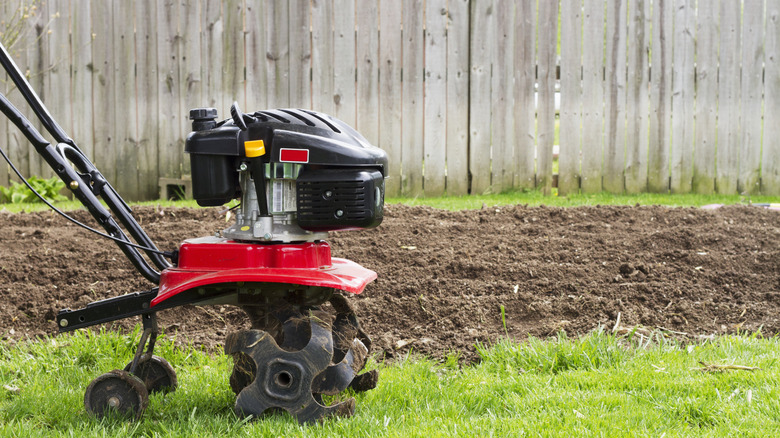
Most people till parts of their backyard when they're preparing a garden. It gets rid of weeds, allows for oxygen to reach the soil, and eliminates rodent tunnels. To till a piece of land, you can either drag a plow behind a tractor or push a gas-powered tiller. When you've identified a spot on your lawn where you'd like to plant sod, you can go over it with the tiller to knock out those ant hills and tunnels.
If you decide that tilling your lawn isn't the right option, you can still get rid of ant hills manually. If there aren't too many ant hills in your backyard, you can tear them out and crush them with a rake. But if the lawn is infested with colonies, you might need a tool that requires less labor. One of the best options is aerate your lawn. You can either push an aerator across your yard or hook one up to the back of your riding mower. After aerating your lawn, it's a good time to plant grass seed. But remember, the best time to aerate your lawn depends on some crucial factors: the grass type and growing season.
Also, remember that your kitchen has everything you need to get rid of ant hills in your yard. For example, you can take out ant hills by pouring two to three gallons of boiling soapy water into them. But be aware that hot water can also kill your grass.